
English Version
As a dedicated supplement manufacturer, ZOOMSHEAL recognizes that the male sexual health category is one of the most dynamic, yet most sensitive, sectors in the wellness industry. Driven by increasing consumer awareness, destigmatization, and the rising global aging population, the market for male enhancement supplements is projected to reach over $4 billion by 2032. Success in this market demands not only powerful, scientifically-backed formulas but also unwavering commitment to quality and regulatory compliance, particularly when dealing with health claims.
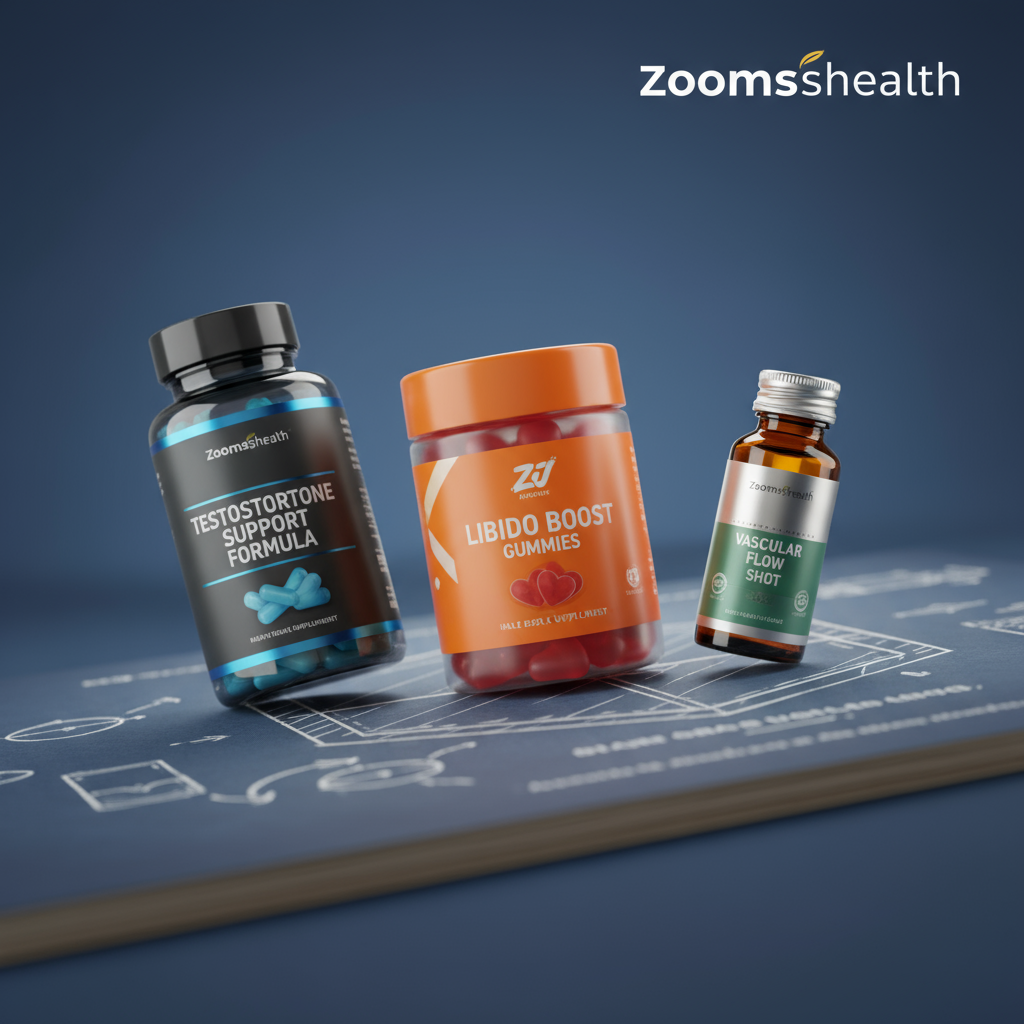
This article provides a comprehensive overview of the male sexual health supplement landscape, detailing key ingredient science, market trends, and how ZOOMSHEAL’s Original Equipment Manufacturing (OEM) expertise can help brands develop differentiated, safe, and effective products.
I. The Science Behind Male Sexual Health Supplements
Male sexual function is a complex physiological process involving hormonal balance, neurological signaling, and, critically, robust vascular health. Supplements primarily target two core aspects: Libido/Hormonal Support and Erectile Function/Vascular Health.
A. Targeting Libido and Hormonal Balance
Many supplements are marketed as "testosterone boosters" or libido enhancers, aiming to address the natural decline in testosterone (andropause) and boost sexual desire. Key ingredients in this category include:
B. Targeting Erectile Function and Vascular Health
Erectile Dysfunction (ED) is often a vascular problem related to poor blood flow. Effective supplements aim to enhance nitric oxide (NO) production, a key molecule that relaxes blood vessels and allows blood to flow into the corpora cavernosa (erectile tissue).
II. Market Trends and The Necessity of Differentiation (2024-2025)
The male sexual health market is characterized by several critical trends that ZOOMSHEAL helps its OEM partners navigate:
-
Shift to Mainstream Wellness: Sexual health is being normalized and integrated into overall wellness (e.g., stress, sleep, and fitness). Consumers are seeking supplements that offer holistic benefits, such as testosterone support combined with adaptogens (like Ashwagandha) for stress reduction.
-
Demand for Clinical Validation: Due to the historical presence of adulterated products (often containing hidden PDE5i drugs like Sildenafil or Tadalafil), discerning consumers demand products featuring patented, branded ingredients (e.g., Testofen, Libifem) with published human clinical trials.
-
Formulation Innovation: While capsules remain dominant, the market is expanding into more consumer-friendly and discreet forms: Gummies, Functional Shots (Liquids), and Discreet Mints, designed for easy integration into daily routines.
-
Transparency and Clean Label: Brands must emphasize heavy metal testing, non-GMO status, and the absence of undeclared pharmaceuticals to counter the industry's negative reputation.
III. ZOOMSHEAL’s Competitive Edge: Advanced OEM Customization
As a full-service supplement producer, ZOOMSHEAL provides strategic OEM/ODM solutions essential for success in this challenging market. Our manufacturing approach prioritizes safety, efficacy, and brand differentiation.
A. Scientific Formulation and Ingredient Sourcing
-
Custom Synergistic Blends: We don't just use single ingredients; we engineer complex formulas that maximize synergy. For example, combining L-Citrulline for vasodilation with Fenugreek for hormonal support and Ashwagandha for stress relief (a common barrier to sexual health).
-
Branded Ingredient Access: We maintain strong relationships with leading raw material suppliers, ensuring access to clinically-studied, trademarked ingredients that provide a definitive marketing advantage and validation of efficacy.
-
Flexible Delivery Formats: Beyond standard capsules and tablets, we specialize in high-demand, differentiated forms:
-
Rapid-Release Softgels: For faster onset of action, crucial for this category.
-
Custom-Flavored Gummies: For consumers prioritizing taste and discretion.
-
Liquid Tinctures/Shots: Delivering high doses of bioavailable amino acids (L-Citrulline) and botanical extracts.
-
B. Quality Control and Regulatory Compliance (The ZOOMSHEAL Guarantee)
The single greatest challenge in the male sexual health sector is the risk of adulteration—the inclusion of undisclosed prescription drugs. Our commitment to quality protects your brand integrity:
-
GMP Certification & Strict Testing: Our facilities operate under strict cGMP guidelines. Every batch is rigorously tested for heavy metals, microbial contaminants, and, most importantly, screening for undeclared PDE5 inhibitors (Sildenafil, Tadalafil, etc.)—a non-negotiable step to ensure consumer safety and legal compliance.
-
Clean Label Formulation: We help brands develop "clean-label" products free from unnecessary fillers, artificial colors, and harmful additives, appealing to the modern, health-conscious consumer.
C. Strategic OEM Differentiation
We partner with you to build a unique product narrative:
-
Niche Targeting: Instead of a generic "male pill," we can develop products for specific niches: "Athletic Performance & Hormonal Support," "Stress-Related Libido Rescue," or "Advanced Vascular Health Formula for Men Over 50."
-
Packaging Innovation: Utilizing discreet, premium packaging (e.g., matte black bottles, single-dose blister packs) that aligns with the desired brand image—from clinical and serious to discreet and luxurious.
-
Regulatory Guidance: Providing expert consultation on global marketing claims, ensuring product language is compliant with regional regulations (e.g., FDA, EFSA) to mitigate legal risks associated with marketing sexual health products.
IV. Conclusion
The male sexual health supplement market offers significant growth opportunities, but it is a landscape fraught with quality and compliance challenges. Brands must move beyond hyperbolic claims and embrace the science of natural ingredients.
ZOOMSHEAL is uniquely positioned to be your partner, providing the necessary scientific expertise, rigorous quality control, and advanced OEM manufacturing capabilities to create products that are not only highly effective and innovative but also entirely trustworthy. By focusing on clinically-supported ingredients and uncompromising safety standards, we ensure your brand can confidently capture market share in this lucrative yet demanding industry.
Regulatory and Claims Strategy for Male Sexual Health Products
Male sexual health sits at the intersection of three regulatory regimes: dietary supplements, traditional herbal medicines, and, in some markets, drugs. Before formulation begins, brand owners should map the intended destination markets and confirm how each classifies ingredients such as Epimedium, Tribulus, and Panax ginseng. In the EU, several of these botanicals fall under novel food or herbal medicinal product rules rather than the food supplement directive. In the US, structure/function claims are permitted but disease claims are not. In China and much of Southeast Asia, registration pathways for imported supplements can take months and require local testing. Locking the target markets early prevents reformulation later.
Claim language is where most compliance failures occur. Permitted wording typically describes supporting normal physiological function, such as maintaining healthy testosterone levels within the normal range or supporting healthy sexual desire, rather than treating erectile dysfunction or promising performance outcomes. Avoid the words treat, cure, prevent, and any reference to prescription drug comparators. Build a claims matrix that lists each ingredient, the substantiating reference, and the approved wording per market. This matrix should be reviewed by regulatory affairs before artwork is finalized, because label copy changes after printing are costly and can delay launch.
Ingredient status documentation is equally important. Buyers should request, for each raw material, a specification sheet, certificate of analysis, allergen and GMO statements, and confirmation of permitted use in the destination market. For botanicals with a history of adulteration, such as Horny Goat Weed, ask for botanical authentication by macroscopic and microscopic examination or DNA barcoding. Keep these records linked to the finished product batch so that a regulator or retailer audit can trace any claim back to a specific lot. This documentation discipline also strengthens retailer onboarding, since major e-commerce platforms increasingly request claim substantiation files.
Finally, plan for post-market surveillance. Adverse event intake, label revision control, and a documented recall procedure are expected elements of a mature quality system. If a product is sold in markets requiring notification or listing, maintain the registration dossiers and renew them on schedule. A manufacturer with a transparent regulatory affairs function can supply these documents as a service, but the brand owner remains legally responsible for the claims on the label. Clarify this division of responsibility in the supply agreement before the first purchase order.
Formulation Realities: Dosage, Standardization, and Stability
A common gap between marketing copy and finished product is dose. Many published studies use standardized extracts at specific amounts, yet commercial formulas sometimes include the same ingredient at a fraction of the studied level. When briefing a formulator, specify the extract ratio and the marker compound content, then set the target dose against a credible reference. If cost constraints prevent a clinically studied dose, adjust the claim language rather than implying efficacy the formula cannot support. Buyers should ask for a dose justification document that lists each active, its standardized marker, the amount per serving, and the basis for that amount.
Standardization is the mechanism that makes dose meaningful. A fenugreek extract standardized to a defined percentage of furostanolic saponins is not interchangeable with raw fenugreek powder, and the same applies to ginseng ginsenosides or Epimedium icariin. Request the specification for every extract and verify that the certificate of analysis reports the marker compound, not just mesh size and moisture. Where a branded ingredient is used, confirm the supplier's authorization and that the branded material is actually the source in the finished batch. Substitution of branded material with generic extract is a frequent integrity issue in this category.
Stability and compatibility deserve early attention. Botanical extracts are hygroscopic and prone to caking, and some, such as Maca and Tribulus, carry strong odors that affect consumer acceptance. Amino acids like L-citrulline are generally stable but can interact with reducing sugars under heat and moisture, so choose excipients carefully. Run accelerated stability at elevated temperature and humidity on the finished dosage form, and test marker compounds and microbial counts at intervals. For liquid shots, evaluate pH, preservative efficacy, and color drift. These studies take time, so schedule them before committing to a launch date.
Delivery format changes the formulation brief. Gummies require heat processing that can degrade sensitive botanicals, so consider adding actives after cooling or selecting heat-stable forms. Capsules offer the simplest path for hygroscopic extracts and allow higher doses per serving. Functional shots demand solubility and taste masking, and discreet mints require careful dosing because the unit weight is small. Choose the format after the dose is fixed, not before, and confirm that the chosen format can physically accommodate the required actives without exceeding a reasonable serving size.
Quality Assurance and Anti-Adulteration Controls
The male enhancement category carries a well-documented history of adulteration with undeclared pharmaceutical ingredients. A robust quality program therefore goes beyond routine testing. Establish an incoming material risk profile that flags botanicals and blends with known adulteration history, and test those materials against a targeted screening panel for PDE5 inhibitors and their analogues. Work with an accredited laboratory and specify the method and limit of detection in the testing agreement. Retain reserve samples of every raw material lot so that any later finding can be investigated against the original material.
Finished product testing should mirror the claims and the risks. A typical release panel includes identity of key actives, assay of marker compounds, microbial limits, heavy metals, and residual solvents where extracts are used. Where the label claims a specific extract or branded ingredient, verify it in the finished product, not only in the raw material. Consider periodic testing for unauthorized substances as a surveillance measure, even when not legally required, because the reputational cost of a positive finding far exceeds the testing expense. Document the sampling plan and acceptance criteria in the quality agreement.
Process controls protect the formula between testing points. Weighing and dispensing should be performed in a controlled area with double verification, and blending steps should be validated for uniformity so that a low-dose active is evenly distributed. Line clearance between batches prevents carryover, which is especially important when the facility also runs products containing stimulants or other actives with strict dose limits. Environmental monitoring and personnel hygiene programs reduce microbial risk in powder handling areas. These controls are routine in GMP facilities but should be confirmed during a supplier audit rather than assumed.
Supplier qualification ties the program together. Audit the manufacturing site, review its GMP certificate and scope, and confirm that the certificate covers the dosage forms you intend to order. Ask how the site handles complaints, deviations, and out-of-specification results, and request examples of completed investigations. For imported finished goods, verify the chain of custody and customs documentation. A short list of qualified suppliers with documented performance is more valuable than a long list of price quotes, particularly in a category where a single quality failure can trigger platform delisting or regulatory action.
- Request targeted PDE5 inhibitor screening on high-risk botanicals and blends.
- Verify branded and standardized ingredients in finished product, not raw material only.
- Retain reserve samples of every lot for traceability and investigation.
- Confirm the GMP certificate scope covers your specific dosage form.
Reviewed by Dr. Xu Wei, PhD, formulation scientist at ZOOMSHEAL in Guangzhou (23 years of supplement contract manufacturing). Last updated: November 2026. This article is for educational purposes and does not replace medical advice.