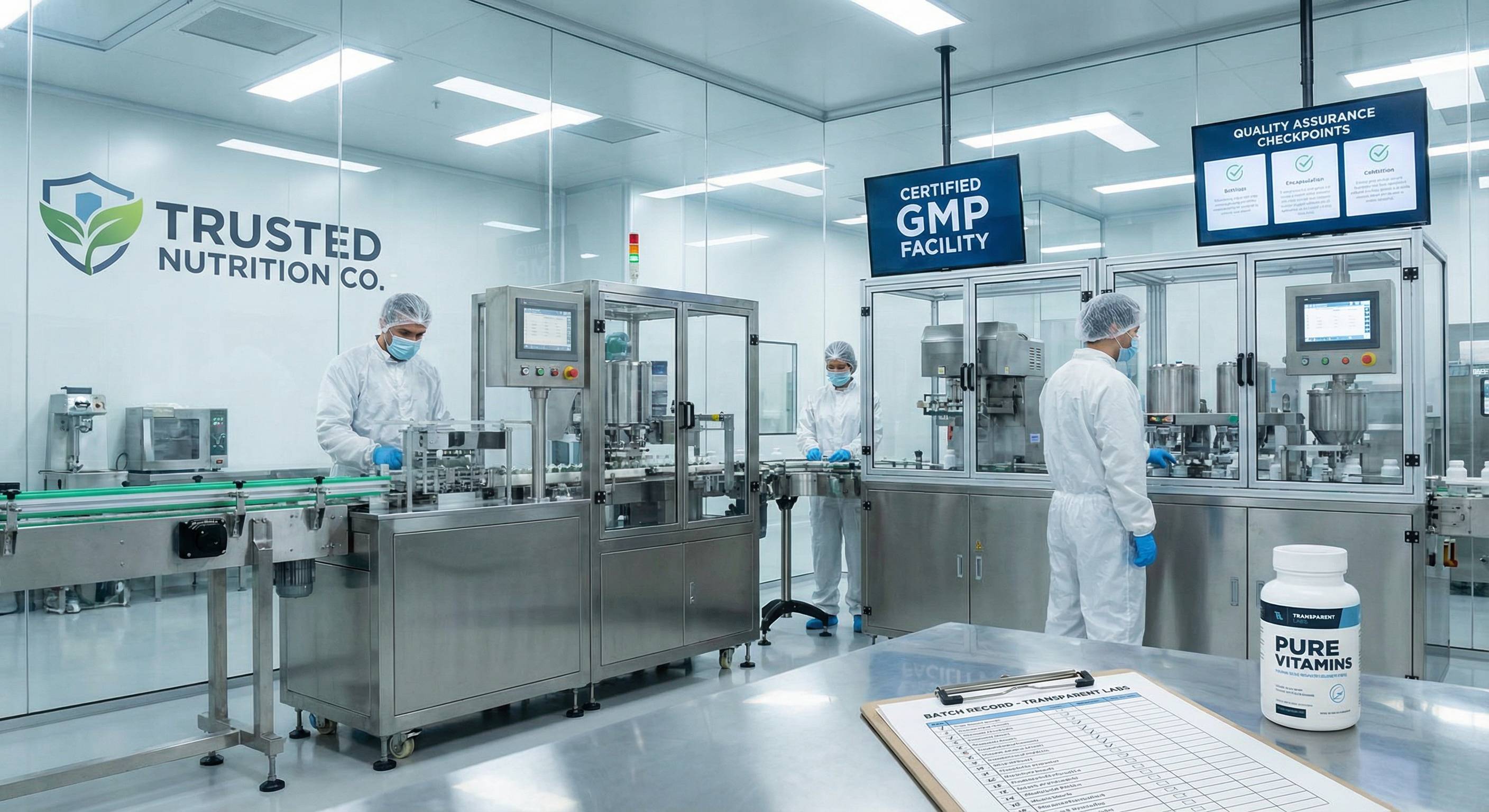

China has become one of the most important manufacturing hubs for nutritional supplements in the global market, and the trend has accelerated dramatically in the past five years. As more brands adopt private-label strategies and expand into categories like gummies, softgels, capsules, powders, and functional drinks, the demand for a reliable Chinese OEM/ODM partner has surged. But despite this growth, many overseas buyers still do not fully understand why Chinese supplement manufacturers are so competitive, how their systems operate, and what standards truly define a high-quality partner. This article offers a comprehensive overview designed for brand owners, distributors, and formulators who want to scale internationally by leveraging China’s manufacturing ecosystem.
Why China Has Become a Global Supplement Manufacturing Hub
The rise of Chinese supplement manufacturers did not happen overnight. Over the past decade, China has moved from basic supplement production to world-class, vertically integrated manufacturing. Multiple forces contributed to this transformation. First, China’s raw-material industry is exceptionally mature. Many of the world’s most widely used vitamins, amino acids, herbal extracts, probiotics, and functional ingredients are produced either in China or through Chinese supply chains. This means factories can access fresher, more affordable raw materials without relying on expensive import channels. For global brands, this results in more stable pricing and better control over formulation consistency.
Second, China’s manufacturing clusters create a level of efficiency unmatched in many Western countries. In cities known for supplement production—such as Guangzhou, Shanghai, and Zhejiang—manufacturers operate alongside packaging suppliers, testing laboratories, transportation hubs, and raw-material distributors. Because everything is concentrated geographically, procurement cycles are faster, communication is more direct, and production timelines are shorter. While U.S. or European factories may need 8–12 weeks for a standard order, many Chinese facilities can complete the same batch in 4–6 weeks, even when dealing with complex products like gummies or softgels.
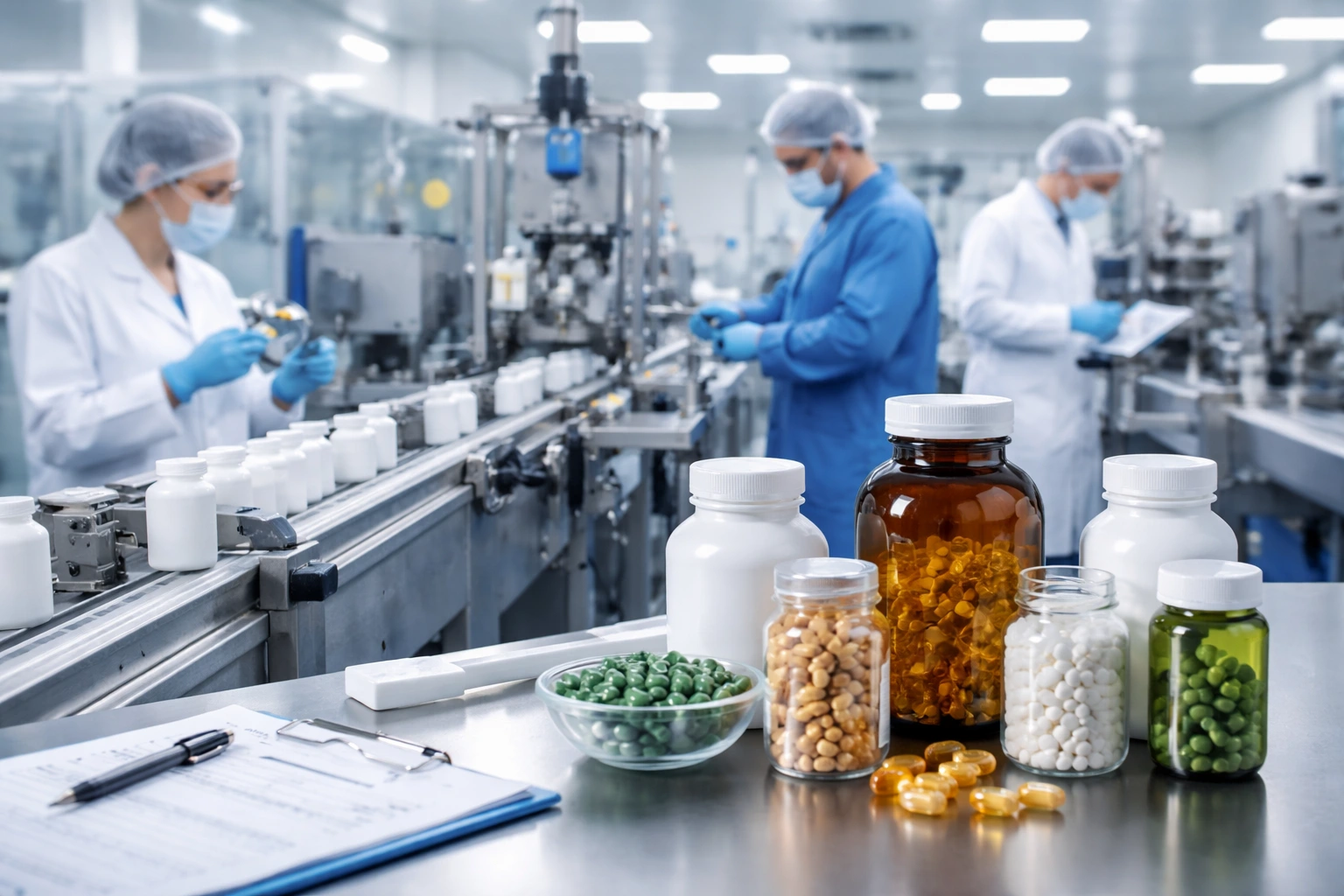
Third, the level of automation in modern Chinese facilities has significantly improved. Leading factories now integrate automated encapsulation machines, continuous drying tunnels, large-scale blending systems, auto-counting and bottling lines, and high-precision gummy cookers. These upgrades reduce human error, improve microbial safety, stabilize batch uniformity, and allow high volumes without compromising quality. Because many global brands now require weekly or monthly replenishment, this high-capacity model is essential for scalability.
Understanding the Quality Standards Behind Chinese Supplement Manufacturing
One of the biggest misconceptions among overseas buyers is that manufacturing quality in China is inconsistent. In reality, the top-tier supplement manufacturers meet or exceed the very standards that define the U.S. and European markets. Facilities operating at a global level follow GMP (Good Manufacturing Practice) as the foundation of their quality system. GMP controls everything from raw-material handling and sanitation to production logs, batch traceability, cross-contamination prevention, and document retention. Without GMP, a factory simply cannot produce safe, legally compliant supplements.
Beyond GMP, many Chinese manufacturers hold additional international certifications such as ISO 22000, HACCP, FSSC 22000, or ISO 9001. These systems introduce structured risk management, hazard analysis, and systematic monitoring of critical control points. They are particularly important for categories such as probiotics, powders, and gummies, where moisture levels and microbe counts must be tightly controlled.
In addition to certifications, reputable manufacturers work closely with globally recognized laboratories such as SGS, Eurofins, Intertek, or CNAS-accredited domestic labs. These external labs verify ingredient identity, potency, heavy metals, pesticides, microbial levels, and stability. Professional manufacturers provide COAs (Certificates of Analysis) for every batch—something global buyers should always demand. The best facilities also perform in-house rapid testing, reducing waiting times while ensuring every batch meets standards before release.
Another sign of a high-quality manufacturer is the robustness of their material traceability system. Modern factories use digital batch codes to track each ingredient from the moment it enters the building until the final product is shipped. This traceability is critical for meeting U.S. FDA inspection standards and EU food-safety requirements, which require complete documentation trails.
Key Advantages of Working with Chinese Supplement Manufacturers
Choosing a supplement manufacturer in China offers several structural advantages that international brands cannot easily find elsewhere. These advantages are not only related to cost but also flexibility, speed, diversity of capabilities, and innovation in dosage form technologies.
1. Full-Range Dosage Form Capabilities
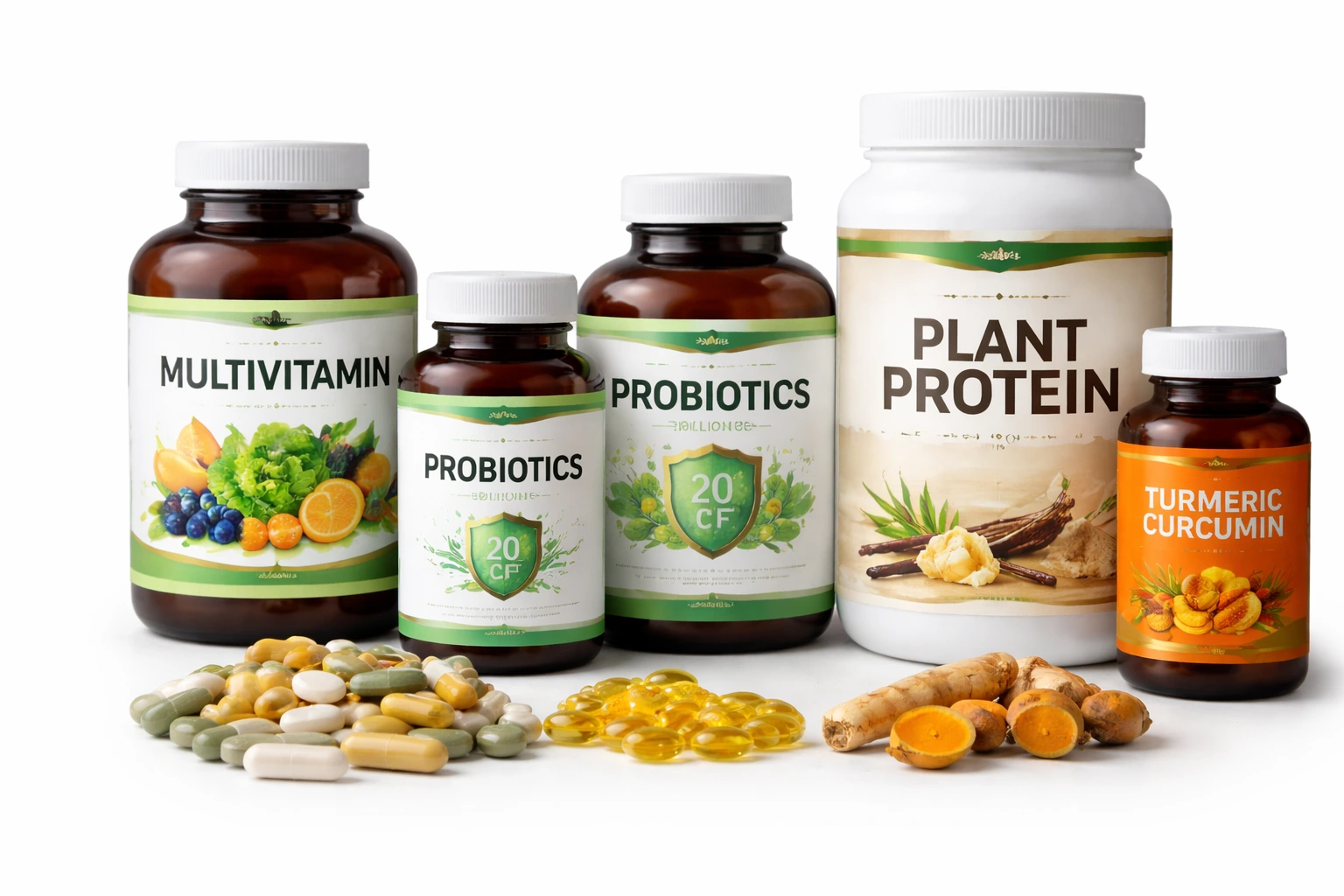
One of the biggest strengths of Chinese OEM/ODM manufacturers is the ability to produce a wide range of supplement formats under one roof. Many Western manufacturers specialize in just one or two product categories—softgels, probiotics, or tablets, for example. In contrast, major Chinese facilities often cover:
-
Gummies(软糖)
-
Softgels(软胶囊)
-
Tablets(片剂)
-
Capsules(胶囊)
-
Powders(粉末)
-
Effervescent tablets(泡腾片)
-
Liquid drops / tinctures(滴剂)
-
Functional beverages(即饮饮品)
This level of diversity means brand owners can centralize their product lines within one supplier instead of managing multiple factories across regions. For startups, this simplifies supply chain management. For mature brands, it ensures formulation consistency and faster line expansions.
Gummy manufacturing, in particular, has advanced dramatically in China. Modern factories use continuous-cooking systems, starchless depositing, and automated coating lines, allowing clean-label gummies, vegan pectin gummies, sugar-free gummies, and heat-stable formulations that previously required European technology.
2. Flexibility for Both Small and Large Orders
While North American and European manufacturers often require high minimum order quantities (MOQs), Chinese manufacturers are more flexible. Many will accept:
-
3,000–5,000 bottles for capsules
-
10,000–20,000 gummies
-
300–500 kg powder blends
This allows new brands to test products, validate markets, and develop prototypes without committing to huge inventories. At the same time, major factories with large-scale production lines can also handle massive orders for enterprise-level clients, fulfilling tens of millions of capsules or gummies per month. This scalability is one of the reasons global Amazon and retail brands increasingly choose China as their primary manufacturing base.
3. Competitive Pricing Without Sacrificing Quality
Cost efficiency remains a major driver for choosing China. But lower cost does not mean lower quality. Because the raw-material infrastructure is domestic, factories do not have to import ingredients at inflated prices. Packaging materials—from bottles to pouches to boxes—are also locally available and competitively priced. Combined with automation and labor efficiency, this leads to:
-
More stable pricing
-
Better margins for brand owners
-
Ability to invest more in marketing and R&D
Furthermore, Chinese manufacturers increasingly invest in R&D teams capable of developing proprietary blends, custom flavoring systems, controlled-release formulations, and rapid-dissolve tablets. These innovations used to be dominated by U.S. and Japanese firms, but China has narrowed—and in some areas surpassed—the technological gap.
4. Faster Turnaround Time
Speed is critical for e-commerce brands and seasonal product launches. Because China’s supply chain ecosystem is so concentrated, production cycles are often 30–50% faster than Western competitors. This includes:
-
Faster raw-material sourcing
-
Shorter lead time for bottles and packaging
-
Quick prototype development
-
Efficient batch scheduling
For capsule or tablet products, some factories can finish production within 20–30 days, including testing. Gummies usually require 30–40 days, depending on coating, flavoring, and mold customization. This allows brands to react quickly to market trends and maintain inventory levels without interruptions.
How to Evaluate a Supplement Manufacturer in China
Choosing the right manufacturer is critical because not all factories operate at the same quality level. Brands should evaluate partners through several dimensions.
1. Certifications and Quality System
Always check for:
-
GMP certification(药品生产质量管理规范)
-
ISO 22000 or HACCP
-
Third-party test compliance (SGS / Eurofins / Intertek)
-
FDA registration (if exporting to the U.S.)
A manufacturer without GMP should not be considered, regardless of price.
2. Manufacturing Capabilities
Examine the factory’s specialization:
-
If you produce gummies, do they have starchless lines?
-
For probiotics, do they have low-humidity, temperature-controlled rooms?
-
For softgels, do they offer plant-based options or enteric coating?
-
For powders, do they ensure homogeneous blending and anti-caking management?
Capabilities should match your product category, not generic descriptions.
3. R&D and Formulation Support
A strong Chinese manufacturer will provide:
-
Custom formulation development
-
Flavor optimization
-
Stability testing
-
Ingredient sourcing recommendations
-
Regulatory compliance guidance
This is essential for brands launching unique or complex products such as sleep blends, immunity formulas, metabolism boosters, sports nutrition, adaptogen drinks, or vegan gummies.
4. Factory Transparency
Factories should offer:
-
Video tours
-
Batch records
-
COA for every production run
-
Raw-material certificates
-
On-site audits
The more transparent a manufacturer is, the more trustworthy they are.
5. Communication Efficiency
Efficient manufacturers:
-
Provide clear project timelines
-
Respond within 24 hours
-
Share technical documents proactively
-
Assign dedicated project managers
Smooth communication directly affects product launch speed.
Major Supplement Manufacturing Hubs in China
China’s supplement industry is supported by several well-established manufacturing clusters. Each region has its own strengths, infrastructure, and specialty product categories. Understanding these hubs helps global buyers identify where top-tier factories are located and what capabilities they offer.
1. Guangdong (Guangzhou, Foshan, Dongguan) – Gummies, Softgels & Finished Products
Guangdong is considered the most diverse and innovation-driven region for supplement manufacturing. Guangzhou and Foshan boast dozens of advanced factories specializing in:
-
Pectin gummies, gelatin gummies, sugar-free gummies
-
Softgels (fish oil, plant-based softgels, functional softgels)
-
Capsules and tablets
-
Liquid supplements and functional beverages
The region is known for its strong flavor-development capabilities, making it highly suitable for brands that prioritize taste, texture, and consumer experience. Many export-oriented factories here work closely with U.S., EU, and Middle Eastern brands and understand international compliance requirements well.
2. Zhejiang (Hangzhou, Ningbo) – Tablets, Capsules & Botanical Extracts
Zhejiang has one of the most mature raw-material supply chains in China. It is especially strong in:
-
Botanical extracts
-
Capsules and tablets
-
Powder blending
-
Energy and metabolism formulas
Because extract producers and supplement factories are located close to one another, supply is stable and ingredient traceability is reliable. Brands creating herbal or TCM-inspired formulations often choose Zhejiang for its strong sourcing ecosystem.
3. Jiangsu & Shanghai – Advanced Manufacturing and R&D
These regions have more pharmaceutical-oriented manufacturing systems and adopt higher levels of automation and SOP-based management. Facilities here often emphasize:
-
GMP pharmaceutical-grade production
-
High-precision encapsulation
-
R&D, stability studies, and formulation innovation
-
Premium private-label lines
Many international buyers prefer Shanghai and Jiangsu when they need a production partner capable of developing high-potency, multi-ingredient blends with rigorous documentation requirements.
4. Shandong – Fish Oil, Softgels & Marine Ingredients
Shandong is one of China’s main marine-ingredient production hubs. Manufacturers here focus on:
-
Fish oil softgels
-
DHA, EPA, and omega-3 concentrates
-
Collagen from marine sources
Because of the supply chain’s proximity to marine resources, pricing is highly competitive, and fatty-acid content is consistent.
Risks to Consider When Working with Manufacturers in China
While China offers strong advantages in capacity and flexibility, it is still essential for brands to evaluate potential risks and implement proper quality-control procedures.
1. Inconsistent Quality Among Small Factories
Not all factories operate at GMP-level standards. Some smaller workshops may lack:
-
Proper document control
-
Sanitation management
-
Batch traceability
-
Third-party testing
Brands must avoid choosing purely based on the lowest price.
2. Raw Material Substitution or Variability
This happens mainly among low-tier suppliers. Mitigation strategies include:
-
Requesting COA from both the supplier and third-party labs
-
Keeping a small retention sample for every batch
-
Using only branded ingredients (e.g., KSM-66, TRAACS, Carnipure) for premium products
3. Poor Communication or Delays
Manufacturers without a structured project-management team may cause:
-
Delays in sampling
-
Miscommunication on formulas
-
Labeling or packaging errors
Choose suppliers who assign a dedicated project manager for your account.
4. Hidden Costs
Some factories may offer low manufacturing quotes but later add unexpected fees for:
-
Labeling
-
Packaging
-
Stability testing
-
Ingredient upgrades
All pricing must be clarified before purchase orders are signed.
How to Work Smoothly with Chinese Supplement Manufacturers
To maximize success, global buyers should follow a structured process when developing products with China-based manufacturers.
1. Begin With a Clear Product Brief
Include detailed information such as:
-
Intended dosage form
-
Ingredient list
-
Active dosages per serving
-
Flavor preferences for gummies or powders
-
Claims and target markets
-
Estimated volume and launch timeline
The more precise the brief, the faster the sampling cycle.
2. Approve Samples Before Mass Production
Never rush into a bulk order. Instead:
-
Request final samples for taste, color, hardness, capsule size, or powder solubility
-
Conduct your own internal testing
-
Check packaging quality, bottle seal integrity, and label material
Only after approval should mass production begin.
3. Conduct Third-Party Lab Testing
For U.S. or EU-bound products, laboratory testing should cover:
-
Ingredient identity
-
Potency/active content
-
Microbial counts
-
Heavy metals
-
Pesticides (especially for herbal formulas)
A serious manufacturer welcomes independent testing—it proves their consistency.
4. Maintain Clear Communication During the Production Cycle
Strong manufacturers provide updates on:
-
Production timeline
-
Filling and packaging progress
-
Testing completion
-
Shipment preparation
Transparency builds trust and reduces misunderstandings.
Why International Brands Are Increasingly Turning to China
Today’s supplement market moves quickly, and brands must be able to innovate and scale on demand. China fulfills these needs through:
-
A highly efficient supply chain
-
Advanced automation
-
Strong raw-material availability
-
Flexible order quantities
-
Cost-effective pricing
-
Capability to produce nearly every dosage form
-
Experience supplying to U.S., EU, Amazon, Middle East, and APAC markets
For global brands seeking both speed and reliability, China has become not only an option—but a strategic advantage.
Conclusion: China as a Strategic Manufacturing Partner
China has established itself as a world-class supplement manufacturing center. From advanced gummy technology to large-scale softgel production, from herbal extracts to sports nutrition powders, the country offers a complete ecosystem that supports product innovation, efficient production, and global expansion. For brands looking to scale quickly, reduce cost without sacrificing quality, or expand their product lines into multiple categories, partnering with a reputable supplement manufacturer in China provides a powerful competitive edge.
If you are currently searching for a reliable partner in China but are unsure how to evaluate or shortlist manufacturers, don’t worry—the Chinese supplement industry is large, but not all factories operate at the same level. In our next article, we will provide a carefully curated list of the top supplement manufacturers in China, including their specialties, certifications, product capabilities, and which types of brands they are best suited for. This guide will help you compare factories more clearly and select the right partner based on your goals, product type, and market requirements.