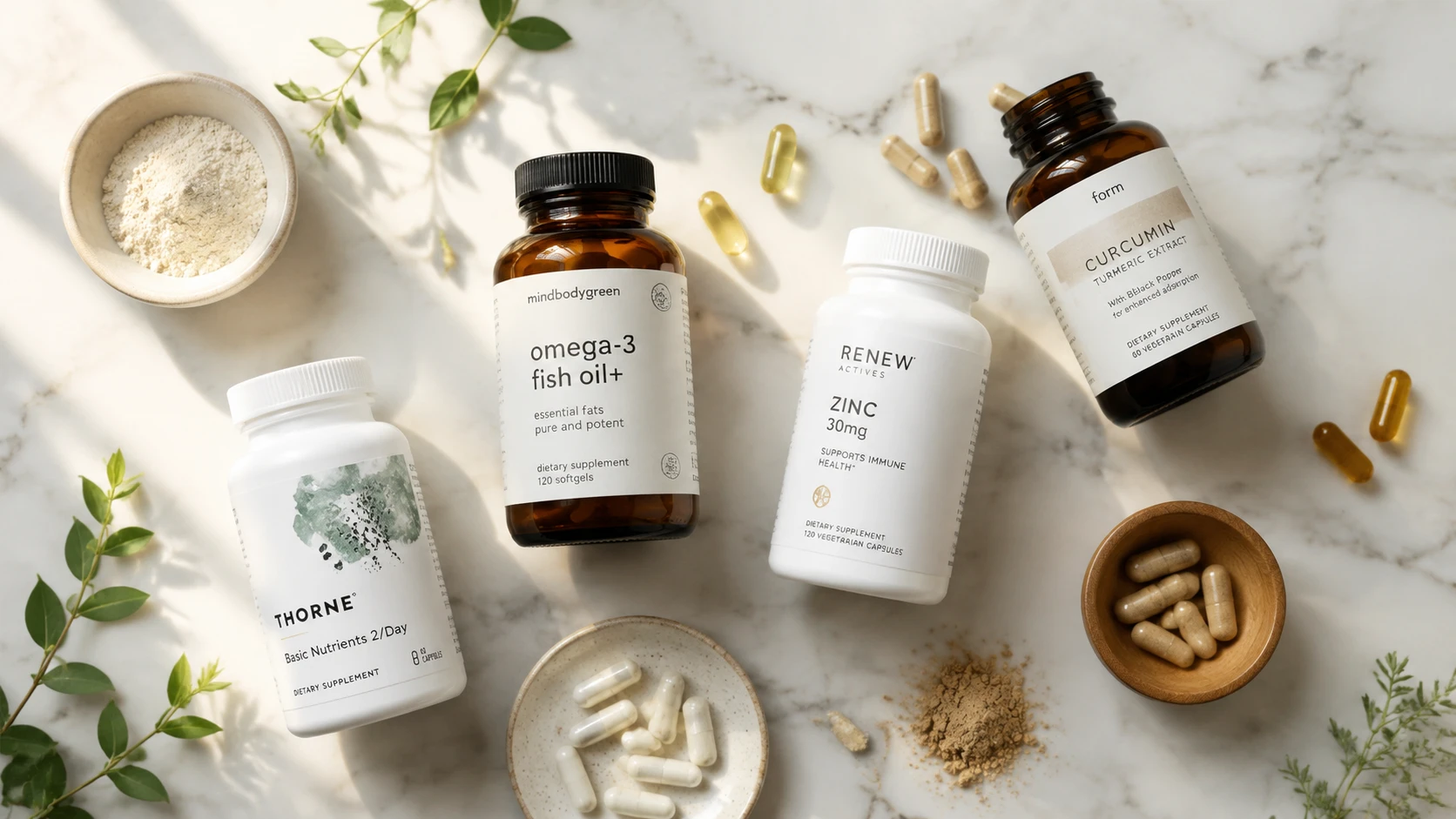
Quick answer: Micronized creatine capsules are creatine monohydrate with reduced particle size, filled into hard capsules. Micronization improves dispersibility and mouthfeel, not total absorption. Capsules give fixed dosing and portability. The ergogenic effect comes from saturating muscle phosphocreatine, which requires consistent daily intake of roughly 3–5 g, taken with or without food. Capsules are a convenience format, not a different molecule.
What micronized creatine capsules are — and what they are not
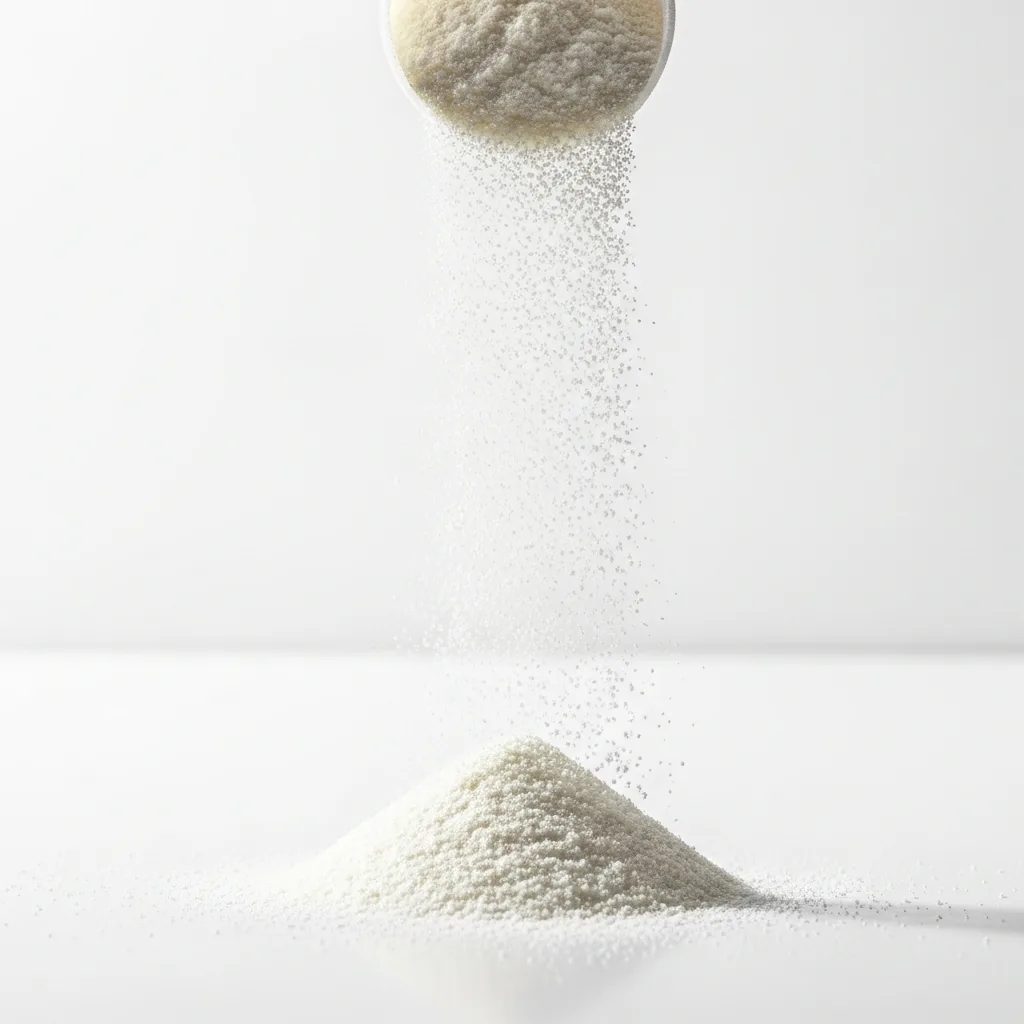
Creatine monohydrate is a small molecule. It is the same molecule whether it arrives as powder, tablet, or capsule. Micronization is a mechanical step: crystals are milled to a smaller particle size, typically under about 200 microns, and often finer. The result is a powder that wets out faster and feels less gritty.
A capsule is a delivery container. It holds a fixed dose, usually 500 mg to 1 g of creatine per capsule in standard sizes, so a 3–5 g daily dose means several capsules. That is the trade-off: precision and portability against pill count.
What capsules are not: they are not a superior molecule, not a patented absorption system, and not a replacement for daily consistency. I have filled both powders and capsules on the same line. The active ingredient is identical. The difference is how the user experiences it.
How creatine works in the muscle
Muscle contraction runs on ATP. During short, hard efforts — a heavy set, a sprint — ATP is used faster than aerobic metabolism can remake it. The phosphocreatine system bridges that gap. Creatine kinase takes a phosphate from phosphocreatine and puts it back onto ADP, regenerating ATP within seconds.
Muscle stores are finite. Oral creatine raises the intramuscular pool, and the ceiling is reached after days to weeks of consistent intake. Once saturated, extra creatine is excreted. This is why timing matters less than total daily dose and adherence.
Creatine also draws water into the muscle cell, which increases cell volume. That osmotic shift is real and measurable. It is often described as a trigger for anabolic signaling; the human evidence for that pathway is weaker than the energy-buffer effect, which is well established.
Forms and delivery systems compared
Most creatine sold today is monohydrate. Other forms — creatine HCl, ethyl ester, buffered blends — cost more and have less human data. I formulate with monohydrate unless a client has a specific reason otherwise.
| Format | Typical dose per unit | Practical notes |
|---|---|---|
| Micronized powder | 3–5 g scoop | Fast to mix; cheapest per gram; taste and grit vary |
| Hard capsule | 0.5–1 g per capsule | Fixed dose, portable, no taste; 3–10 capsules per day |
| Tablet | 0.5–1 g per tablet | Compressed; needs good disintegrant or it passes intact |
| Stick pack / sachet | 3–5 g | Pre-measured; good for travel and single-serve retail |
| Gummy | 1–3 g per piece | Heat-sensitive; creatine degrades in high-moisture, high-heat systems |
Capsules win on adherence for people who dislike powder. They lose on cost per gram and on pill burden. A 5 g dose in 1 g capsules is five capsules. That is fine for some users and unacceptable for others.
Dosing and specification ranges
Maintenance dosing is the practical default: 3–5 g per day of creatine monohydrate. Loading — around 20 g per day split into four doses for about a week — saturates muscle faster but is optional. Loading is more likely to cause loose stools.
For capsules, the specification matters as much as the dose. A 1 g capsule at 5 g daily is a reasonable target. Below that, pill count climbs quickly.
| Parameter | Typical range | Why it matters |
|---|---|---|
| Creatine monohydrate per capsule | 500 mg – 1,000 mg | Sets daily pill count |
| Daily maintenance dose | 3–5 g | Standard saturation target |
| Loading dose (optional) | ~20 g/day, split | Faster saturation; more GI risk |
| Particle size (micronized) | Under ~200 microns | Dispersibility and mouthfeel |
| Capsule shell | HPMC or gelatin | HPMC suits vegetarian claims |
Creatine is hygroscopic. In a capsule, moisture uptake can soften the shell and degrade the fill over time. Desiccant in the bottle and a low-moisture fill are not optional details; they are the difference between a stable product and a sticky one.
Who benefits and who should be careful
People doing repeated high-intensity efforts — resistance training, sprinting, team sports — are the clearest beneficiaries. Vegetarians and vegans often start with lower muscle creatine stores, so the response can be larger. Older adults combining creatine with resistance training may see modest gains in lean mass and function, though the data are mixed.
People with kidney disease should talk to their clinician before supplementing. Creatine raises serum creatinine, which can confuse kidney function tests; this is a measurement artifact, not necessarily kidney damage, but it needs clinical context. Anyone on multiple medications should check for interactions. This is education, not medical advice.
People who do not train and do not plan to train will get little from creatine. It is not a stimulant and it does not burn fat.
What the evidence actually shows
The evidence for creatine monohydrate and strength/power performance is strong and consistent across many trials and reviews. Effects are modest but real: more reps, slightly higher peak power, small gains in lean mass when paired with training.
The evidence for recovery is weaker. Some studies show reduced markers of muscle damage; others do not. I would not sell creatine as a recovery product on its own.
The evidence for cognitive effects is early and inconsistent. Some small trials in sleep-deprived or stressed populations show signals; broader claims are not supported. The evidence for creatine HCl, ethyl ester, and buffered forms is thin compared with monohydrate. If a client asks for those, I ask what problem they are solving that monohydrate does not solve.
Quality signals: reading a label and a CoA
A label tells you the declared dose. A Certificate of Analysis tells you what was actually tested. Every batch we ship carries a CoA. For creatine, the useful tests are identity, assay, moisture, heavy metals, and microbial limits. Particle size distribution matters for micronized claims.
| Test | What it confirms | Typical method |
|---|---|---|
| Identity | Material is creatine monohydrate | FTIR or HPLC |
| Assay | Purity vs label claim | HPLC |
| Moisture | Stability risk in capsules | Karl Fischer or loss on drying |
| Heavy metals | Lead, arsenic, mercury, cadmium | ICP-MS |
| Microbial limits | Total plate count, yeast, mold, pathogens | Compendial methods |
| Particle size | Supports micronized claim | Laser diffraction or sieve |
On the label, look for the creatine form, the dose per capsule, the capsule shell, and any excipients. Magnesium stearate and silicon dioxide are common and functional. A proprietary blend that hides the creatine dose is a red flag. So is a claim of "FDA approved" — dietary supplements are not FDA approved. FDA facility registration is not approval.
Common mistakes
Taking creatine occasionally and expecting results. Saturation requires daily intake. Skipping days resets the clock.
Buying capsules with too little creatine per capsule, then abandoning the product because of pill count. Check the math before you buy.
Assuming micronized means better absorption. It means better dispersibility. The absorption endpoint is the same molecule.
Storing capsules in a hot bathroom. Heat and humidity degrade the fill and the shell. Keep the bottle closed and dry.
Confusing serum creatinine rises with kidney damage. Context matters; clinicians know this, but users often do not.
How micronized creatine capsules are made at scale
Creatine monohydrate arrives as bulk powder. It is milled to the target particle size, then blended with glidants and lubricants in a defined order. The blend is filled into hard capsules on a capsule filler, and the capsules are polished, inspected, and packed with desiccant.
In-process checks cover fill weight, capsule closure, and appearance. Finished batches go to the lab for assay, moisture, metals, and microbials. At ZOOMSHEAL, our Guangzhou factory runs hard capsules, softgels, tablets, gummies, powders, liquids, and effervescent tablets in-house. We are a contract manufacturer, not a trading company. MOQ starts at 500 units per SKU for gummies, powders and liquids and 1,000 for capsules, tablets and softgels; softgel pilots can run 1,000–2,000. Lead time is 4–6 weeks after formula and artwork approval, and sampling takes 7–10 days.
Our facility holds GMP (Intertek), ISO 9001:2015, ISO 22000:2018, HACCP, NSF audit, and line-specific Halal. We are FDA-registered via a US agent. That is registration, not approval.
A practical checklist before you buy or brief a manufacturer
Confirm the creatine form and dose per capsule. Confirm the daily dose you will actually take. Check the CoA for assay, moisture, metals, and microbials. Check the capsule shell if you need a vegetarian claim. Check storage instructions. Check the manufacturer's certifications and whether they own the factory. Ask for a sample before committing to a production run.
If you are briefing a contract manufacturer, bring the dose, the capsule size, the shell type, the target market's labeling rules, and the stability expectations. Those four inputs determine most of the project.
Frequently asked questions
Are micronized creatine capsules better than powder?
Not better in absorption. The molecule is the same. Micronization improves dispersibility and mouthfeel, and capsules give fixed dosing and portability. Powder is cheaper per gram and easier to take in larger doses. Choose based on adherence: the format you will actually take daily is the better format for you.
How many capsules do I need per day?
At a 3–5 g maintenance dose, a 1 g capsule means three to five capsules daily. A 500 mg capsule doubles that. Check the label before buying. If pill count is a barrier, powder or stick packs may suit you better. Consistency matters more than the format.
Do I need to load creatine?
No. Loading saturates muscle faster, roughly within a week, but maintenance dosing reaches the same plateau in a few weeks. Loading uses about 20 g per day split into doses and is more likely to cause loose stools. Most people can skip it.
Does creatine damage the kidneys?
In healthy people, the evidence does not show kidney damage at typical doses. Creatine raises serum creatinine, which can look like reduced kidney function on a blood test. That is a measurement effect. People with existing kidney disease should consult their clinician before supplementing.
Is creatine monohydrate the same as creatine HCl?
No. They are different forms. Monohydrate has the largest body of human evidence. Creatine HCl is more soluble in water but has far less human data and costs more. I formulate with monohydrate unless there is a specific reason to use another form.
What should a creatine CoA include?
Identity, assay, moisture, heavy metals, and microbial limits. For a micronized claim, particle size distribution. A CoA should be batch-specific, not a generic sheet. Every batch we ship carries one. Ask for it before you buy.
Can I take creatine capsules on an empty stomach?
Yes. Creatine does not require food for absorption. Some people report mild stomach discomfort when taking several capsules at once; splitting the dose across the day can help. Taking it with a meal is fine too. Total daily intake is what matters.
Is FDA registration the same as FDA approval?
No. FDA facility registration means the facility is registered with the agency. It is not an approval, and dietary supplements do not have pre-market approval in the US. Any product claiming "FDA approved" is misusing the term. Look for GMP, ISO, and batch CoAs instead.
References
- NIH Office of Dietary Supplements — Exercise and Athletic Performance
- PubMed — creatine monohydrate strength and power meta-analyses
- PubMed — creatine particle size and micronization
- PubMed — creatine and kidney function safety
- EFSA — creatine monohydrate safety assessment
- FDA — Dietary Supplements
- WHO — Quality control of herbal and supplement materials
- PMC — creatine in vegetarians and muscle creatine stores
Reviewed by Dr. Xu Wei, PhD, formulation scientist at ZOOMSHEAL in Guangzhou (23 years of supplement contract manufacturing). Last updated: November 2026. This article is for education and does not replace medical advice.