Quick answer: NMN is a precursor the body converts into NAD+, a coenzyme used in energy metabolism, DNA repair and cell signaling. Human trials show oral NMN raises blood NAD+ at doses around 250–1,250 mg daily. Whether that translates into visible health benefits is still under study. A vegetable-extract blend does not raise NAD+. It supplies antioxidants that may reduce the oxidative load that consumes NAD+. Treat it as support, not a second engine.
What NMN and NAD+ actually are, and what they are not
NAD+ is a coenzyme. It carries electrons in redox reactions. Without it, glycolysis and the mitochondrial electron transport chain stall. It is also a substrate for PARP enzymes in DNA repair and for sirtuins in gene regulation. That is the mechanism, and it is well established in biochemistry.
NMN is nicotinamide mononucleotide. One enzymatic step converts it to NAD+ through the salvage pathway. The body also makes NMN from nicotinamide and from niacin/niacinamide, and recycles NAD+ constantly.
What NMN is not: it is not a drug, it is not approved to treat or prevent any disease, and it is not a substitute for sleep, protein intake or exercise. In the US, dietary supplements have no pre-market approval. Any claim that a product is "FDA approved" is false.
How NAD+ declines and how NMN enters the pathway
NAD+ levels fall with age in animal and human tissue studies. The drivers include reduced synthesis from the salvage pathway, increased consumption by PARP and CD38, and chronic low-grade inflammation. This is a measured association, not a single-cause story.
Oral NMN is absorbed in the gut, appears in blood within minutes to hours in pharmacokinetic studies, and is largely converted to NAD+ or to nicotinamide before reaching tissues. That last point matters. Some researchers argue most oral NMN is dephosphorylated to nicotinamide riboside in the gut. Others show intact NMN in plasma. The debate is unresolved, and it shapes how you read the trial data.
Oxidative stress sits on the consumption side of the ledger. Free radicals damage DNA, PARP activates to repair it, and PARP burns NAD+. A high oxidant load therefore drains NAD+ faster. That is the only honest rationale for pairing NMN with an antioxidant-rich vegetable blend.
Forms and delivery systems
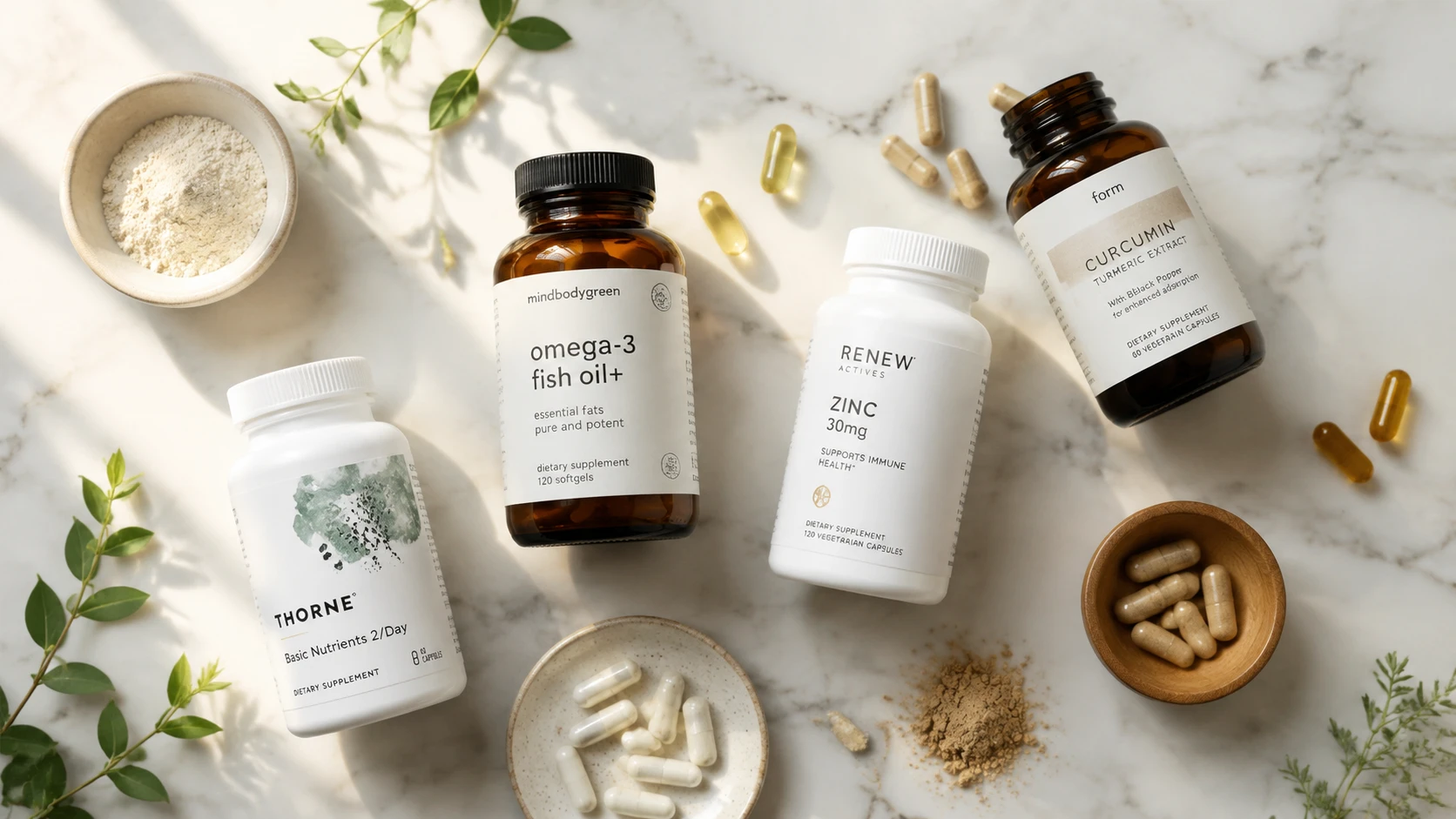
NMN is sold as a powder, in hard capsules, in softgels, in stick packs and sachets, and in effervescent tablets. Each form has trade-offs in stability, dose ceiling and cost.
NMN is hygroscopic and degrades in the presence of moisture and heat. Powder in a jar exposes the material to air every time it is opened. Capsules protect the fill but still let moisture through the shell over time. Stick packs and sachets are single-dose and seal well, which is why many brands use them for higher doses. Effervescent tablets dissolve fast and taste acceptable, but the compression step and the alkaline chemistry require careful stability work.
Vegetable blends behave differently. Water-soluble extracts and powdered whole vegetables are easy to blend into a powder or stick pack. They are harder to put into a softgel because the fill is oil-based. A softgel can carry an oil-soluble vegetable extract or a suspension, but not a full gram of dry powder.
| Form | Typical NMN dose per unit | Moisture protection | Practical note |
|---|---|---|---|
| Hard capsule | 125–500 mg | Moderate | Easy to combine with a veggie powder; multiple capsules needed for high doses |
| Softgel | Limited by fill volume | Good | Oil fill; suits oil-soluble extracts, not large dry powder loads |
| Powder jar | Flexible | Low after opening | Cost-efficient; requires a tight desiccant and a scoop |
| Stick pack / sachet | 250–1,000 mg | High | Single-dose, good for high-dose NMN plus a veggie blend |
| Effervescent tablet | 250–500 mg | High until opened | Needs stability testing; taste masking is the main challenge |
Dosing and specification ranges
Human trials have used oral NMN from roughly 100 mg to 1,250 mg per day, for up to 12 weeks in the published work. Doses in the 250–600 mg range reliably raise blood NAD+ in several trials. Higher doses have not shown proportional benefit in the endpoints measured so far.
For a vegetable blend, there is no standard dose. The practical range in commercial products is 500–3,000 mg of blended vegetable powder per day, driven by taste and by the extract ratio. A 10:1 extract at 200 mg is not the same as 2,000 mg of whole powder. Specify the extract ratio on the label or the CoA, not just the milligram weight.
For a pilot run, our factory can start softgels at 1,000–2,000 units. Most other forms start at 500 units per SKU (1,000 for capsules, tablets and softgels). Lead time is 4–6 weeks after formula and artwork approval, and sampling takes 7–10 days.
| Ingredient | Range seen in trials or common products | What to specify |
|---|---|---|
| NMN | 100–1,250 mg/day | Purity by HPLC, heavy metals, microbial limits, water content |
| Vegetable blend (powder) | 500–3,000 mg/day | Extract ratio, total polyphenols, pesticide screen |
| Vegetable blend (extract) | 100–500 mg/day | Extract ratio, carrier, residual solvents |
Who may benefit and who should be careful
The people most likely to consider NMN are adults over 40 who are already training, sleeping and eating well, and who want to test whether NAD+ support changes how they feel. That is a reasonable consumer profile. It is not a medical indication.
Be careful with pregnancy and breastfeeding, with active cancer treatment, and with any condition where you are taking prescription medication. NMN interacts with the same pathways as some chemotherapy agents in preclinical work. That is a reason for a clinician conversation, not a reason to self-prescribe.
People with kidney or liver disease should not add high-dose niacin-related compounds without advice. And anyone expecting a stimulant effect will be disappointed. NMN is not caffeine.
What the evidence actually shows
Here is the honest summary. NAD+ raising is well documented. Clinical outcome benefit is not yet established.
Several small randomized trials in adults have reported increases in blood NAD+ and modest changes in walking distance or insulin sensitivity. Sample sizes are small, durations are short, and some trials are industry-funded. A 2023 review of human NMN trials concluded that the data are promising but insufficient to support broad clinical claims. That is the state of the field.
For vegetable and polyphenol blends, the evidence is even thinner. Individual vegetables and polyphenols have observational associations with health outcomes. A blended supplement has not been shown in a controlled trial to extend lifespan or prevent disease. Anyone who tells you otherwise is selling, not explaining.
What we can say with confidence: NMN is well tolerated in the trials published so far, with no serious adverse events reported at doses up to 1,250 mg daily for 12 weeks. That is a safety signal, not a benefit claim.
Quality signals: reading a label and a CoA
A label tells you the dose per serving. A Certificate of Analysis tells you what was actually in the batch. Ask for the CoA before you place an order, and read these items.
Look for assay by HPLC with a specified method, not a vague "purity" figure. Look for heavy metals (lead, arsenic, cadmium, mercury), microbial limits, and water content. For NMN, water content matters because moisture drives degradation. For vegetable powders, ask for a pesticide screen and a total polyphenol figure.
Check the legal entity behind the brand. ZOOMSHEAL is the export brand of Zhongci Health Products Technology Development Co., Ltd. in Huadu District, Guangzhou. We hold GMP certification audited by Intertek, ISO 9001:2015, ISO 22000:2018, HACCP, an NSF audit, and line-specific Halal certification. We are registered with the FDA as a facility through a US agent. That registration is not FDA approval, and no supplement has pre-market approval in the US. Every batch ships with a CoA.
| Test | What it catches | Why it matters for NMN |
|---|---|---|
| Assay by HPLC | Underdosed or degraded material | Confirms the label claim |
| Water content (Karl Fischer) | Moisture pickup | NMN degrades with moisture |
| Heavy metals | Contamination from raw material | Required for any supplement batch |
| Microbial limits | Poor hygiene or handling | Standard release test |
| Pesticide screen | Residues in vegetable powders | Relevant to any botanical blend |
Common mistakes
Mistake one: buying on dose alone. A 1,000 mg claim means nothing if the assay is 70% or the water content is high. Mistake two: assuming a veggie blend raises NAD+. It does not. It may reduce the drain on NAD+, which is a different claim.
Mistake three: ignoring the form. A powder jar left open in a humid kitchen loses potency faster than a sealed stick pack. Mistake four: treating a CoA as optional. It is the only document that ties a specific batch to a specific test result.
Mistake five: confusing FDA facility registration with approval. They are not the same, and the distinction is legal, not semantic.
How this is manufactured at scale
NMN arrives as a raw material and is tested on receipt. We blend it with excipients in a controlled humidity room, because moisture is the main enemy. For capsules, the blend goes into a capsule filler and the shells are sealed. For stick packs, the powder goes into a sachet line with a desiccant where needed. For softgels, the NMN is suspended in an oil carrier and encapsulated.
Vegetable blends are blended separately and tested for pesticides and microbial load before they meet the NMN. Finished batches are tested again, and the CoA is issued against the batch number. That is the whole process. It is not glamorous, and that is the point.
A practical checklist before you order
Ask for the CoA for the exact batch you will receive. Confirm the assay method. Confirm water content for NMN. Confirm pesticide screening for any vegetable powder. Confirm the extract ratio on the label. Confirm the legal manufacturer and the facility registrations. Confirm the MOQ and the lead time in writing. Confirm the stability data for the form you chose. Confirm who holds the label claim if a test fails.
If a supplier cannot answer these in writing, the price is not the issue. The process is.
Frequently asked questions
Does NMN actually raise NAD+ in humans?
Yes, in the trials published so far. Oral NMN at doses from about 250 mg to 1,250 mg daily has raised blood NAD+ in several small randomized trials in healthy adults. The increases are measurable and consistent across studies. What is not yet established is whether that rise produces meaningful clinical outcomes over years. The NAD+ rise is the reliable finding. The rest is still being tested.
Is NMN the same as nicotinamide riboside?
No. Both are NAD+ precursors, but they are different molecules with different absorption and metabolism. NR has its own trial base. NMN has its own. Some researchers argue both converge on the same pathway in the gut. Others show differences in tissue distribution. If you are comparing products, compare the trial data for each molecule separately, not as a class.
Can a vegetable blend replace NMN?
No. Vegetables do not contain meaningful NMN. A vegetable blend supplies polyphenols, fiber and vitamins. Those may reduce oxidative stress, which is one route by which NAD+ is consumed. That is support, not replacement. If your goal is to raise NAD+, the vegetable blend is not the tool. If your goal is a broader nutritional base, it can be part of the formula.
What dose of NMN should a supplement contain?
Trials have used 100 mg to 1,250 mg daily. The 250–600 mg range is the most common in studies that showed a NAD+ rise. Higher doses have not shown proportional benefit in the endpoints measured. For a commercial product, 250–500 mg per serving is a defensible label claim. Above that, confirm the stability data for the form you choose.
How do I read an NMN Certificate of Analysis?
Start with the batch number and the date. Then read the assay result and the method. HPLC is the standard. Check water content, heavy metals and microbial limits. For a vegetable blend, check the pesticide screen. A CoA without a method is a marketing document. A CoA with a method and a batch number is a release document. Ask which one you have been sent.
Is NMN FDA approved?
No. The FDA does not approve dietary supplements. There is no pre-market approval pathway for supplements in the US. A facility can be registered with the FDA, and ZOOMSHEAL's factory is registered through a US agent. That registration is not an approval of any product or any claim. Any label or page that says "FDA approved" for a supplement is making a false statement.
What is the minimum order for an NMN and veggie blend?
At our factory, most forms start at 500 units per SKU (1,000 for capsules, tablets and softgels). Softgels can start at 1,000–2,000 units for a pilot. Lead time is 4–6 weeks after formula and artwork approval. Sampling takes 7–10 days. Those numbers apply to the forms we run in-house: capsules, softgels, tablets, gummies, powders, stick packs, liquid drops and effervescent tablets.
Does NMN have side effects?
In the published trials, NMN was well tolerated at doses up to 1,250 mg daily for 12 weeks, with no serious adverse events reported. That is a short window. Long-term data do not exist yet. If you are pregnant, breastfeeding, being treated for cancer, or taking prescription medication, talk to a clinician before adding NMN. This article is education, not medical advice.
References
- NIH Office of Dietary Supplements — Niacin fact sheet
- PubMed search — NMN human randomized trials
- PubMed search — NAD+ decline and aging
- PMC search — NMN pharmacokinetics
- FDA — Dietary Supplements
- EFSA — Novel food
- WHO — Healthy diet fact sheet
- PubMed search — polyphenols and oxidative stress
Reviewed by Dr. Xu Wei, PhD, formulation scientist at ZOOMSHEAL in Guangzhou (23 years of supplement contract manufacturing). Last updated: November 2026. This article is for education and does not replace medical advice.