

Even those who prioritize a balanced diet may struggle to consistently meet their daily vitamin needs due to irregular eating habits, consumption of processed foods, limited access to fresh ingredients, and changing dietary preferences. Therefore, vitamin supplements are becoming increasingly popular as a practical and reliable way to promote overall health and fill nutritional gaps.
Today, vitamin supplements are no longer just for replenishing vitamins; they are widely used in broader health strategies. Consumers are no longer simply looking to "get enough vitamins," but seeking targeted support to enhance energy, immunity, bone strength, cognitive function, and even improve skin health. This shift is driving rapid growth in the dietary supplement industry, with increasingly advanced formulations designed to improve absorption, enhance bioavailability, and provide more consistent results.
The market is flooded with health supplements, making it difficult to know where to begin. Different types of vitamins, chemical forms, dosages, and delivery methods all affect the effectiveness of supplements in the body. Understanding these differences is crucial—not only for consumers looking to make informed health choices, but also for companies and brands committed to developing high-quality, competitive health supplements.
This article provides a comprehensive overview of vitamin supplements, exploring their mechanisms of action, different types, physiological effects, and how to choose the right formula based on individual needs. Combining scientific insights and practical applications, the article offers a clearer framework for understanding the role of vitamin supplements in modern health and nutrition.
What are vitamin supplements? Why are they important?
Vitamin supplements are concentrated forms of essential nutrients designed to complement a daily diet. Unlike medications that target specific diseases, vitamin supplements are designed to support normal physiological functions, including energy metabolism, immune defense, and skin, bone, and cardiovascular health. Supplements come in various forms, including tablets, capsules, softgels, powders, and gummies, to meet different preferences, lifestyles, and dosage needs.
The effectiveness of any vitamin supplement depends on a number of factors: the chemical form of the vitamin, its bioavailability, dosage, and individual absorption efficiency. High-quality supplements manufactured according to Good Manufacturing Practices (GMP) ensure product safety, stable ingredients, and the amount of active nutrients indicated on the label.
What are vitamin supplements? Why are they so important?
Vitamin supplements are concentrated forms of essential nutrients designed to complement a daily diet. Unlike medications that target specific diseases, vitamin supplements are designed to support normal physiological functions, including energy metabolism, immune defense, and skin, bone, and cardiovascular health. Supplements come in various forms, including tablets, capsules, softgels, powders, and gummies, to meet different preferences, lifestyles, and dosage needs.
The efficacy of any vitamin supplement depends on a number of factors: the chemical form of the vitamin, its bioavailability, dosage, and individual absorption efficiency. High-quality supplements manufactured according to Good Manufacturing Practices (GMP)ensure product safety, stable ingredients, and the amount of active nutrients stated on the label.
Fat-soluble vitamins and water-soluble vitamins
Vitamins can be broadly classified into fat-soluble vitaminsand water-solublevitamins, which affects how the human body absorbs, stores, and utilizes them.
Fat-soluble vitamins(A, D, E, K)
These vitamins are fat-soluble and stored in the liver and adipose tissue for easy absorption and utilization by the body. Fat-soluble vitamins require dietary fat for optimal absorption; excessive intake, if not controlled, can lead to toxicity. For example, high doses of vitamin A can cause poisoning, while excessive vitamin D can affect calcium balance and kidney function.
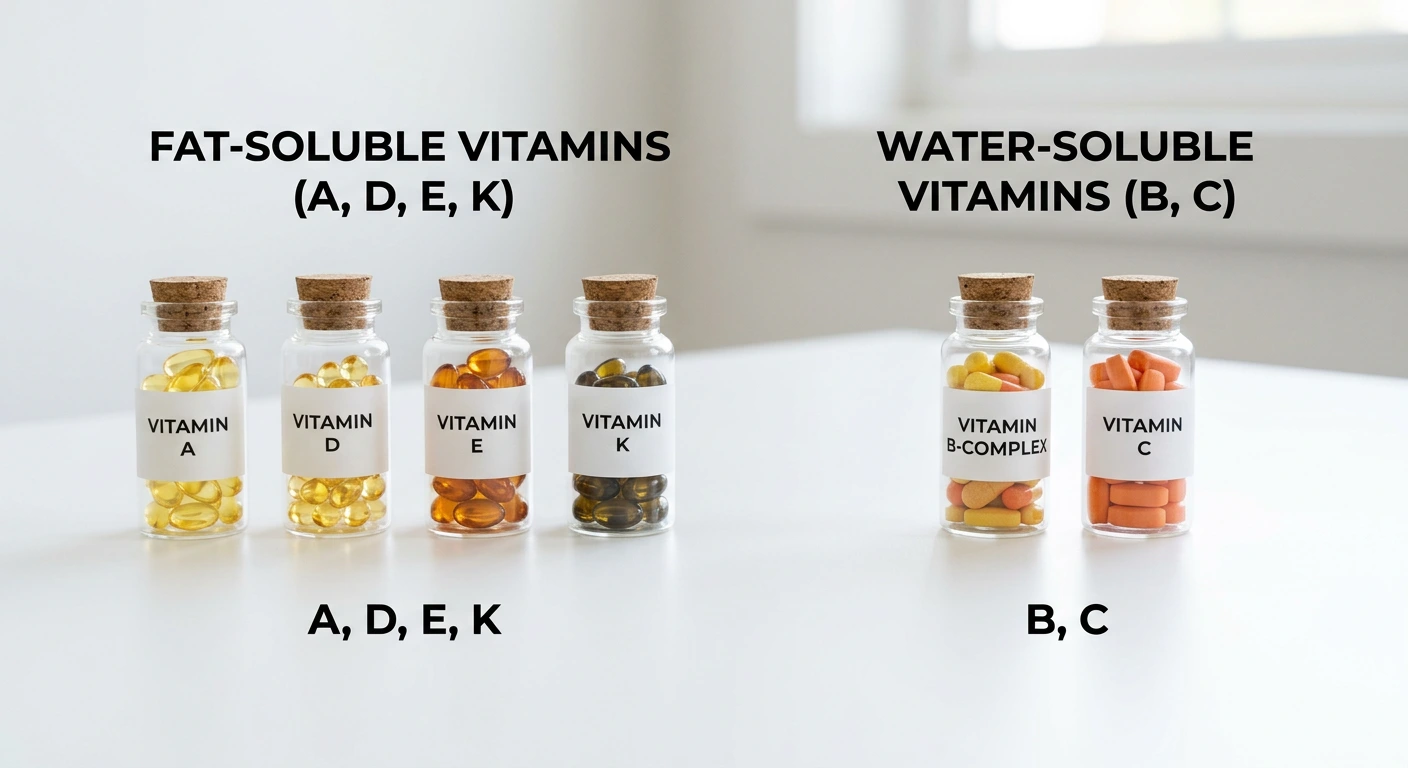
Water-soluble vitamins(vitamin C and B vitamins)
Water-soluble vitamins are water-soluble and do not accumulate in the body. Excess amounts are usually excreted in urine, so poisoning is unlikely. However, insufficient intake can quickly lead to deficiency symptoms. To maintain stable levels of water-soluble vitamins in the body, daily intake is generally necessary, especially for B vitamins, which are crucial for energy metabolism, nervous system function, and red blood cell production.
Key vitamins and their specific benefits
Vitamin A plays a vital role in vision, immune function, and skin health. In supplements, vitamin A can be present as pre-formed retinol or beta-carotene.
It exists in the form of beta -carotene. Beta-carotene is a provitamin that the body can convert into active vitamin A. Retinol is typically used for specific purposes, while beta-carotene is safer to take at higher doses because its conversion process is regulated. Regular vitamin A supplementation, especially during winter or periods of high susceptibility to infections, can be beneficial for people who do not consume enough colorful fruits and vegetables in their diet, or for those who need to boost their immunity.
Vitamin D
VitaminD is essential for calcium absorption, bone strength, and immune system regulation. It exists in the forms of vitamin D2 (ergocalciferol)and vitamin D3 (cholecalciferol), with vitamin D3 generally considered more effective in raising and maintaining serum vitamin D levels. Many adults, especially those with insufficient sunlight exposure or the elderly, are at risk of vitamin D deficiency. Vitamin D supplementation contributes to bone health, muscle function, and may even improve mood and energy regulation.
Vitamin E
Primarily acting as a fat-soluble antioxidant, vitamin E protects cell membranes from oxidative damage caused by free radicals. Supplements typically provide d-α-tocopherol(natural) or dl-α-tocopherol(synthetic). Vitamin E supplementation is particularly beneficial for cardiovascular health, skin protection, and reducing oxidative stress in active individuals or older adults.
Vitamins
Vitamin K is essential for blood clotting and bone metabolism. It exists in two forms: vitamin K1 (phylloquinone), found in leafy green vegetables, and vitamin K2 (menaquinone),typically derived from fermented foods. Vitamin K supplements, especially vitamin K2, are often taken with calcium and vitamin D to optimize bone density and cardiovascular health, particularly in older adults.
Vitamins
Vitamin C, also known as ascorbic acid, is a well-known antioxidant that supports immune function, collagen synthesis, and skin health. It exists in various forms, such as ascorbic acid, sodium ascorbate, or buffered vitamin C, and has high bioavailability. Vitamin C supplementation can reduce oxidative stress, enhance immunity, and promote connective tissue health, and is therefore widely used for disease prevention and daily health maintenance.
B vitamins
B vitamins work together to support energy production, nervous system health, and red blood cell production. The main vitamins include:
- Vitamin B1 (thiamine):converts carbohydrates into energy.
- Vitamin B2 (riboflavin):Supports cellular energy production and skin health.
- Vitamin B3 (niacin):helps maintain healthy cholesterol levels and cardiovascular function.
- B5 (pantothenic acid):essential for the production and metabolism of coenzyme A.
- Vitamin B6 (pyridoxine):involved in neurotransmitter synthesis and immune regulation.
- B7 (Biotin):Helps with the health of hair, skin, and nails.
- B9 (folic acid):essential for DNA synthesis and pregnancy support.
- Vitamin B12 (cobalamin):essential for red blood cell formation, nerve health, and homocysteine regulation.
B vitamin supplements typically combine all these vitamins to provide comprehensive metabolic and cognitive support, making them especially suitable for vegetarians, older adults, or people with high physical or cognitive needs.

Why do people take vitamin supplements?
Even with a balanced diet, modern lifestyles and health conditions can lead to insufficient nutrient intake:
- Dietary restrictions:Vegetarian, vegan, allergen-free, or low-calorie diets may lack certain vitamins, such as B12 or D.
- Aging:Older adults may have a decreased ability to absorb nutrients, especially vitamin B12 and vitamin D.
- Lifestyle factors:Busy schedules, scarcity of fresh produce, and high-intensity physical activity can all increase nutritional needs.
- Health conditions:Gastrointestinal diseases, chronic diseases, or medications can affect vitamin absorption or increase vitamin requirements.
Vitamin supplements are a practical and reliable way to fill these gaps, meet specific health needs, and ensure overall health.
How to choose the right vitamin supplement: What really matters?
When choosing vitamin supplements, consumers often focus primarily on the label—how many milligrams each bottle contains, how many vitamins, and how many benefits it offers. However, choosing an effective supplement is less about dosage and more about the dosage form, absorption rate, formulation rationality, and manufacturing quality.
The chemical form of vitaminsis one of the most easily overlooked factors . Not all forms of vitamins function the same way after entering the body. For example, vitamin B12 can exist in the form of cyanocobalamin or methylcobalamin. While both provide vitamin B12, methylcobalamin is already the active form that the body can directly utilize, which may be more beneficial to people with weaker conversion abilities. Similarly, folic acid can exist in the form of folic acid or methylfolic acid, the latter having higher biological activity in some individuals.
This distinction has become especially important in the modern nutritional supplement industry, as consumers are increasingly aware that "not all vitamins are the same," even if the labels look similar.
Another critical aspect is bioavailability . A supplement may contain a high dose, but if the body cannot absorb it efficiently, much of it will be wasted. This is why advanced formulations often combine vitamins with supportive compounds. For example, fat-soluble vitamins like A, D, E, and K are better absorbed when taken with dietary fats, while some formulations include oils or emulsifiers to enhance uptake.
From a product development perspective, this is where supplement manufacturers can differentiate themselves—not by adding more ingredients, but by designing formulas that actually work in the body.
Dosage, Balance, and the Risk of Over-Supplementation
There is a common misconception that more vitamins always mean better results. In reality, vitamin supplementation is about balance, not excess .
Water-soluble vitamins such as vitamin C and B-complex are generally excreted when consumed in excess, but this does not mean unlimited intake is beneficial. Extremely high doses can still lead to digestive discomfort or metabolic imbalance. On the other hand, fat-soluble vitamins accumulate in the body, which means long-term excessive intake may pose risks.
For example:
- Too much vitamin D over time may disrupt calcium balance
- Excess vitamin A can lead to toxicity symptoms
- High doses of certain B vitamins may cause nerve-related issues in rare cases
This is why well-designed supplements focus on appropriate daily ranges , often aligned with recommended dietary allowances (RDA) or slightly above them for functional support.
From a practical standpoint, consumers benefit more from consistent, moderate supplementation rather than short-term high-dose use. This approach supports long-term health without placing unnecessary stress on the body.
Matching Vitamin Supplements to Different Needs
Not all consumers take vitamin supplements for the same reason, and this is where content like yours can really capture search traffic—by aligning vitamins with real-life needs rather than abstract nutrition theory.
For individuals dealing with low energy or fatigue , B-complex vitamins, particularly B12 and B6, are often relevant because they support energy metabolism and red blood cell production. Magnesium and iron may also play a role depending on the underlying cause.
For those focused on immune support , vitamin C, vitamin D, and zinc are commonly discussed together. While each plays a different role, they collectively support immune cell function, antioxidant defense, and inflammatory balance.
In the context of bone and joint health , vitamin D, vitamin K2, and calcium are often combined. This is not just a marketing concept—it reflects how these nutrients interact physiologically. Vitamin D enhances calcium absorption, while vitamin K2 helps direct calcium to bones rather than soft tissues.
For skin, hair, and beauty-related goals , biotin, vitamin E, and vitamin C are frequently included in formulations. Vitamin C supports collagen synthesis, vitamin E provides antioxidant protection, and biotin contributes to keratin structure.
These combinations are not random—they reflect a growing trend in supplementation toward targeted, condition-based formulations , which is also highly relevant for B2B supplement manufacturers developing custom products.
The Role of Manufacturing Quality in Vitamin Supplements
From a consumer perspective, supplements may look similar on the surface. However, behind the label, there can be significant differences in how products are made.
High-quality vitamin supplements begin with careful ingredient sourcing . Raw materials must be tested for purity, potency, and safety before they are used in production. This is especially important for vitamins that are sensitive to environmental conditions, such as heat, light, and moisture.
The formulation stage is equally critical. Certain vitamins can degrade over time or interact with other ingredients. For example, vitamin C is sensitive to oxidation, and some B vitamins may lose potency if not stabilized properly. Manufacturers must account for these factors to ensure the product remains effective throughout its shelf life.
Production under Good Manufacturing Practices (GMP) helps ensure consistency, traceability, and safety. This includes controlled environments, standardized procedures, and multiple layers of quality testing.
For businesses sourcing supplements, manufacturing quality is not just a technical detail—it directly affects product credibility, customer trust, and long-term brand value .
Practical Tips for Using Vitamin Supplements Effectively
While formulation and quality are important, how supplements are used in daily life also makes a difference.
Taking vitamins at the right time can improve their effectiveness. Fat-soluble vitamins are generally better absorbed with meals that contain some fat, while water-soluble vitamins can often be taken on an empty stomach, depending on tolerance.
Consistency is another key factor. Vitamins do not typically produce immediate effects; their benefits accumulate over time. Regular daily use is more effective than sporadic intake.
It is also important to avoid unnecessary duplication. Many consumers take multiple supplements without realizing that they may overlap in ingredients, leading to excessive intake of certain vitamins.
A more effective strategy is to use well-designed, balanced formulasto achieve specific health goals, rather than mixing too many single products together.
Final words
Vitamin supplements have long transcended the realm of simple nutritional supplementation. Today, they represent a clever fusion of science, formulation technology, and personalized health needs.
Understanding the differences between various types of vitamins, their absorption mechanisms, and their interactions within the body helps consumers make more informed choices. This also highlights the importance of high-quality manufacturing and careful formulation for delivering effective products.
For individuals, the goal is not to replace a healthy diet, but to strategically supplementit to ensure a continuous intake of essential nutrients to support overall health.
For companies in the health supplement industry, this growing awareness presents an opportunity—not only to sell products, but also to provide scientifically based, carefully formulated solutions that meet consumers' actual needs.