
1. Collagen Industry Overview
Collagen is the most abundant protein in the human body and one of the fastest-growing segments in the dietary supplement industry. The global collagen market was valued at approximately $6.8 billion in 2024 and is projected to reach $12.4 billion by 2032, growing at a CAGR of 7.8%.
Key market drivers:
- Beauty-from-within trend: Collagen peptides for skin, hair, and nail health are the largest product segment, accounting for approximately 40% of market revenue
- Aging population: Joint health and mobility supplements (Type II collagen) are growing at 9%+ annually
- Sports nutrition: Collagen protein for muscle recovery and tendon health is an emerging category
- Functional food & beverage: Collagen-infused coffee, protein bars, and ready-to-drink beverages are rapidly expanding
- Pet supplements: Collagen for joint and skin health in dogs and cats is a growing niche
Regional breakdown:
- Asia-Pacific: 38% of global production (dominant in raw material supply and manufacturing)
- North America: 30% of consumption (largest end-user market)
- Europe: 22% of consumption (strictest regulatory requirements)
- Rest of World: 10% (fastest-growing region)
For collagen manufacturers, these trends translate to increasing demand for capacity, especially for low-molecular-weight hydrolyzed collagen, marine collagen, and custom peptide blends.
2. What Is Collagen? Types, Sources & Applications
2.1 Collagen Types and Their Functions
There are at least 28 known types of collagen in the human body, but only 5 are commercially significant for supplement manufacturing:
| Type | Primary Source | Molecular Structure | Primary Benefit | Typical Application |
|---|---|---|---|---|
| Type I | Bovine hide, fish skin, fish scales | Fibrillar (dense, strong fibers) | Skin health, anti-aging, bone strength | Beauty supplements, skin health powders |
| Type II | Chicken sternum, bovine cartilage | Fibrillar (thinner, more elastic) | Joint health, cartilage support | Joint health supplements, arthritis support |
| Type III | Bovine hide, fish skin | Fibrillar (co-occurs with Type I) | Skin elasticity, blood vessel support | Typically blended with Type I |
| Type V | Bovine, eggshell membrane | Non-fibrillar | Hair growth, placental health | Multi-collagen blends, hair supplements |
| Type X | Bovine cartilage | Network-forming | Bone formation, growth plate support | Bone health, growth supplements |
Most collagen supplements on the market are one of three formats:
- Hydrolyzed Collagen Peptides (Type I & III): The most common format. Enzymatically broken down into small peptides for high solubility and absorption.
- Multi-Collagen (Types I, II, III, V, X): A blend designed for comprehensive benefits across skin, joints, bones, and hair.
- Native Type II Collagen (UC-II): Undenatured Type II collagen, typically sourced from chicken sternum, used for joint health. Requires special low-temperature processing.
2.2 Amino Acid Profile of Collagen
Collagen has a unique amino acid profile that distinguishes it from other proteins:
| Amino Acid | Function | % in Bovine Collagen | % in Marine Collagen |
|---|---|---|---|
| Glycine | Core structural amino acid; supports sleep, detoxification | ~33% | ~28% |
| Proline | Collagen synthesis, skin hydration | ~12% | ~10% |
| Hydroxyproline | Unique to collagen; biomarker for collagen content | ~10% | ~8% |
| Glutamic acid | Precursor to glutathione; antioxidant support | ~8% | ~9% |
| Arginine | Nitric oxide production, blood flow | ~7% | ~9% |
| Alanine | Energy metabolism | ~6% | ~8% |
| Other amino acids | Various | ~24% | ~28% |
3. Raw Material Sourcing & Quality
3.1 Bovine Collagen Sources
The majority of the world's collagen comes from bovine (cattle) hides:
- Primary sourcing regions: South America (Brazil, Argentina), India, Europe (Germany, France), United States
- Preferred material: Split hides (the inner layer of cowhide) — higher collagen content, lower fat
- By-product of the leather industry: Most bovine collagen is a sustainable by-product; the hides would otherwise go to waste
- Critical requirement: Animals must be free from BSE/TSE (Bovine Spongiform Encephalopathy). Reputable collagen manufacturers only source from BSE-free countries with full traceability
3.2 Marine Collagen Sources
Marine collagen is derived from fish processing by-products:
- Primary sourcing regions: Southeast Asia (Vietnam, Thailand, Indonesia), Europe (Norway, Iceland), South America (Chile, Peru)
- Fish species: Cod, salmon, tilapia, snapper, seabass, mackerel, tuna
- Preferred material: Fish skin (higher collagen content, lighter color, lower odor) and fish scales
- Sustainability: Marine collagen is typically a by-product of the fishing/fillet industry, reducing waste
- Advantage: No religious restrictions (halal, Hindu-compatible); lower molecular weight possibilities
- Disadvantage: Higher cost; potential fishy odor if not processed correctly; lower gel strength
3.3 Other Collagen Sources
- Chicken collagen: Sourced from chicken sternum cartilage (Type II). Used for joint health products.
- Pork collagen: Sourced from pig skin. High yield, low cost, but limited by religious restrictions (not halal).
- Eggshell membrane collagen: Contains Types I, V, and X. Premium source with additional joint-supporting compounds.
3.4 Raw Material Quality Specifications
| Parameter | Bovine Hide | Fish Skin | Fish Scales | Test Method |
|---|---|---|---|---|
| Protein content (dry basis) | ≥85% | ≥80% | ≥75% | Kjeldahl |
| Fat content | ≤3% | ≤5% | ≤2% | Soxhlet extraction |
| Moisture content | ≤12% | ≤10% | ≤12% | Loss on drying |
| Ash content | ≤2% | ≤3% | ≤5% | Furnace 550°C |
| Heavy metals | ≤10 ppm total | ≤5 ppm total | ≤10 ppm total | ICP-MS |
4. The Complete Collagen Manufacturing Process
Understanding how is collagen manufactured requires examining the 10-stage process from raw material arrival to finished powder.
Stage 1: Raw Material Inspection & Preparation
Process:
- Raw materials arrive frozen, chilled, or dried, depending on source and shipping distance
- Incoming QC: Visual inspection, microbial swabbing, temperature verification, documentation review (country of origin, BSE-free certificate)
- Raw materials are washed thoroughly in potable water to remove blood, dirt, and surface contaminants
- Cutting and grinding: Hides are cut into 5-10 cm pieces; fish skins are de-scaled if needed
- Grading: Materials are sorted by quality; premium grades are separated for higher-value products
Stage 2: Pre-Treatment (Demineralization & Degreasing)
Purpose: Remove non-collagenous materials (minerals, fats, other proteins) to prepare clean collagen for extraction.
Alkaline Treatment:
- Material is soaked in sodium hydroxide (NaOH) solution at 0.5-2% concentration for 12-48 hours
- pH: 12-13
- Temperature: 15-25°C (low temperature to prevent collagen degradation)
- Purpose: Swell the tissue, dissolve non-collagen proteins, destroy pathogens
- Rinsing: Multiple washes with clean water until pH returns to neutral (typically 6-8 washes over 8-24 hours)
Acid Treatment:
- Material is soaked in hydrochloric acid (HCl) or phosphoric acid (H3PO4) at 0.5-3% concentration for 12-24 hours
- pH: 2-4
- Purpose: Remove calcium and other minerals; further swell the tissue for easier enzymatic access
- Rinsing: Multiple washes to return pH to 4-6
Degreasing (for fish skin):
- Enzymatic or solvent-based degreasing to reduce fat content below 3%
- High-fat content causes off-odors, reduced solubility, and stability issues in finished product
Stage 3: Extraction (Enzymatic Hydrolysis)
This is the most critical stage of collagen manufacturing, where raw collagen is broken down into absorbable peptides.
The hydrolysis process:
-
Reactor Setup: Pre-treated material is transferred to a stainless steel hydrolysis reactor with heating jacket, agitator, and pH control system. Material-to-water ratio is typically 1:3 to 1:5.
-
Temperature Adjustment: The mixture is heated to the optimal enzyme working temperature:
- Protease type: Alcalase, Neutrase, Protamex, Flavourzyme (Novozymes) or equivalent food-grade enzymes
- Temperature: 50-60°C — varies by enzyme type
- pH: 6.0-8.5 — varies by enzyme type (buffer may be added)
-
Enzyme Addition: Enzyme is added at 0.5-2% of substrate weight (wet basis). The enzyme-to-substrate ratio determines hydrolysis speed and final molecular weight.
-
Hydrolysis Reaction: The reaction proceeds for 2-12 hours depending on:
- Desired molecular weight (shorter time = higher molecular weight)
- Raw material type (fish hydrolyzes faster than bovine)
- Enzyme concentration and activity
- Temperature and pH control accuracy
-
Monitoring: Degree of hydrolysis (DH) is monitored by measuring the increase in free amino groups (OPA method or pH-stat method). Target DH depends on desired product specifications.
-
Enzyme Inactivation: At the target DH, the enzyme is deactivated by heating to 85-95°C for 10-20 minutes. This step is critical: residual enzyme activity will continue to break down collagen during storage, resulting in inconsistent product quality.
Key parameters summary:
| Parameter | Range | Impact on Product |
|---|---|---|
| Hydrolysis temperature | 50-60°C | Higher temp = faster reaction but risk of thermal degradation above 65°C |
| Enzyme concentration | 0.5-2% | Higher enzyme = faster hydrolysis = lower molecular weight |
| Reaction time | 2-12 hours | Longer time = lower molecular weight |
| pH | 6.0-8.5 | Enzyme-specific optimum; deviation reduces activity |
| Degree of hydrolysis | 10-30% | Higher DH = shorter peptides = higher solubility |
Stage 4: Enzyme Inactivation & Cooling
- Temperature is raised to 85-95°C for 10-20 minutes to denature all enzymes
- The solution is then cooled rapidly to 30-40°C using a plate heat exchanger or cooling jacket
- Rapid cooling prevents thermal degradation of the collagen peptides
Stage 5: Filtration & Purification
Multiple filtration stages remove insoluble particles, fat, color bodies, and potential contaminants:
Primary Filtration:
- Vibrating screen filter (50-200 mesh) or decanter centrifuge
- Removes large insoluble particles (undigested tissue, bone fragments)
Activated Carbon Treatment:
- Activated carbon (0.5-2% w/v) is added to the warm collagen solution
- Contact time: 30-60 minutes with gentle agitation
- Removes color bodies, off-odors, and bitter-tasting peptides
- Carbon is removed by filtration (plate and frame filter or bag filter)
Fine Filtration:
- Depth filtration (10-50 micron) followed by fine filtration (1-5 micron)
- Removes residual carbon particles and fine sediment
Ultrafiltration (Optional — Premium Products):
- Membrane filtration with controlled molecular weight cutoff (MWCO)
- Typical MWCO: 1-10 kDa
- Allows precise targeting of peptide size distribution
- Also concentrates the solution simultaneously
- Disadvantage: Significant yield loss (20-40%), higher cost
Stage 6: Concentration
The filtered collagen solution is typically 3-8% solids. Concentration is required before drying:
- Method: Vacuum evaporation at 50-65°C, 25-30 inHg vacuum
- Target solids content: 30-45%
- Equipment: Falling film evaporator, rising film evaporator, or scraped surface evaporator
- Low-temperature operation preserves peptide integrity and prevents Maillard browning
Stage 7: Sterilization (Optional — Pharmaceutical Grade)
For pharmaceutical-grade collagen products, sterilization is required:
- Heat sterilization (UHT): 135-145°C for 3-5 seconds (flash heating to minimize degradation)
- Filtration sterilization: Passing through 0.2-micron sterile filters (does not affect peptide structure)
- Irradiation: Gamma or electron beam (less common due to potential peptide damage)
Stage 8: Drying
Drying is the most energy-intensive stage and significantly affects product quality:
Spray Drying (85-90% of production):
- Equipment: Spray dryer with centrifugal or nozzle atomizer
- Process: Concentrated collagen solution is atomized into fine droplets in a hot air chamber
- Inlet temperature: 160-200°C
- Outlet temperature: 70-90°C
- Residence time: 5-30 seconds
- Result: Fine powder with uniform particle size (typically 50-200 microns)
- Advantages: High throughput, consistent quality, good solubility
- Disadvantages: High energy cost; potential for thermal degradation if outlet temperature is not controlled
Freeze Drying (Lyophilization — Premium/Specialty):
- Equipment: Freeze dryer with vacuum chamber
- Process: Collagen solution is frozen (-30 to -50°C), then water is sublimated under vacuum
- Duration: 24-72 hours
- Result: Spongy, highly porous product that is easily milled
- Advantages: Best preservation of peptide structure; superior solubility; no thermal degradation
- Disadvantages: High cost (3-5x spray drying); low throughput; batch process
- Used for: Bioactive collagen peptides, clinical research materials, premium cosmetic ingredients
Vacuum Drying (Less Common):
- Used for specialized applications or smaller batch sizes
- Lower cost than freeze drying but slower than spray drying
Stage 9: Milling, Blending & Sieving
- Dried collagen is milled to specified particle size using a hammer mill, pin mill, or jet mill
- Particle size options:
- Standard: 20-40 mesh (200-850 microns) — best solubility
- Fine: 60-80 mesh (180-250 microns) — for smooth texture
- Micro-fine: 100+ mesh (<150 microns) — for beverages, dissolves instantly
- Sieving through vibratory screens ensures uniform particle size
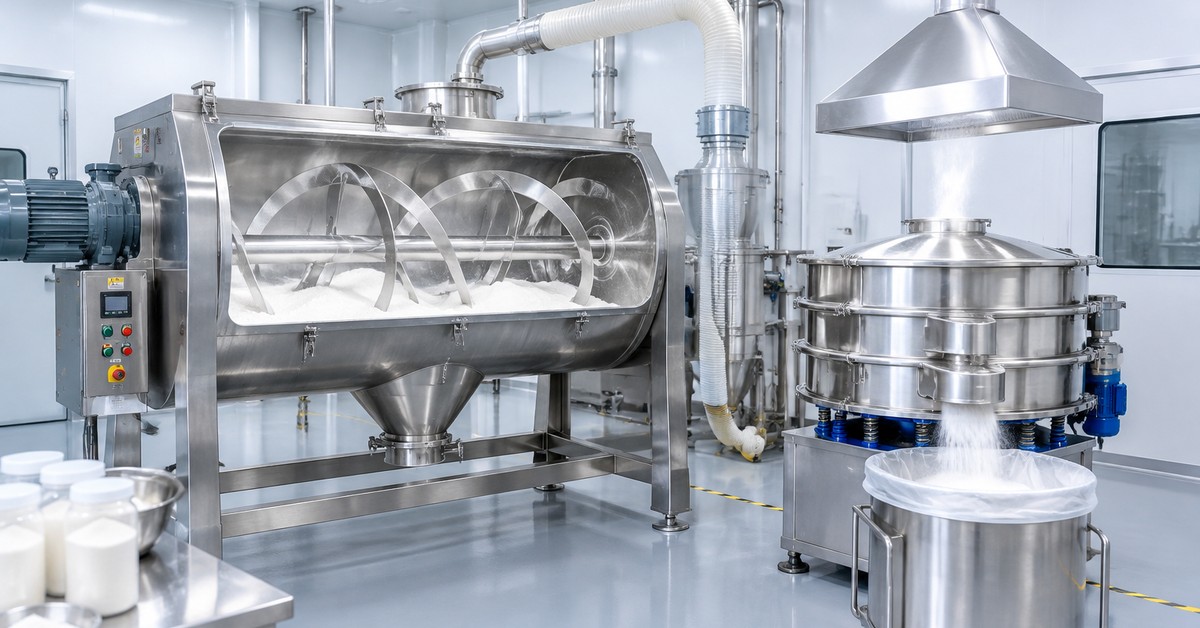
- Blending: Multiple batches are blended in a V-blender or ribbon blender to ensure lot-to-lot consistency
- Optional: Agglomeration (instantizing) for better dispersion in cold liquids
Stage 10: Quality Testing & Packaging
Before packaging, every batch undergoes release testing:
| Test | Specification | Method |
|---|---|---|
| Protein content | ≥90% (bovine), ≥85% (marine) | Kjeldahl / Dumas combustion |
| Moisture | ≤7% | Loss on drying at 105°C |
| Solubility (cold water) | ≥98% | Visual dissolution, 20°C, 5 min |
| pH (1% solution) | 5.0-7.0 | pH meter |
| Molecular weight distribution | Per specification | SDS-PAGE / HPLC-SEC |
| Heavy metals | Pb ≤0.5 ppm, As ≤1.0 ppm, Hg ≤0.1 ppm, Cd ≤0.5 ppm | ICP-MS |
| TAMC (total aerobic microbial count) | ≤1000 CFU/g | USP <61> |
| TYMC (total yeast & mold) | ≤100 CFU/g | USP <61> |
| Salmonella | Absent in 25g | USP <62> |
| E. coli | Absent in 10g | USP <62> |
| S. aureus | Absent in 10g | USP <62> |
| Organoleptic | White to off-white powder, neutral to mild characteristic odor | Sensory evaluation |
Packaging options:
- Bulk: Multi-layer aluminum foil bags (5-25 kg) with nitrogen flushing, sealed in HDPE pails or fiber drums
- Industrial: Super sacks (500-1000 kg) for large-scale food manufacturing
- Retail: Resealable stand-up pouches, jars, or single-serve sachets
- Shelf life: 24-36 months when stored below 25°C, below 60% RH, away from direct sunlight and strong odors
5. Molecular Weight & Why It Matters
Molecular weight is the single most important quality parameter in collagen manufacturing. It directly affects absorption, functionality, and price.
Molecular Weight Ranges
| Category | Molecular Weight | Characteristics | Typical Price Premium |
|---|---|---|---|
| Gelatin | 50,000-300,000 Da | Forms gels when cooled; limited cold-water solubility; used in food (gummies, marshmallows) | Base |
| Standard collagen peptides | 3,000-10,000 Da (3-10 kDa) | Good cold-water solubility; most common in supplements | +20% |
| Low molecular weight peptides | 1,000-3,000 Da (1-3 kDa) | Excellent cold-water solubility; faster absorption; less gelation | +50% |
| Ultra-low / bioactive peptides | 500-1,000 Da (0.5-1 kDa) | Rapid absorption; highest bioavailability; targeted bioactivity claims | +100%+ |
How Molecular Weight Affects Absorption
Research shows that collagen peptides with molecular weights below 3,000 Da are absorbed significantly better:
- Peptides <3,000 Da can pass directly through the intestinal wall into the bloodstream (di- and tri-peptides via PepT1 transporter)
- Peptides >10,000 Da require further digestion in the gut before absorption
- Lower MW = higher peak plasma concentration of hydroxyproline-containing peptides (the biomarker for collagen absorption)
- Higher MW = longer absorption curve (but potentially sustained delivery)
Note for brand owners: Not all "low molecular weight" claims are verified. Request a molecular weight distribution chart (HPLC-SEC or SDS-PAGE) from your collagen manufacturer to validate claims.
6. Quality Control & Testing Standards
In-Process Control Points
| Control Point | Parameter | Frequency | Method |
|---|---|---|---|
| Raw material receiving | Protein, fat, moisture, microbiology | Every lot | In-house or COA review |
| Pre-treatment | pH, temperature, time | Every batch | pH meter, thermometer, timer |
| Hydrolysis reaction | Temperature, pH, degree of hydrolysis | Continuous monitoring | In-line sensors, OPA method |
| After filtration | Clarity, color, odor | Every batch | Visual, sensory |
| Concentration | Solids content | Hourly | Refractometer, moisture analyzer |
| Drying | Inlet/outlet temperature, outlet humidity | Continuous | In-line sensors |
| Finished powder | Full spec panel | Every lot | QC laboratory |
Third-Party Certifications
| Certification | Relevance | Auditing Body |
|---|---|---|
| cGMP (21 CFR Part 111/117) | Required for US market dietary supplements and food ingredients | FDA / Third-party |
| ISO 9001:2015 | Quality management system | Registrar (BSI, SGS, TÜV) |
| ISO 22000 / FSSC 22000 | Food safety management | Registrar |
| HACCP | Hazard analysis and critical control points | Third-party |
| Halal | Required for Muslim-majority markets | Halal certifying body |
| (OU, OK) | Required for Jewish-majority markets | Rabbinical organization |
| USDA Organic / EU Organic | Required for organic-labeled products | USDA-accredited certifier |
| Non-GMO Project Verified | Consumer demand / retailer requirement | Non-GMO Project |
| Self-GRAS | Generally Recognized as Safe — US FDA requirement | GRAS panel / FDA notification |
7. Bovine vs Marine vs Other Sources: Deep Comparison
| Factor | Bovine Collagen | Marine Collagen | Chicken Collagen |
|---|---|---|---|
| Primary type | Type I & III | Type I | Type II |
| Protein content | ≥90% | ≥85% | ≥80% |
| Typical MW range | 3,000-10,000 Da | 500-5,000 Da | 5,000-15,000 Da |
| Crystallinity/gelling | Moderate gelling tendency | Minimal gelling | Low gelling |
| Odor profile | Neutral to mild | Potential fishy odor if not processed well | Mild |
| Cost per kg (bulk) | $12-25 | $25-60 | $30-80 |
| Religious compliance | Halal/ possible with certified sourcing | Widely halal/ compliant | Halal/ possible |
| Best application | General wellness, skin, bone | Beauty/skin, premium beverages | Joint health, mobility |
| Market share | ~70% | ~20% | ~8% |
8. Collagen Applications Beyond Supplements
While dietary supplements represent the largest market for collagen, significant opportunities exist in other sectors:
Cosmetic & Personal Care
- Anti-aging creams and serums
- Hair masks and conditioners
- Lip balms and eye creams
- Sheet masks and collagen face masks
- Note: Topical collagen typically uses non-hydrolyzed or high-MW collagen; penetration is limited compared to oral ingestion
Food & Beverage
- Collagen protein bars
- Collagen coffee creamers
- Ready-to-drink collagen waters
- Collagen gummies (confections with health positioning)
- Soups, broths, bone broth powders
Medical & Pharmaceutical
- Wound dressings (collagen sponges, membranes)
- Tissue engineering scaffolds
- Bone graft substitutes
- Hemostatic agents (collagen-based止血材料)
- Drug delivery systems (collagen-based carriers)
Pet Supplements
- Collagen chews for joint health
- Collagen powders for dogs and cats
- Collagen-infused pet treats
9. Regulatory Compliance Requirements
Regulatory requirements vary significantly by target market and application:
United States (FDA)
- Dietary supplement: cGMP per 21 CFR Part 111; NDI notification for new collagen types/sources
- Food ingredient: Food additive regulation 21 CFR 184.1490 (gelatin); GRAS for hydrolyzed collagen
- Cosmetic ingredient: Subject to cosmetic GMPs and labeling requirements
- Labeling requirements: "Hydrolyzed bovine collagen peptides" requires source disclosure; "Marine collagen" must specify fish species
European Union (EFSA)
- Novel Foods Regulation (EU 2015/2283) — applies to non-traditional collagen sources
- Health claims regulation (EC 1924/2006) — very limited approved collagen claims
- Food contact materials compliance
- EU organic certification if applicable
China
- GB 31645-2018 — National standard for collagen peptides
- SI/T 11089-2015 — Standard for hydrolyzed fish collagen (aquatic)
- Labeling requirements per GB 7718
- Import registration required for foreign-produced collagen
10. How to Choose a Collagen Manufacturer
10.1 Evaluation Framework
| Criteria | Weight | What to Evaluate |
|---|---|---|
| Raw material sourcing & traceability | 30% | Country of origin, BSE-free certification, MSC (marine) certification, halal/ documentation |
| Processing capability | 25% | Hydrolysis control (MW targeting), filtration capability, drying method, batch size range |
| Quality systems & certifications | 20% | In-house lab, third-party testing, certification status (ISO, GMP, HACCP, halal, ) |
| Product range & customization | 15% | MW range options, source options (bovine/marine/blends), additional processing (flavor masking, instantizing) |
| Commercial terms | 10% | MOQ, pricing structure, lead time, payment terms, sample policy |
10.2 Key Questions to Ask
- Where do you source your raw materials? Can you provide country-of-origin and BSE-free documentation?
- What molecular weight ranges can you produce? Can you provide an MW distribution report (HPLC-SEC)?
- What certifications do you hold? Can you share the latest audit results?
- What is your production capacity? What is the lead time for standard orders?
- Do you offer custom hydrolysis with specific MW targeting?
- What is your microbial testing protocol? In-house or third-party?
- Can you provide reference clients in my application area (supplements, food, cosmetics)?
- What is your MOQ for standard vs. custom formulations?
- Do you offer organic, non-GMO, or other certified options?
- Can you provide samples for evaluation? What is the sample cost?
10.3 Red Flags
- Cannot provide source traceability documentation
- No verifiable certifications
- No COA provided with samples
- Unusually low pricing (suggests low-quality raw materials or inconsistent processing)
- Inconsistent communication
- Cannot provide MW distribution data
11. ZOOMSHEAL Collagen Manufacturing Capabilities
As an experienced collagen manufacturer, ZOOMSHEAL offers comprehensive collagen production services for brands worldwide.
Our Collagen Product Range
| Product Type | Source | Specifications | Applications |
|---|---|---|---|
| Hydrolyzed Bovine Collagen Peptides | Bovine hide (halal-certified) | Type I & III, ≥95% protein, 2-5 kDa | Supplements, beauty powders, functional foods |
| Marine Collagen Peptides | Wild-caught fish skin | Type I, ≥90% protein, 1-3 kDa | Premium beauty supplements, beverages |
| Multi-Collagen Blend | Bovine + Marine + Chicken | Types I, II, III, V, X, custom ratios | Comprehensive wellness supplements |
| Collagen + Vitamin C Blend | Custom formulation | With added vitamin C for enhanced absorption | Ready-to-market private label product |
| Collagen Gummies | 2,500mg collagen per serving | With biotin, hyaluronic acid, sea moss | Consumer-friendly collagen delivery |
Production Facility
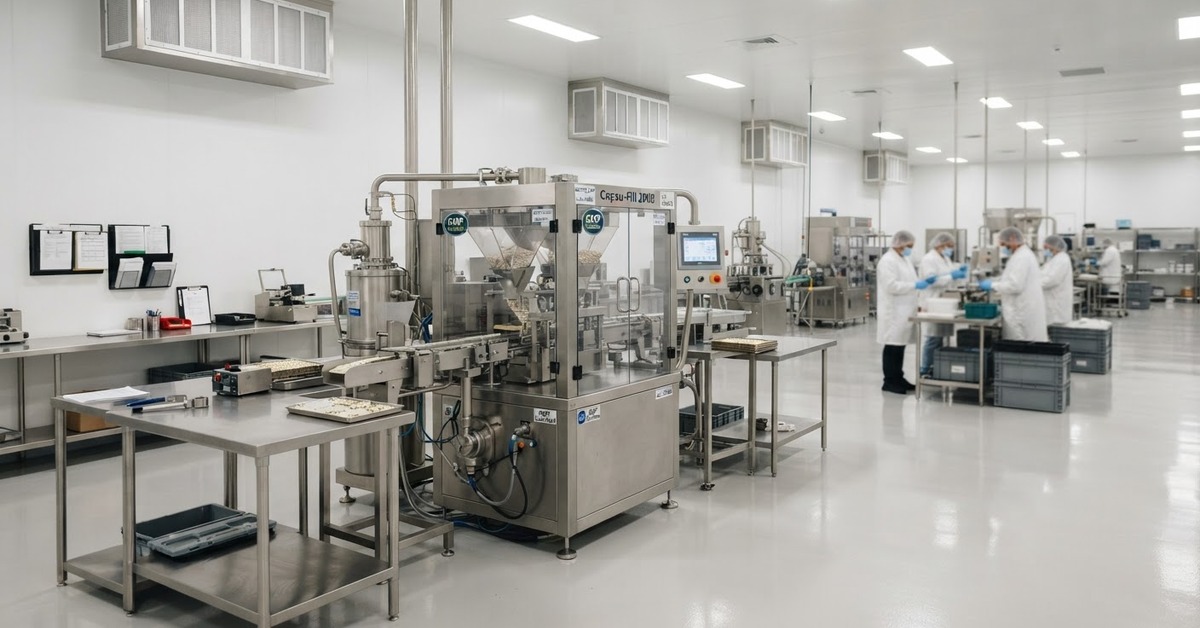
- 10,000 sqm GMP facility with 100,000-grade cleanroom
- Multiple drying technologies: Spray drying, vacuum drying
- Advanced filtration: Microfiltration, ultrafiltration for precise MW targeting
- In-house QC laboratory with HPLC, ICP-MS, microbial testing capabilities
- Certifications: ISO 9001, ISO 22000, HACCP, NSF-GMP, Halal
Services
- Custom hydrolysis: Target MW from 500 to 10,000 Da
- Private label collagen: Custom formulations, branding, packaging
- Multi-collagen blending: Custom ratios of Types I, II, III, V, X
- Collagen gummy manufacturing: Full production line for collagen gummies
12. Frequently Asked Questions
What is the difference between collagen and gelatin?
Gelatin is partially hydrolyzed collagen that retains gel-forming ability. It has higher molecular weight (50,000-300,000 Da) and forms a gel when cooled, making it suitable for food applications like gummies and marshmallows. Hydrolyzed collagen (collagen peptides) is more fully broken down, has lower molecular weight (500-10,000 Da), dissolves in cold water without gelling, and is better absorbed by the body. Gelatin is generally less expensive; collagen peptides command a premium.
Which collagen type is best for skin?
Type I and Type III collagen, whether from bovine or marine sources, are most associated with skin health. Marine collagen (Type I) has smaller peptide sizes and may be absorbed more efficiently for skin benefits. Many studies showing skin benefits use 2.5-10g daily of hydrolyzed collagen peptides for 8-12 weeks.
Can collagen be halal certified?
Yes. Bovine collagen can be halal-certified if the source animals are slaughtered according to Islamic law and processed in halal-certified facilities. Marine collagen is naturally halal-compliant in most cases, as fish do not require ritual slaughter.
What is the shelf life of collagen powder?
24-36 months when stored in a sealed container in a cool, dry place (below 25°C, below 60% RH), away from direct sunlight and strong odors. Signs of degradation include yellowing, clumping, development of off-odors, and reduced solubility.
How is marine collagen different from bovine?
Marine collagen is sourced from fish skin/scales, typically has lower molecular weight (500-3,000 Da vs. 3,000-10,000 Da), has a different amino acid profile (higher glycine, lower proline), is more expensive (2-3x bovine), is naturally halal/, and carries a risk of fishy odor if not processed correctly.
What does "hydrolyzed" mean on a collagen label?
Hydrolyzed means the collagen protein has been broken down into smaller peptides through enzymatic hydrolysis. The process makes the collagen water-soluble and easily digestible. All collagen peptides are hydrolyzed; the term distinguishes them from gelatin (partially hydrolyzed) and native collagen (not hydrolyzed).
What is the minimum order quantity for private label collagen?
MOQs vary by product type: collagen powder typically 500-2,000 kg, collagen gummies 5,000-50,000 bottles, and multi-collagen blends depend on ingredient availability. Contact us for specific requirements.
Is collagen vegan?
No. True collagen is derived exclusively from animal sources (bovine, marine, chicken, porcine). Vegan "collagen boosters" contain ingredients like vitamin C, silica, bamboo extract, and specific amino acids (glycine, proline) that the body uses to produce its own collagen.
How do I verify collagen peptide quality?
Request these documents from your manufacturer: (1) Certificate of Analysis for each batch, (2) Molecular weight distribution report (HPLC-SEC), (3) Heavy metals analysis (ICP-MS), (4) Microbial testing report, (5) Third-party certification documents, (6) Stability study results.
Can collagen peptides be flavored?
Yes. Unflavored collagen has a neutral to mild taste that blends well into beverages and foods. Collagen can be flavored with natural flavors (fruit, chocolate, vanilla) and sweeteners for retail products. ZOOMSHEAL offers flavor customization for private label clients.
Frequently Asked Questions About Collagen Manufacturing
How is collagen made?
Collagen is made by hydrolysing collagen-rich raw materials, usually bovine hide, porcine skin, fish skin or eggshell membrane. The raw material is cleaned, then treated with enzymes or mild acid to break the triple-helix protein into smaller peptide chains. The resulting liquid is filtered, deodorised, concentrated and dried into a fine, water-soluble collagen peptide powder that blends easily into capsules, powders, gummies and drinks.
How is collagen powder made?
Collagen powder is the dried form of hydrolysed collagen. After hydrolysis, the collagen solution is filtered through fine mesh, treated with activated carbon to remove colour and odour, and then spray-dried or freeze-dried. The dry powder is milled to a controlled particle size, tested for molecular weight, heavy metals and microbiology, and packed in food-grade lined drums ready for private label blending.
How are collagen peptides made?
Collagen peptides are short chains of amino acids produced by enzymatic hydrolysis. Food-grade proteases cut the long collagen protein at specific points, lowering the average molecular weight to around 2,000-5,000 Dalton for standard peptides or below 1,000 Dalton for premium grades. Lower molecular weight improves solubility and absorption, which is why hydrolysed and marine collagen peptides dominate the supplement market.
How do they make collagen supplements?
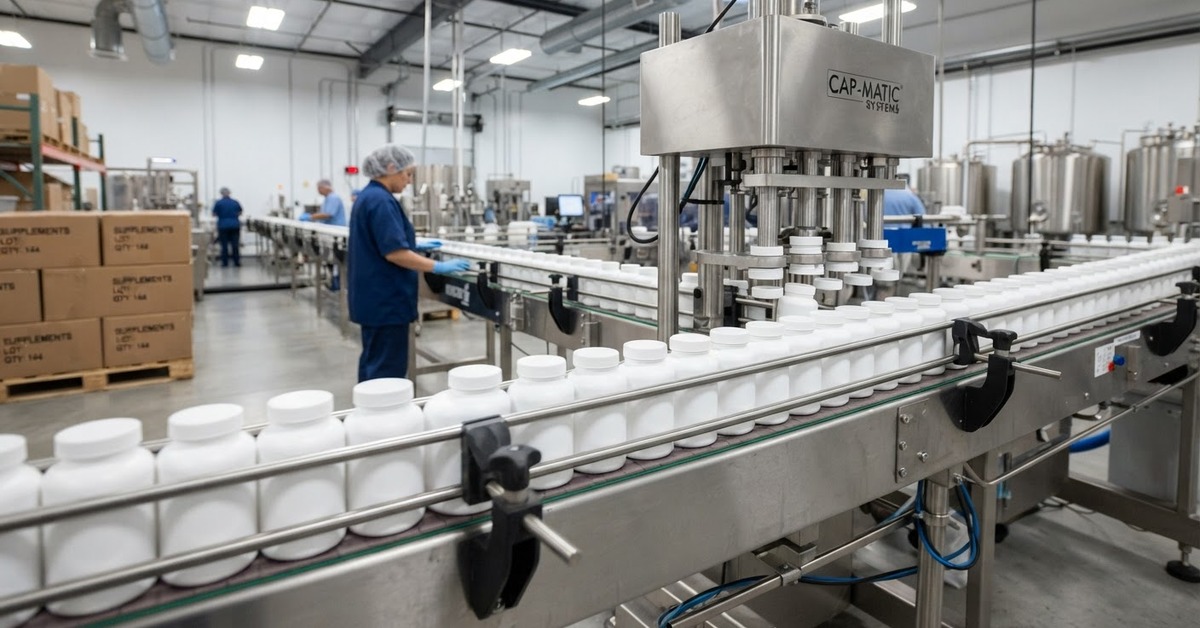
Finished collagen supplements are made by combining collagen peptides with flavour, sweetener, vitamin C or other actives, then filling the blend into the dosage form the brand wants: powder sticks, scoops, capsules, softgels or gummies. Every batch is blended under humidity control, filled on calibrated equipment, sealed, and released with a certificate of analysis before export packing.
What raw materials are used to make collagen?
Bovine hide and bone, porcine skin, fish skin and scales, and eggshell membrane are the main commercial sources, with bovine and marine collagen the most common for supplements. Source, species and country of origin are documented for traceability, and raw materials are screened for heavy metals, antibiotics and microbial contamination before processing.
Can collagen be manufactured in China?
Yes. China is one of the largest collagen manufacturing regions in the world. ZOOMSHEAL produces collagen peptides and finished collagen supplements for private label brands in a GMP, ISO 9001 and ISO 22000 facility, handling sourcing, hydrolysis, blending, filling, testing and export documentation, with MOQ from 3,000 units for most formats.