

Manufacturing capabilities at a glance
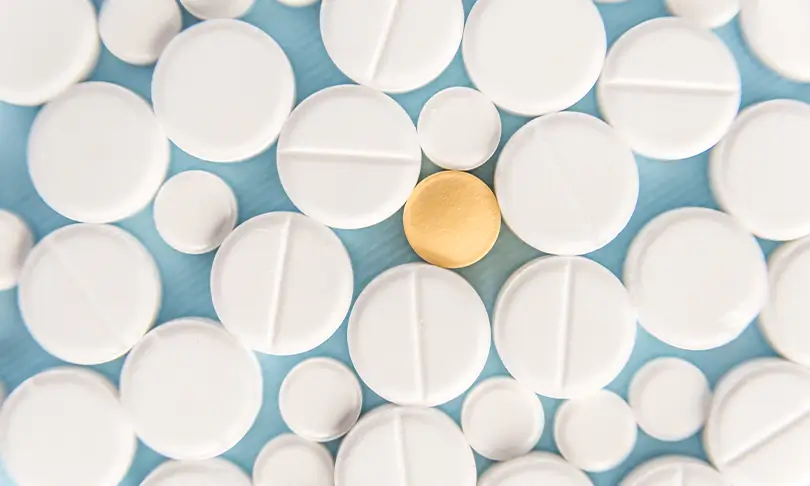
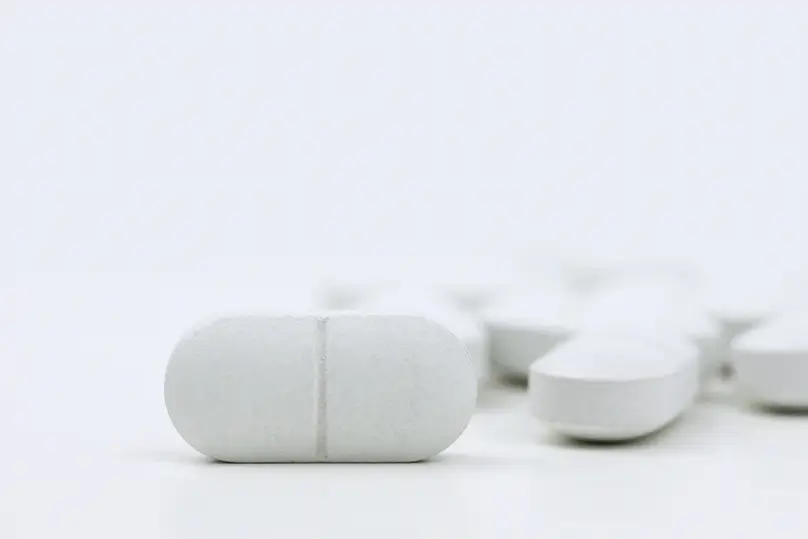
| Dosage forms | Compressed, film-coated, sugar-coated, chewable and effervescent tablets |
|---|---|
| Minimum order quantity | From 500 units per SKU for gummies, powders and liquids, and from 1,000 units for capsules, tablets and softgels, depending on formula and packaging |
| Lead time | 4–6 weeks after formula and artwork approval, excluding shipping |
| Custom formulation | One-a-day, multi-layer and effervescent formats from your concept |
| Certifications | GMP, ISO 22000 and HACCP; Halal and organic options available |
| Documentation | Certificate of analysis (CoA) for every batch, specification sheet, MSDS and export documents |
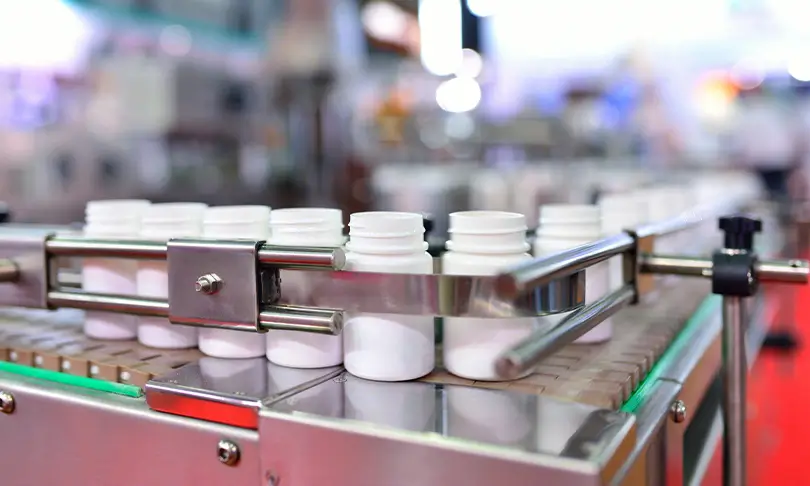
| Packaging & labelling | Bottles, jars, pouches and stick packs with private-label artwork; export-ready labelling |
Frequently Asked Questions
What is the minimum order quantity (MOQ) for tablets?
Tablet projects typically start from 1,000 units per SKU, depending on tablet size, formula and packaging.
How long is the lead time?
Around 4-6 weeks after your formula and packaging artwork are approved, plus shipping time.
Can you produce coated, chewable and effervescent tablets?
Yes. We produce compressed, film-coated, sugar-coated, chewable and effervescent tablets, including one-a-day and multi-layer formats.
Is your factory certified?
Yes. Our Guangzhou factory is GMP-certified and operates to ISO 22000 and HACCP standards, with Halal options. Every batch is third-party tested and comes with a certificate of analysis (CoA).
Do you offer custom formulations and private label?
Yes. Our R&D team develops custom tablet formulations from your concept, and we provide full private-label (OEM) and ODM services, including packaging design and export-ready labelling.
Tablets: compression, coating and the limits of the format
A tablet is the cheapest dose form per unit and the least forgiving to formulate. Compression only works if the powder flows and bonds, coating only works if the core is strong enough, and effervescent tablets fail on humidity before they ever reach a customer. These are the process choices behind a tablet that survives the supply chain.
Direct compression, granulation or roller compaction
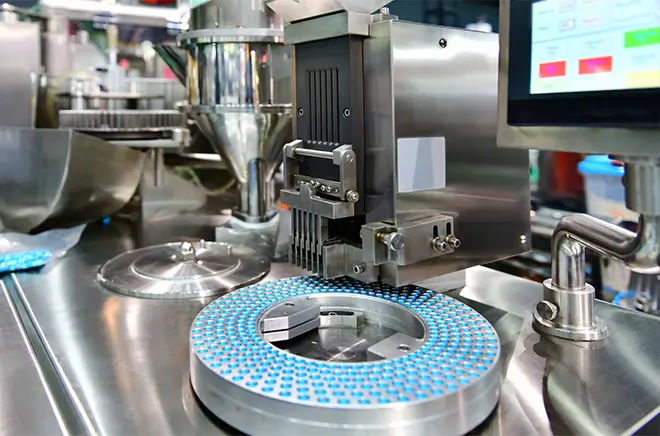
Direct compression is the fastest and cheapest route: blend the actives with excipients that flow and compress well, then press. It works for dense, well-behaved powders and for actives dosed high enough that segregation is not a risk.
When the active is light, cohesive or dosed in micrograms, direct compression produces weight variation and content uniformity failures. Wet granulation binds the particles into a uniform granulate; roller compaction does the same without water or heat, which matters for moisture-sensitive actives. The process choice is a formulation decision, not a machine preference, and it has to be made before the tablet weight on the label is fixed.
- Direct compression: fast, low cost, suited to dense and stable powders
- Wet granulation: uniformity for low-dose and cohesive actives
- Roller compaction: granulation without water or heat
- Tooling: shape, embossing and logo decide the minimum tablet weight
Coating: the reason tablets get a finish
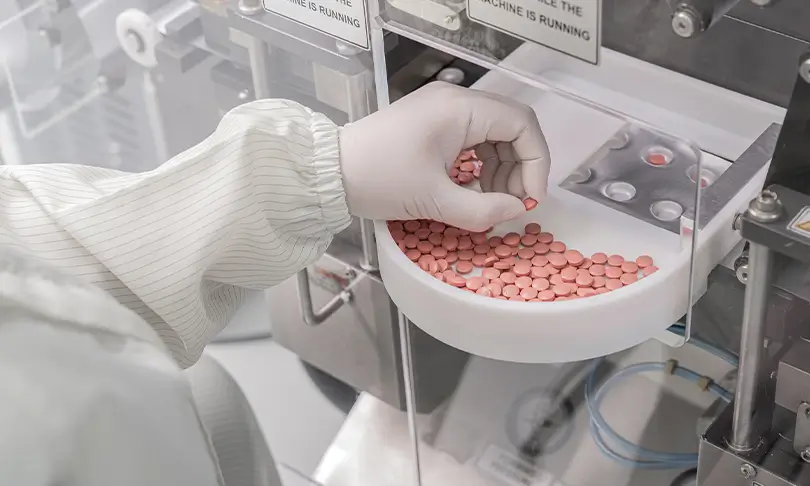
A film coat is not decoration. It masks taste, reduces dust, improves swallowability and protects the active from light and moisture. An enteric coat goes further and delays release until the tablet leaves the stomach, which is what makes acid-sensitive ingredients — probiotics, enzymes, some plant extracts — viable in a tablet at all.
Coating adds process time and a weight gain that must appear in the specification, and it can hide a weak core rather than fix it. A tablet that chips at the edge during coating was a compression problem first.
Effervescent tablets are a different animal
Effervescent tablets combine an acid and a carbonate, which means the formula reacts with humidity. Production runs in a dehumidified room, typically below 20% relative humidity, and the finished tablets go into foil tubes or blister strips rather than loose bottles.
This is why effervescent projects cost more per unit and why the packaging is part of the formula. A tablet that is stable in a foil tube can fail within weeks in a jar, and no amount of desiccant fixes a formula that was compressed in damp air.
Chewable and dispersible: texture problems
Chewable tablets replace compression strength with mouthfeel, which is a harder target: the tablet must be soft enough to chew, hard enough to survive a bottle, and pleasant enough that a customer takes a second one tomorrow. Mannitol, sorbitol and microcrystalline cellulose do most of that work, and the active load is limited by how much grit a customer will accept.
Dispersible tablets have the opposite constraint: they must disintegrate fast in water and still taste acceptable once dissolved. Both formats need taste trials before the flavour is locked, because the masking system changes the texture as well as the taste.
Documents, claims and stability
Tablet documentation looks the same as for any solid dose form — certificate of analysis per batch, heavy metals, microbiology, GMP certificate and stability data — but the tests that matter are specific: weight variation, hardness, friability, disintegration time and dissolution where the claim depends on release.
If the label claims delayed or sustained release, dissolution data is not optional. It is the evidence that the tablet actually behaves as described.
- Weight variation, hardness, thickness and friability per batch
- Disintegration time, and dissolution for modified-release claims
- Stability in the final packaging, not in bulk
- Artwork checked against the destination market's labelling rules
FAQ
Related Manufacturing Services
- Effervescent Tablet Manufacturer
- Vitamin & Multivitamin Manufacturer
- Zinc Supplement Manufacturer
- Mineral Supplement Manufacturer
- Private Label Supplements
- Turnkey Supplement Manufacturer
- Tablet Contract Manufacturing
- Capsule Manufacturer
- Softgel Manufacturer
- Powder Manufacturer
- Gummy Manufacturer
- Liquid Drops Manufacturer