

Manufacturing capabilities at a glance
| Dosage forms | Two-piece hard capsules in gelatin or HPMC (vegetarian), sizes 0–4 |
|---|---|
| Minimum order quantity | From 500 units per SKU for gummies, powders and liquids, and from 1,000 units for capsules, tablets and softgels, depending on formula and packaging |
| Lead time | 4–6 weeks after formula and artwork approval, excluding shipping |
| Custom formulation | Vitamins, minerals, botanicals and probiotics, including dosage, excipients and capsule size |
| Certifications | GMP, ISO 22000 and HACCP; Halal and organic options available |
| Documentation | Certificate of analysis (CoA) for every batch, specification sheet, MSDS and export documents |
| Packaging & labelling | Bottles, jars, pouches and stick packs with private-label artwork; export-ready labelling |
Frequently Asked Questions
What is the minimum order quantity (MOQ) for capsules?
Capsule projects typically start from 1,000 units per SKU. The exact MOQ depends on capsule size, formula and packaging.
How long is the lead time?
Around 4-6 weeks after your formula and packaging artwork are approved, plus shipping time.
Is your factory certified?
Yes. Our Guangzhou factory is GMP-certified and operates to ISO 22000 and HACCP standards, with Halal options. Every batch is third-party tested and comes with a certificate of analysis (CoA).
Can you develop a custom capsule formulation?
Yes. Our R&D team develops custom capsule formulations, including vitamins, minerals, botanicals and probiotics, from your concept, covering dosage, excipients and capsule format.
Do you offer private label and packaging?
Yes. We provide private-label (OEM) and ODM programs, including packaging design, bottles and pouches, and export-ready labelling.
Making capsules: formats, regulation and real lead times
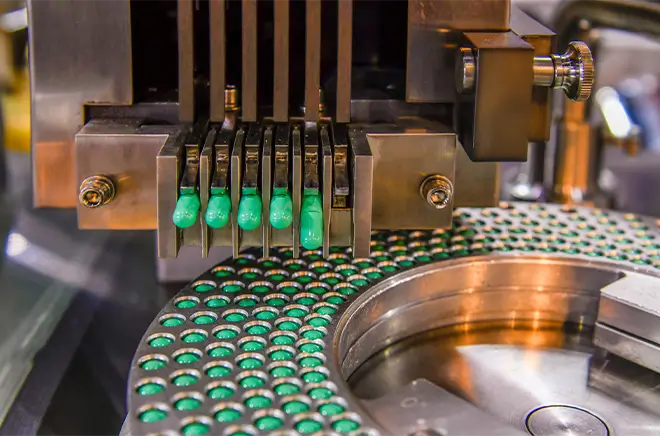
A capsule looks simple: two shells and a powder. In practice, the format choice drives bioavailability, the fill weight drives the label claim, and the humidity on the filling line decides whether the batch passes or is rejected. These are the decisions worth getting right before a run is booked.
Which capsule format for which use
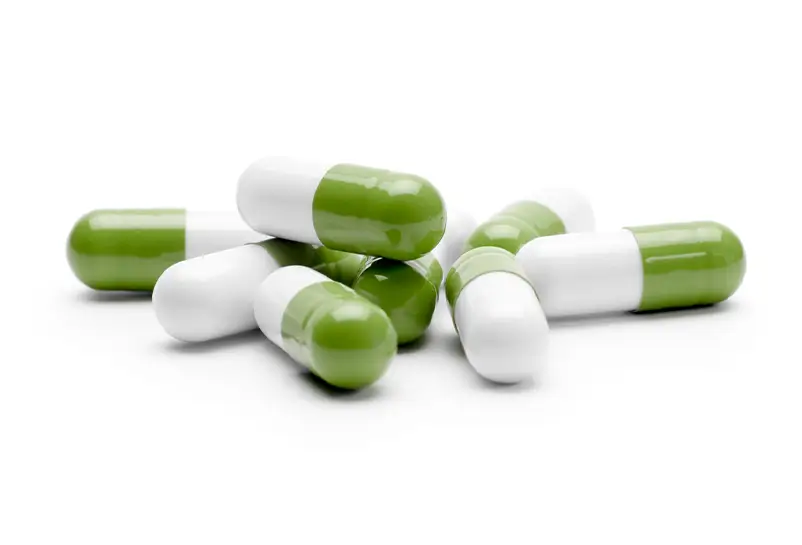
Hard capsules come in two families: gelatin and HPMC (often marketed as vegetarian or vegan capsules). Gelatin is the cheaper option and gives a glossier finish; HPMC handles heat and low humidity better and is the default for vegetarian, halal and kosher positioning. Sizes run from 000 down to 4, with the common supplement sizes being 0, 1 and 2.
Fill weight is a function of powder density, not of the capsule size alone. A size 0 capsule can hold roughly 500 mg of a dense powder or closer to 300 mg of a light, fluffy extract — so the label claim has to be settled against a real bulk density measurement, not a catalogue figure.
- Gelatin hard capsule: lowest unit cost, standard for powders and pellets
- HPMC / vegetarian capsule: for vegan, halal and kosher claims
- Pellet or beadlet fill: for sustained release and incompatible ingredients
- Enteric or delayed-release: for acid-sensitive actives and probiotics
What labelling regulation actually requires
The same capsule sells into markets with very different rules, and the artwork has to satisfy all of them if you ship from one production run. In the EU, the nutrition declaration, allergen statement and authorised health claims list are the main constraints; in the US, the Supplement Facts panel and structure-function disclaimer govern the layout.
The practical consequence is that artwork approval is usually the longest part of the project, not production. Brands that leave labelling until the capsules are ready routinely lose two to three weeks.
MOQ, samples and production lead times
A capsule run typically starts at 1,000 units per SKU, though this depends on capsule size, fill formula and whether packaging is included. Samples for stability or for your own testing are normally produced before the commercial batch, and it is worth building that step into the plan rather than treating it as an optional extra.
From approved formula and approved artwork, expect roughly 4-6 weeks of production plus shipping. If the formula is new, add formulation and stability time in front of that.
Quality control: the documents to demand
A supplier that cannot produce documents is a supplier you cannot audit. For each batch, ask for a certificate of analysis covering identity, assay, heavy metals and microbiological results, and check that the testing laboratory is independent of the production site.
- Certificate of analysis per batch with third-party results
- Heavy metals (lead, arsenic, cadmium, mercury) and microbiological limits
- GMP certificate for the manufacturing site
- Stability data supporting the shelf life on the label
- Retention samples kept for the duration of the shelf life
Packaging and logistics
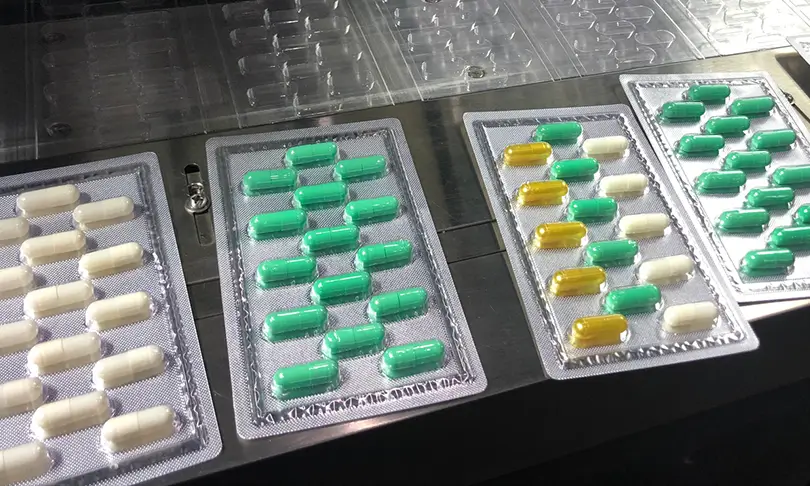
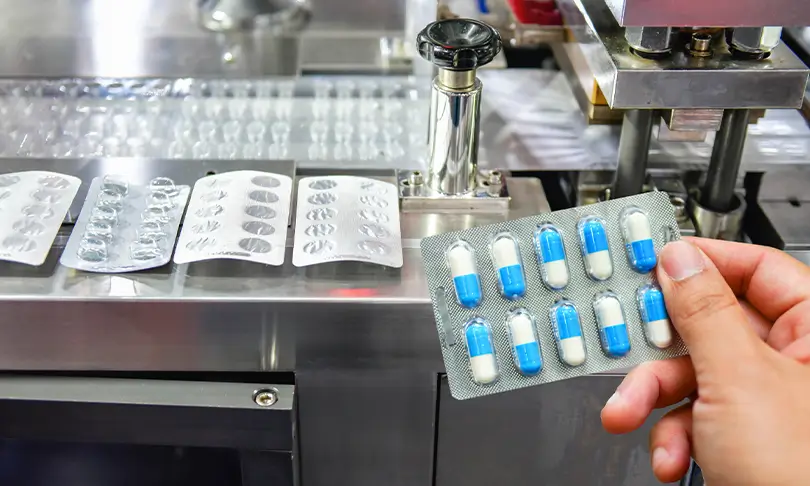
Bottles with desiccant, blisters, sachets and bulk drums all change the stability picture and the freight maths. A capsule that is stable in an HDPE bottle with a desiccant can fail in a blister if the destination is humid, so the packaging choice belongs in the stability plan.
For export, confirm the incoterm, the labelling language, and whether the destination requires an importer of record before the goods leave the factory — these are the details that turn a smooth shipment into a customs story.
FAQ
Related Manufacturing Services
- Ashwagandha & KSM-66 Manufacturer
- Turmeric & Curcumin Manufacturer
- Probiotic Supplement Manufacturer
- Shilajit Supplement Manufacturer
- Private Label Supplements
- Low MOQ Supplement Manufacturer
- Encapsulation Services
- Tablet Manufacturer
- Softgel Manufacturer
- Powder Manufacturer
- Gummy Manufacturer
- Liquid Drops Manufacturer