

Creatine Supplement Manufacturer for Powder, Gummies & Capsules
ZOOMSHEAL is a GMP-certified creatine manufacturer in Guangzhou, China. We produce micronized creatine monohydrate powder, gummies and capsules for sports nutrition brands, gyms and DTC sellers, handling blending, flavouring and packaging in-house.
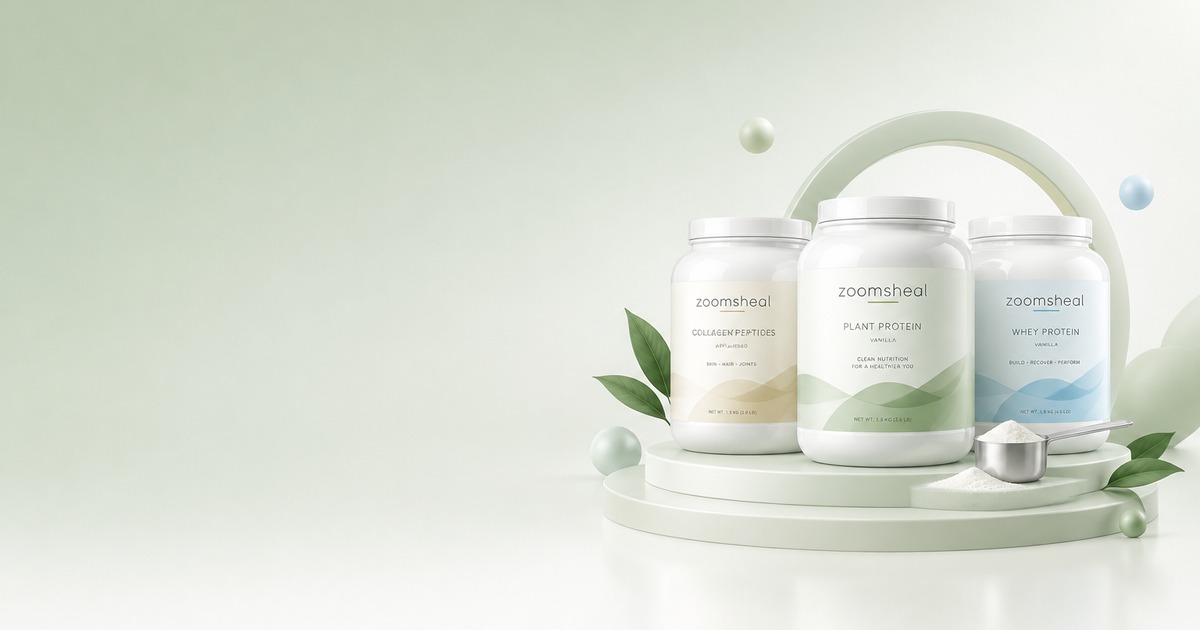
Creatine Contract Manufacturing in Powder, Gummy and Capsule Form
Creatine is one of the highest-volume sports nutrition ingredients, so buyers compare purity, particle size and price per gram. ZOOMSHEAL produces creatine monohydrate in our GMP-certified Guangzhou Huadu facility, where we control micronization, blending, flavouring and filling so every batch matches the assay and mesh size you approve.
We make micronized creatine monohydrate in 300 g, 500 g and 1 kg tubs, single-serve stick packs, pectin gummies and hard capsules, plus blends with beta-alanine, taurine, electrolytes or whey. Our clients include sports nutrition brands, gym chains, Amazon and DTC sellers shipping to the US, EU, Middle East and Southeast Asia.
Why Brands Choose Our Creatine Production
Creatine Manufacturing Specifications
| Format | Specification | MOQ | Lead Time |
|---|---|---|---|
| Powder Tubs | Micronized creatine monohydrate, 300 g-1 kg, 60-120 servings | 500 cans | 4-6 weeks |
| Stick Packs | Single-serve 3-5 g, flavoured or unflavoured, stick format | 500 sticks | 4-6 weeks |
| Pectin Gummies | 1-3 g creatine per piece, 60-90 count jars, sugar-free option | 500 bottles | 4-6 weeks |
| Hard Capsules | Creatine monohydrate 750 mg-1,000 mg, 90-180 count | 1,000 bottles | 4-6 weeks |
| Bulk Powder | 99% micronized creatine monohydrate, 25 kg bags or drums | 25 kg | 4-6 weeks |
Our Creatine Contract Manufacturing Process
Quality Control for Creatine Purity and Potency
Creatine purity is the number brands live or die by, so our quality programme starts at raw material intake. Every lot of creatine monohydrate is assayed by HPLC for content, checked for heavy metals, and screened for microbiology before release to blending, and micronized powder is verified for particle size and flow.
Production runs in our GMP-certified Guangzhou Huadu plant under FDA, NSF and cGMP standards, with HACCP controls covering intake, blending, flavouring, filling and packing. Finished batches are tested for assay, fill or weight uniformity, moisture and microbial safety, and each shipment leaves with a certificate of analysis.
Creatine manufacturing: monohydrate, micronised, and why gummies are difficult
Creatine is a commodity with a compliance problem. The molecule is cheap, well studied and sold in enormous volumes, and the differences between grades that matter are not the ones the marketing suggests. Monohydrate is the reference form; everything else is a variation on particle size, dissolution or salt form. This page covers what actually varies between lots, how to write a specification, and why creatine gummies lose potency faster than almost any other format.
Monohydrate versus the alternatives
Creatine monohydrate is the form used in the overwhelming majority of clinical research and the only one with a large evidence base. It is also the cheapest per gram. Creatine hydrochloride, nitrate, ethyl ester, buffered and liquid-stable variants exist and are sold on solubility or gastrointestinal arguments, but they cost several times more and none of them has displaced monohydrate in the literature.
For most brands the sensible technical decision is monohydrate, with the differentiation coming from micronisation, purity, dissolution and the delivery format rather than from the salt form. A brand that wants a premium story is usually better served by a genuinely low-creatinine, high-purity micronised monohydrate than by a niche salt.
If a non-monohydrate form is chosen, the specification has to name the exact salt and its assay method, because a generic "creatine" assay will read the creatine moiety and not the counter-ion, which is how products end up under-delivering on a stated dose.
Purity, creatinine and the numbers on the CoA
Creatine degrades to creatinine in the presence of moisture and heat, and creatinine is both a marker of degradation and a substance with its own safety limits. A good monohydrate specification limits creatinine, typically to under 100–200 ppm, alongside an assay of 99.5% or higher on a dried basis.
Moisture matters as much as purity. Monohydrate is a hydrate — it contains about 12% water of crystallisation by definition — so the moisture test is really a check that the material has not dehydrated or absorbed extra water. An over-dried lot can behave differently on the line and re-absorb moisture from the air during blending.
We ask for assay, creatinine, moisture, appearance, particle size distribution, bulk and tapped density, heavy metals and microbiological limits. For micronised grades the particle size distribution is the whole point of the product, so it must be specified with a method (laser diffraction) rather than described as "fine powder".
Why creatine gummies are a formulation risk
Creatine in aqueous solution cyclises to creatinine, and the reaction is strongly pH and temperature dependent, with the highest rate at low pH and elevated temperature. A gummy is a high-water-activity gel cooked at temperature and stored at ambient conditions; both of those push the reaction. The result is a product that can test at 5 g per serving on the day of manufacture and substantially lower three or six months later.
There are workable approaches — low water activity formulations, a pH closer to neutral, a coated or encapsulated creatine that limits contact with the gel water, and a gummy process that avoids prolonged high-temperature hold — but they are engineering solutions, not a matter of adding more creatine. Overages alone tend to produce a product that is out of specification one way or the other during its life.
We will only sign off a creatine gummy claim with real-time data on the finished format, plus accelerated data, because the degradation curve in a gel matrix is not something that can be predicted from powder stability.
Formats and realistic doses
Powder in a jar, stick pack or sachet is the natural home for creatine: 3–5 g per serving, no water in the product, and a foil laminate for moisture barrier. It is also the cheapest per gram of active and the easiest to keep in specification.
Capsules work up to about 3–4 g per serving, which requires four to six large capsules — acceptable for a maintenance dose, awkward for a 5 g loading dose. Tablets are possible but compression adds heat and the resulting tablets are large.
Ready-to-drink and liquid formats exist and are the weakest from a stability standpoint; if a liquid is required, the pH and the shelf life have to be designed around the cyclisation reaction from the start, and the claim should be supported by finished-product data at release and at expiry.
Specification checklist
For a creatine monohydrate project: assay on dried basis, creatinine limit, moisture, particle size distribution, bulk and tapped density, appearance, heavy metals, microbiological limits, and a statement of the manufacturing route (chemical synthesis versus fermentation-derived, if the brand claims a specific origin).
Ask for three commercial lots and check creatinine and particle size, not just assay. Then run a blend and fill trial: creatine is dense and free-flowing but it segregates against lighter excipients, and fill-weight consistency on the actual machine is the number that matters for a launch.
Creatine Contract Manufacturing FAQ
What is the minimum order quantity for creatine supplements?+
How long does creatine production and delivery take?+
Can you produce creatine under my own brand?+
Do you provide samples before a bulk order?+
Can creatine be blended with other ingredients?+
What certifications does your factory hold?+
Can you help with shipping and customs documents?+
What payment terms do you offer?+
Ready to Launch Your Creatine Line?
Send us your creatine format, target dosage and pack size, and our team will reply with a formulation plan, MOQ and quote. ZOOMSHEAL has manufactured sports nutrition in Guangzhou since 2003, so your creatine brand launches on a proven line.