
Probiotic Manufacturing Explained: Strains, Stability and Shelf Life
Probiotic manufacturing is the process of producing supplement products that contain live microorganisms at a guaranteed potency for the full shelf life. It is one of the hardest formats in the supplement industry, because the active ingredient is a living culture that heat, moisture, oxygen and time all work against. A probiotic that leaves the factory at ten billion CFU and arrives at the customer with almost nothing has failed, even if every label claim was technically true on day one.
This guide explains how probiotics manufacturing works, why stability dominates every decision, and how to judge a probiotic manufacturing facility before you commit.
What makes probiotic manufacturing different
Most supplement actives are stable chemicals. Probiotics are live cultures. That single difference changes the entire process:
- Heat is the enemy. Freeze-drying and low-temperature processing replace the heat steps used for other powders.
- Water is the enemy. Moisture drives premature activation and death, so water activity is controlled tightly.
- Oxygen is the enemy. Packaging and handling minimise oxygen exposure.
- Overages are normal. Manufacturers blend extra CFU to guarantee the label claim at end of shelf life.
- Viability is the spec. Testing measures living cells, not just presence of DNA.
Because of this, the manufacture of probiotics is less about big equipment and more about disciplined control of the environment at every step.
The probiotic manufacturing process
1. Strain selection and sourcing. Strains are chosen for the intended benefit and for stability. Supplier identity, potency and documentation are verified on receipt, since a mislabelled strain ruins the batch.
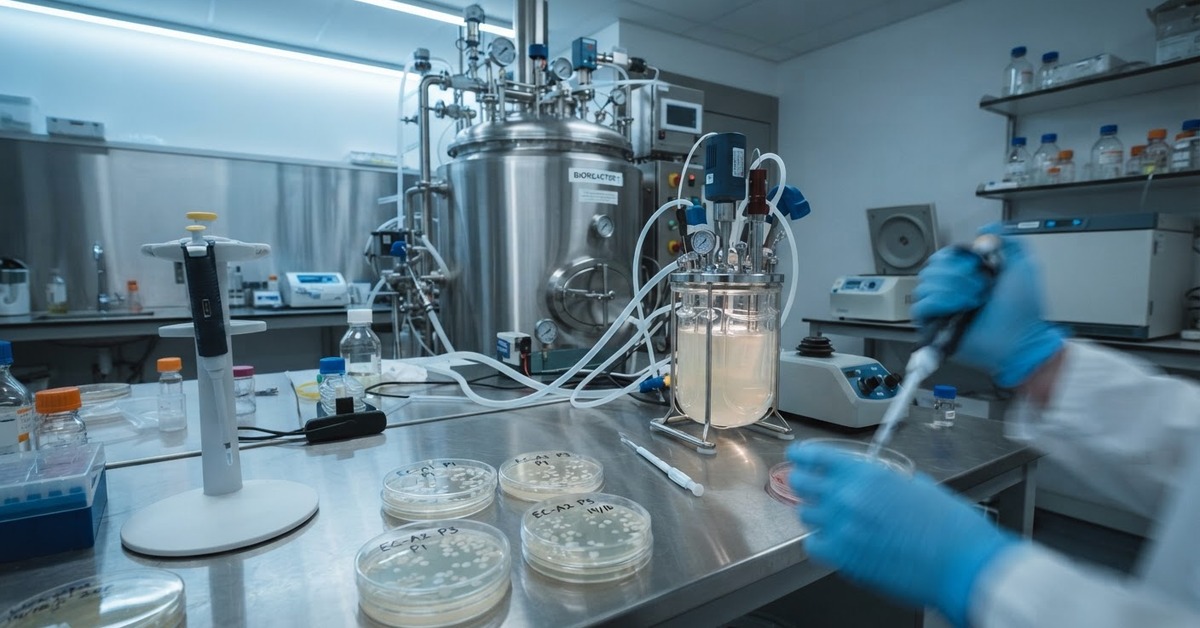
2. Fermentation. Each strain is grown in a controlled fermenter under defined temperature, pH and nutrient conditions to reach high cell density.
3. Harvest and concentration. Cells are separated from the growth medium and concentrated.
4. Freeze-drying (lyophilisation). The culture is frozen and dried under vacuum so water is removed without heat that would kill the cells. Protective cryoprotectants improve survival.
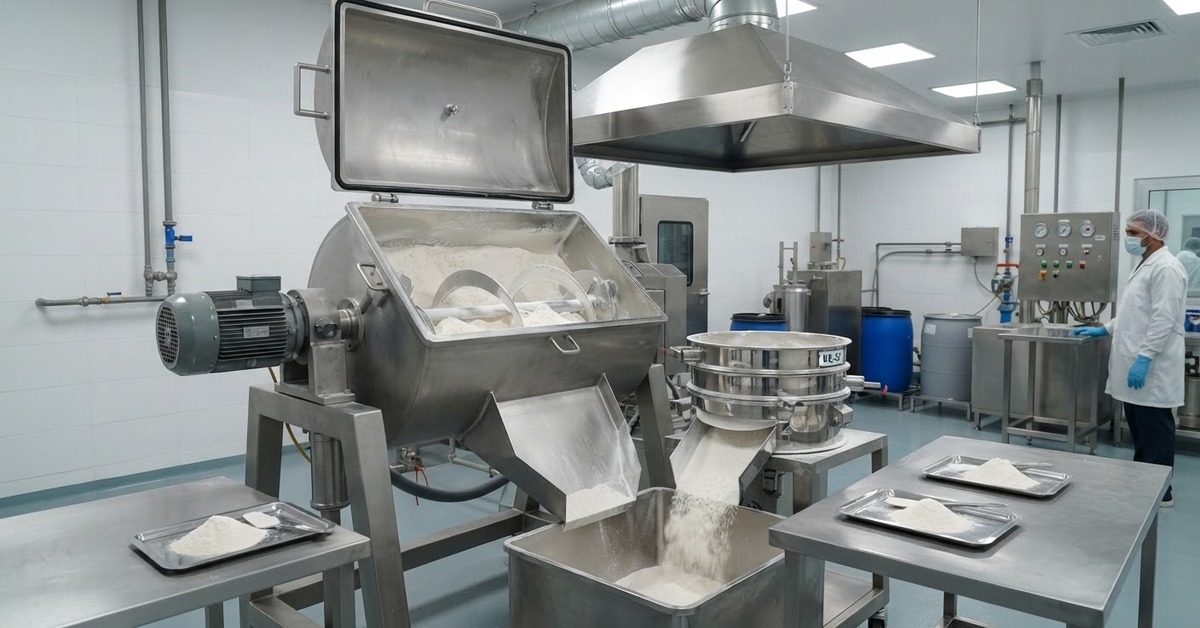
5. Blending. Dried cultures are blended with excipients and often with prebiotics, in low-humidity conditions.
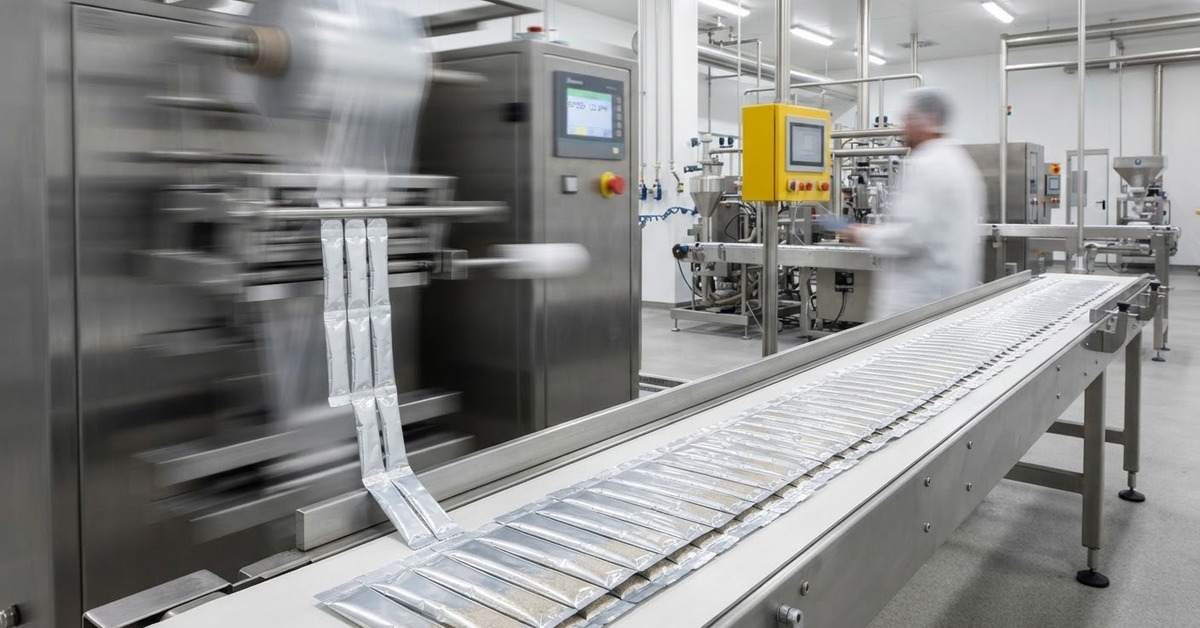
6. Encapsulation or filling. Blending feeds directly into capsules, sachets or stick packs. Some products use enteric or acid-resistant capsules to protect cells through the stomach.
7. Packaging and storage. Packaging limits moisture and oxygen ingress, and storage conditions are specified to protect viability.
Why stability and shelf life dominate
A probiotic's real product is a promise of live cells over time. Three controls make that promise achievable:
- Water activity. Keeping it low suspends the cultures. If moisture creeps in, cells activate and die.
- Overages. Blending above the label claim builds in the loss that occurs naturally during shelf life. The size of the overage depends on the strain and the packaging.
- Packaging barrier. Bottles with desiccant, blister packs and sealed sachets all help. The right choice depends on the target shelf life and market.
Stability testing is not a formality. It is how the overage is set. Without it, a manufacturer is guessing, and guessing usually means either an inflated cost or a failed claim.
Probiotic product formats
Capsules and sachets tend to protect viability best, because the shell or sealed pack limits moisture and oxygen. Powders in a jar expose the culture to head space air every time the lid opens, so they usually need a larger overage. Gummies and liquids are the hardest, because water and processing heat work against the cells.
| Format | Strengths | Considerations |
|---|---|---|
| Capsule | Protects strains, easy dosing | Capsule shell and moisture barrier matter |
| Sachet / stick pack | Good for high CFU and blends | Seal integrity is critical |
| Powder in jar | Flexible dosing | Head space and scoop hygiene |
| Chewable tablet | Convenient | Heat and compression can reduce viability |
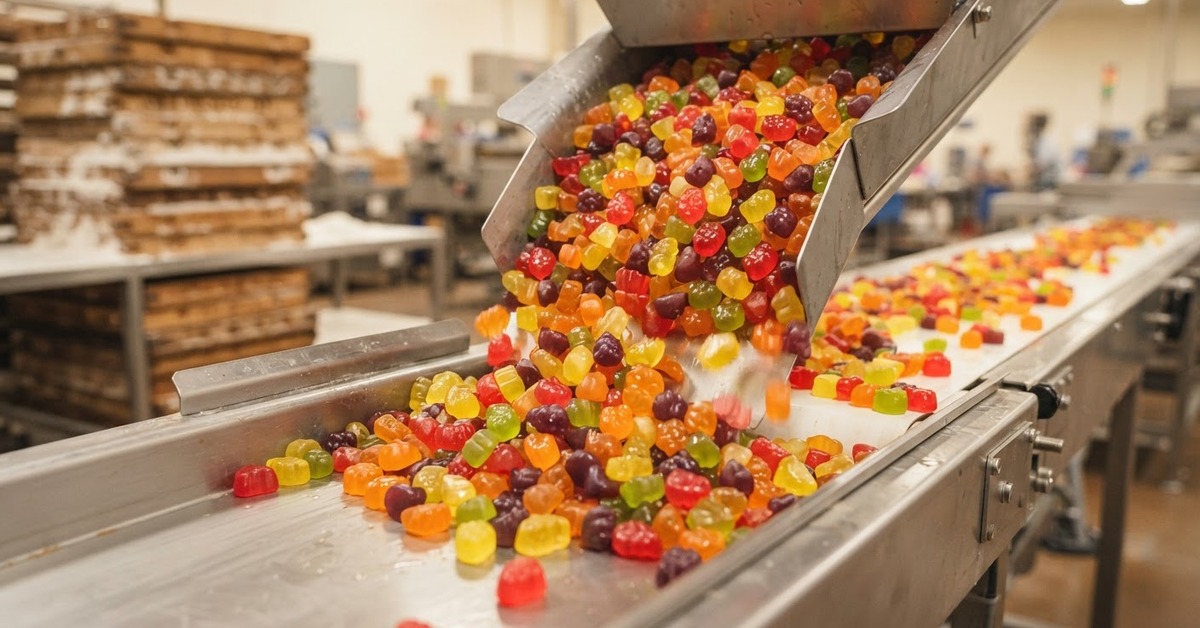
| Gummy | Consumer appeal | Harder to protect live strains |
| Liquid drops | Fast delivery | Stability and refrigeration needs |
Choosing strains for stability, not just benefit
Marketing tends to start with the benefit a strain is known for. Manufacturing starts with whether the strain survives. Some strains tolerate drying and storage well; others need enteric protection or refrigeration. When a formula calls for a fragile strain, the manufacturer has to choose between a larger overage, a protective capsule, or a different strain. Each choice changes cost and shelf life, so strain selection should involve the manufacturer early, not be handed over as a finished list.
Testing probiotics: what a batch record should show
- Strain identity confirming the culture is the strain claimed
- CFU count at release and at end of shelf life
- Microbiology for pathogens and spoilage organisms
- Water activity confirming the powder stays dry
- Heavy metals on the finished lot
- Stability testing across the claimed shelf life
A spec that states only a CFU number at release is incomplete. The number that matters is the one at end of shelf life, because that is what the customer actually experiences.
Probiotic manufacturing specifications
Reference parameters from a Guangzhou-based GMP-certified facility:
| Item | Typical specification |
|---|---|
| Potency | Stated in CFU per serving, guaranteed to end of shelf life |
| Strains | Single strain or multi-strain blends |
| Formats | Capsule, sachet, stick pack, powder, chewable, gummy, drops |
| Processing | Low-temperature freeze-drying, humidity-controlled blending |
| Overages | Set from stability data, not fixed rules |
| MOQ | 5,000 bottles / 3,000 jars / 25 kg bulk per SKU |
| Lead time | 4-6 weeks after formula and artwork approval |
| Testing | Strain identity, CFU count, microbiology, water activity, heavy metals |
| Certifications | GMP, cGMP, FDA, NSF, HACCP, ISO 22000 |
What drives probiotic cost
- Strain cost. Some strains are far more expensive to grow and stabilise than others.
- CFU level. Higher claimed potency means more material and often more overage.
- Format. Capsules are efficient; gummies and liquids are harder to protect and cost more.
- Packaging barrier. Desiccant bottles and high-barrier sachets add cost but extend shelf life.
- Testing. Strain identity and CFU testing are essential and not cheap.
- MOQ. Larger runs spread fermentation and setup costs.
How to choose a probiotic manufacturing facility
- Strain documentation. Ask for identity and potency data on incoming cultures.
- Humidity control. Confirm the facility actually controls water activity through blending and packing.
- Stability data. Ask how overages are set and what shelf-life testing is run.
- Testing capability. CFU and strain identity testing should be routine.
- Format range. A facility that runs both capsules and stick packs can match the format to the strain.
- Certification scope. Verify GMP, ISO 22000 or HACCP on the certificate and the covered lines.
- One accountable contact with predictable response times.
Start your probiotic project
ZOOMSHEAL Health has manufactured probiotics and other nutraceuticals in Guangzhou since 2003. We run humidity-controlled blending, freeze-dried cultures, capsules, sachets, stick packs and powders, with MOQ from 5,000 bottles and lead times from 4-6 weeks.