
Stick Pack Manufacturer: Why Brands Are Switching to Single-Serve Tubes
A stick pack manufacturer turns a powder, granule or liquid into sealed single-serve tubes that a customer tears open and pours. Sticks have moved from a niche format to a serious channel decision, because they solve problems that jars and bottles cannot: precise dosing, portability and a lower barrier to trial. For brands planning a single-serve line, choosing the right stick pack manufacturer is as important as choosing the formula.
This guide explains how stick pack manufacturing works, who it suits, and what actually drives the cost of private label stick packs.
What is a stick pack?
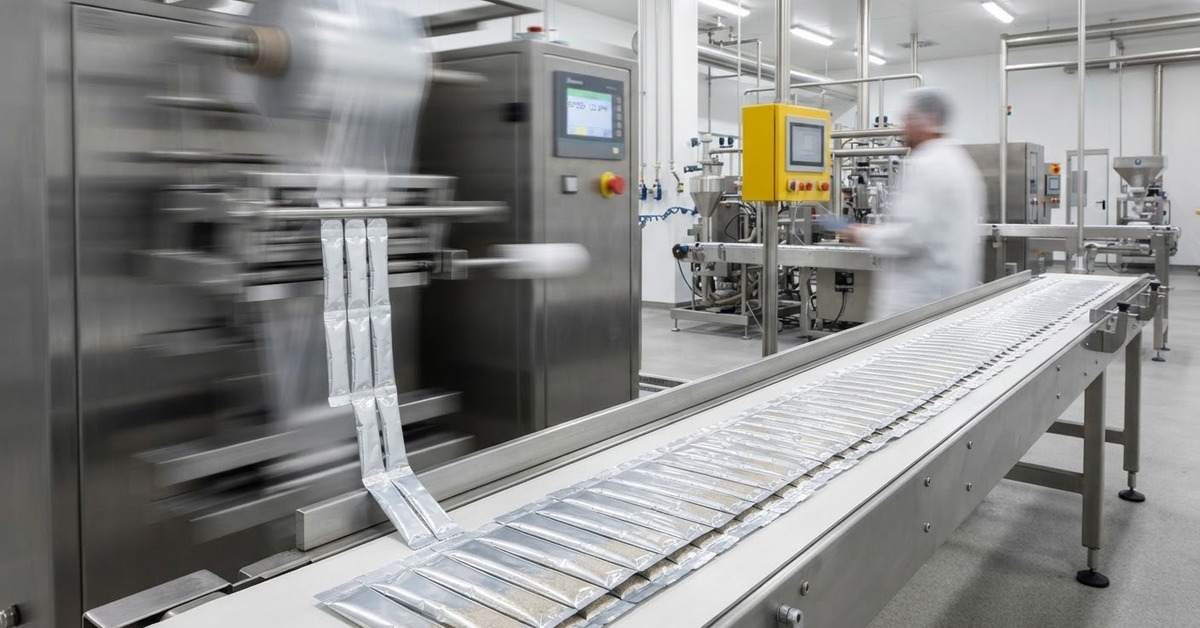
A stick pack is a narrow, sealed sachet, usually a few grams, that holds one serving of powder, granule or liquid. It is formed from a roll of laminate film, filled by weight, and sealed into individual tubes, then often bundled into a multi-count carton or pouch.
The format works because it is precise and portable. The customer gets the same dose every time, and the brand gets a package that fits in a pocket, a gym bag or a handbag.
Why brands are switching to stick packs
- Precise single servings. No scooping, no guesswork, no half-used jars.
- Portability. Far easier to carry than a jar or a shaker.
- Trial-friendly. A small carton lowers the cost of a first purchase.
- Sampling and gifting. Sticks are ideal for trial packs and gift sets.
- Long shelf life. Good barrier film protects sensitive actives.
- Shelf presence. Multi-count cartons stand out and communicate convenience.
The trade-off is unit packaging cost. Sticks use more material per gram of product than a jar, so the format suits higher-value products where convenience justifies the price.
How stick pack manufacturing works
The typical line runs in these steps:
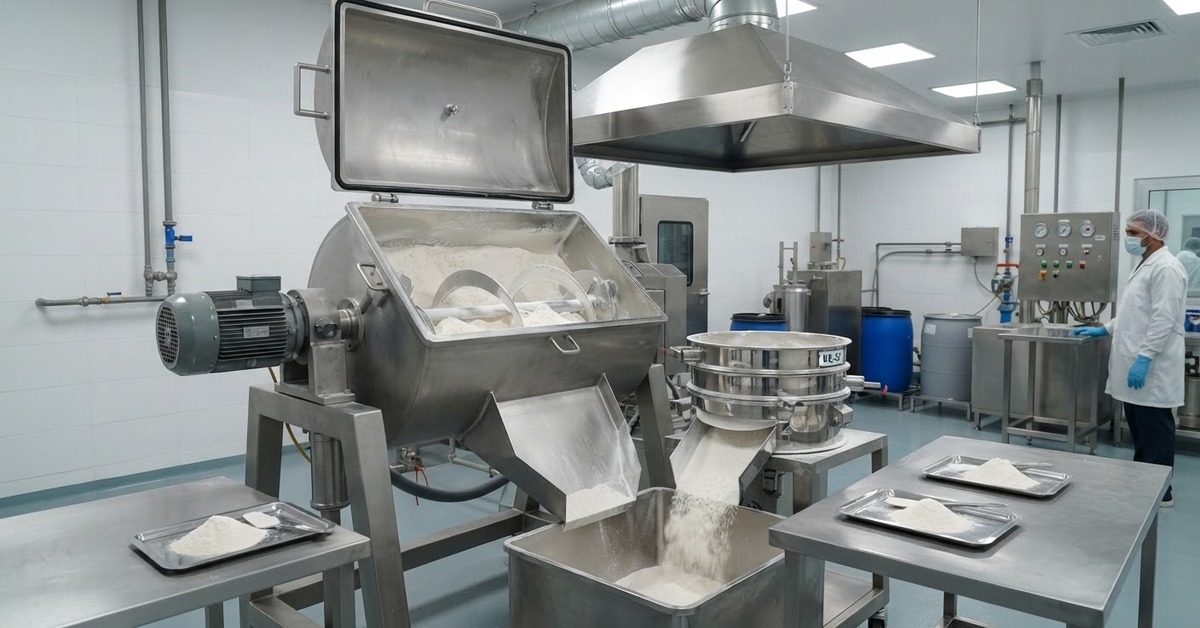
- Formulation fit. The powder or liquid is tuned for flow, dissolution and taste in a small serving.
- Film selection. The laminate is chosen for the barrier the product needs, against moisture, oxygen or light.
- Forming. The film is shaped into tubes on a vertical form-fill-seal machine.
- Filling. Each tube is filled by weight, which requires accurate dosing at high speed.
- Sealing. Seals are formed and checked for integrity; a weak seal leaks and fails.
- Cutting and bundling. Individual sticks are cut and packed into cartons or pouches.
- Testing. Fill weight, seal strength, microbiology and potency are verified before release.
Seal integrity and fill accuracy are the two quality pillars. A stick that leaks or underfills is a customer complaint waiting to happen.
Private label vs custom stick packs
- Private label stick packs use a ready formula, such as a greens blend, collagen, electrolyte mix or pre-workout, with your branding. Fast and low risk.
- Custom stick packs are developed to your specification, including actives, dosage, flavour and film. Slower and higher cost up front, but the product is yours and can be defended.
Many brands launch with a private label stick to prove demand, then invest in a custom formula once the format is validated.
Sticks also change the economics of sampling. A brand can place a ten-count carton into a subscription box or a retail trial at a fraction of the cost of a full tub, which lowers the barrier to a first purchase and grows trial volume.
Stick packs compared with sachets and tubs
| Format | Serving | Best for | Trade-off |
|---|---|---|---|
| Stick pack | One serving | Portability, sampling | Higher packaging cost per gram |
| Sachet | One to two servings | Larger doses, lower unit cost | Less premium feel |
| Tub or jar | Multi-serving | Value, home use | Needs a scoop, bulkier |
| Single-serve pouch | One serving | Higher fill weights | Uses more material than a stick |
The right choice depends on dose size and how the customer uses the product. A stick suits a 5 g greens blend; a 30 g protein dose is better in a sachet or pouch.
Common stick pack problems
- Weak seals. Usually a film temperature or pressure setting, caught by seal testing.
- Underfill or overfill. A dosing accuracy issue, caught by inline weight checks.
- Flavour fade. Often a film barrier or storage problem.
- Caking inside the stick. Moisture ingress through the film, solved with a higher-barrier laminate.
Each of these is prevented by testing, not by hoping. Ask a prospective stick pack manufacturer how each is controlled.
Stick pack manufacturing specifications
Reference parameters from a Guangzhou-based GMP-certified facility:
| Item | Typical specification |
|---|---|
| Fill range | Commonly 2-15 g per stick, powder, granule or liquid |
| Formats | Powder sticks, granule sticks, liquid sticks |
| Film | Multi-layer laminate, barrier tuned to the product |
| Flavours | Natural or nature-identical, multi-flavour runs |
| Actives | Vitamins, minerals, collagen, electrolytes, protein, botanicals |
| MOQ | 5,000 bottles / 3,000 jars equivalent, or 25 kg bulk per SKU |
| Lead time | 4-6 weeks after formula and artwork approval |
| Testing | Fill weight, seal integrity, microbiology, potency, moisture |
| Packaging | Individual sticks, multi-count carton, stand-up pouch |
What drives stick pack cost
- Active ingredients. Protein, collagen and branded actives dominate the unit cost.
- Film specification. Higher-barrier laminates cost more but extend shelf life.
- Fill accuracy. Tight weight tolerances require better equipment and more checks.
- Format. Liquid filling is more complex than dry powder.
- MOQ. Larger runs spread film setup and printing costs over more units.
- Testing. Potency, microbiology and seal testing add cost but protect the brand.
Film and printing minimums are often the hidden line in a stick pack quote, so ask early.
How to choose a stick pack supplement manufacturer
- Machine capability. Confirm the line can hit your fill range and tolerances.
- Film selection support. A good partner recommends a barrier level, not just the cheapest film.
- Seal testing. Ask how seal integrity is validated during production.
- Powder and liquid capability. Not every facility runs both.
- Certification scope. Verify GMP, ISO 22000 or HACCP on the certificate and the covered lines.
- MOQ and scalability. Confirm the same site can scale with you.
- One accountable contact with predictable response times.
Start your stick pack project
ZOOMSHEAL Health has manufactured stick packs and other nutraceutical formats in Guangzhou since 2003. We run dry and liquid stick filling, custom formulation and private label, with MOQ from 5,000 units and lead times from 4-6 weeks.