Ask five suppliers for a supplement manufacturing lead time and you will get five numbers: 25 days, 45 days, 60 days, "about three months". They are not lying. They are measuring different things — one is quoting production only, another is quoting production plus testing, a third is quietly including ocean freight.
If you are planning a launch, the number that matters is the one from purchase order to saleable units in your warehouse. For a private label order run through a Chinese contract manufacturer, that is usually 8 to 12 weeks, and most of the delay does not happen on the production line.
The short answer
Production itself is fast. Filling 3,000 bottles of capsules takes days, not weeks. The calendar is eaten by everything around production: artwork approval, component lead times, analytical testing, and freight. A realistic plan for a first order looks like this:
| Stage | Typical duration | Who controls it |
|---|---|---|
| Quotation, samples, formula confirmation | 1–2 weeks | You and the supplier |
| Purchase order, deposit, raw material release | 1–2 weeks | Supplier |
| Packaging components (bottles, labels, cartons) | 4-6 weeks | Supplier + printer |
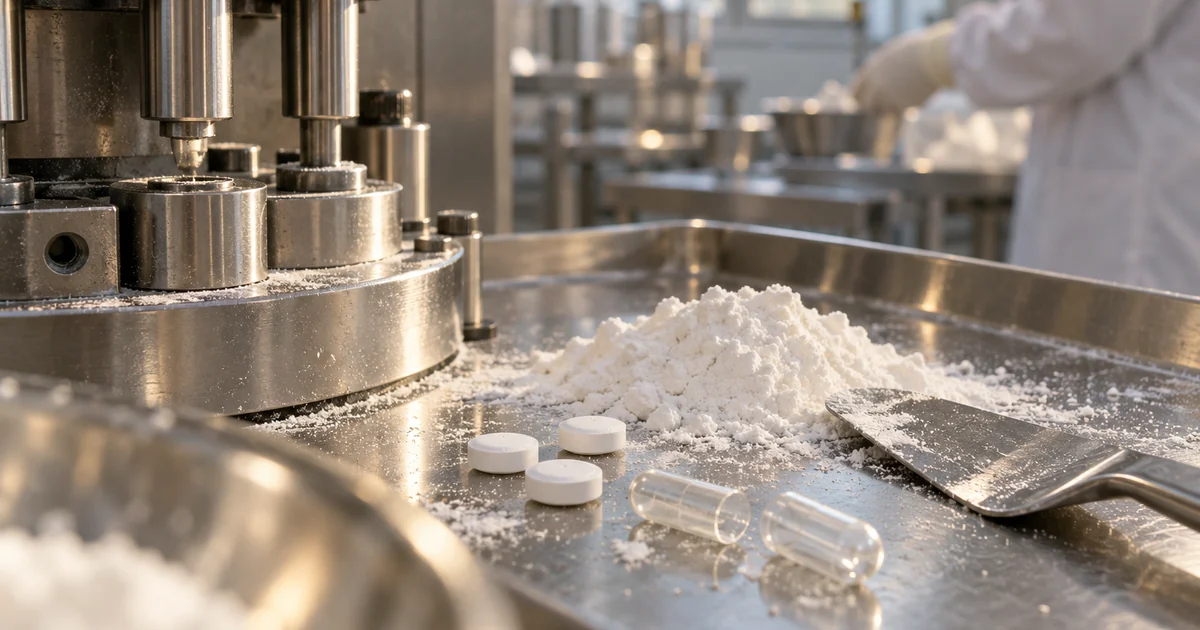
| Production (blending, filling, packing) | 3–7 days | Supplier |
| In-house QC and third-party testing | 5–10 days | Lab |
| Freight (ocean to US/EU, door to door) | 30–45 days | Forwarder |
Add them up and 8 to 12 weeks is the honest range. Cut any one stage and the whole plan moves.
Where the weeks actually go
Week 1–2: the paperwork nobody budgets for
The clock does not start when you send an enquiry. It starts when a purchase order and deposit land, because until then the factory cannot reserve a production slot or order raw material.
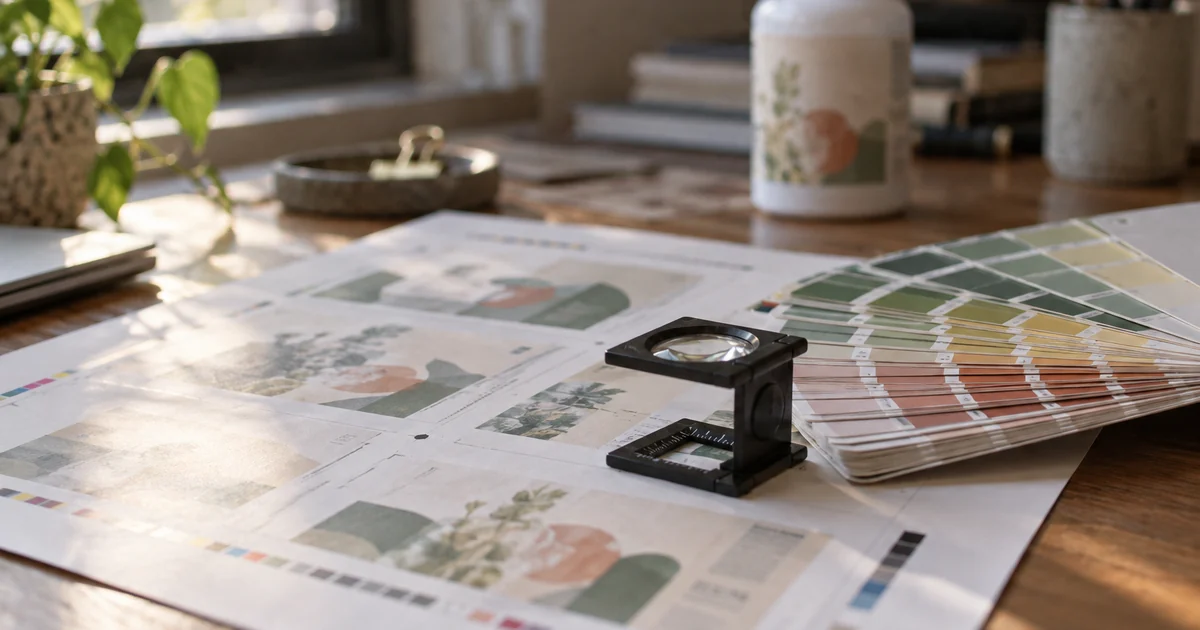
Before that happens you need a formula locked, a fill weight agreed, and artwork that the factory's regulatory reviewer has actually passed. Artwork is the most common source of silent delay: a supplement facts panel with the wrong serving size, a claim that is not allowed in the destination market, or a barcode that does not scan will bounce back and forth for a week at a time.
If you are selling into the US, the label has to satisfy 21 CFR 101.36 for the Supplement Facts panel. In the EU, claims fall under Regulation (EC) No 1924/2006. A supplier who reviews artwork against those rules before printing saves you a reprint, and a reprint of labels is usually 10 to 15 days.
Week 2–4: packaging components are the real bottleneck
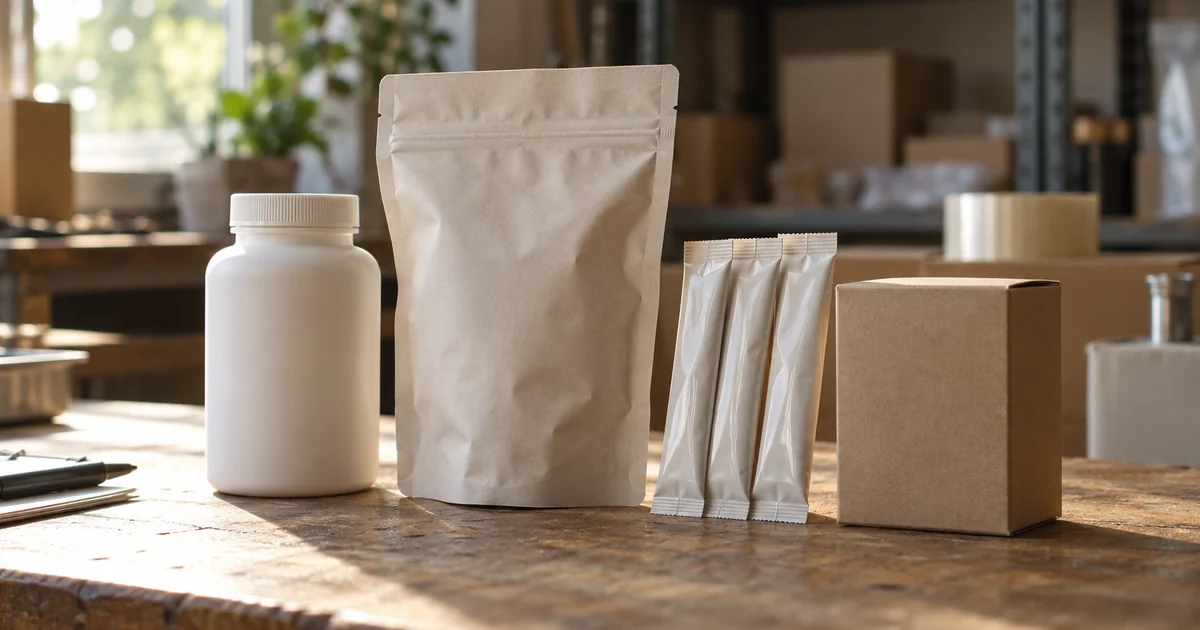
Most first-time buyers assume the hard part is the formula. It is not. Bottles, caps, induction seals, labels, and cartons are physical goods with their own lead times, and they are often made by a different factory than the one filling your product.
- Stock bottle and cap: 3–7 days if the supplier holds inventory.
- Custom bottle or mould: 25–40 days, plus tooling cost.
- Printed labels: 7–12 days after artwork approval.
- Folding cartons with foil or spot UV: 10–18 days.
This is why a supplier who quotes "20 days production" is technically correct and practically useless. The production line is not the constraint; the label printer is.
A private label supplement manufacturer that already stocks standard 60cc and 100cc HDPE bottles, or standard gummy jars, can cut two weeks off a first order. If your design needs a custom mould, plan for the extra month.
Week 4–5: production
Once components and raw materials are all in the building, production is quick:
| Format | Blending | Filling / compression | Packing |
|---|---|---|---|
| Capsules | 1 day | 1–2 days | 1 day |
| Tablets | 1 day | 1–3 days | 1 day |
| Gummies | 1 day | 2–3 days (plus curing) | 1 day |
| Softgels | — | 2–4 days | 1 day |
| Powder / stick packs | 1 day | 1–2 days | 1 day |
gummies deserve a note: they are not finished when they leave the mould. Most gummy lines need 48 to 72 hours of curing before the product is stable enough to pack, and that time is often left out of a quoted lead time.
Week 5–7: testing and release
A batch is not released because it looks right. It is released when the analytical results come back.
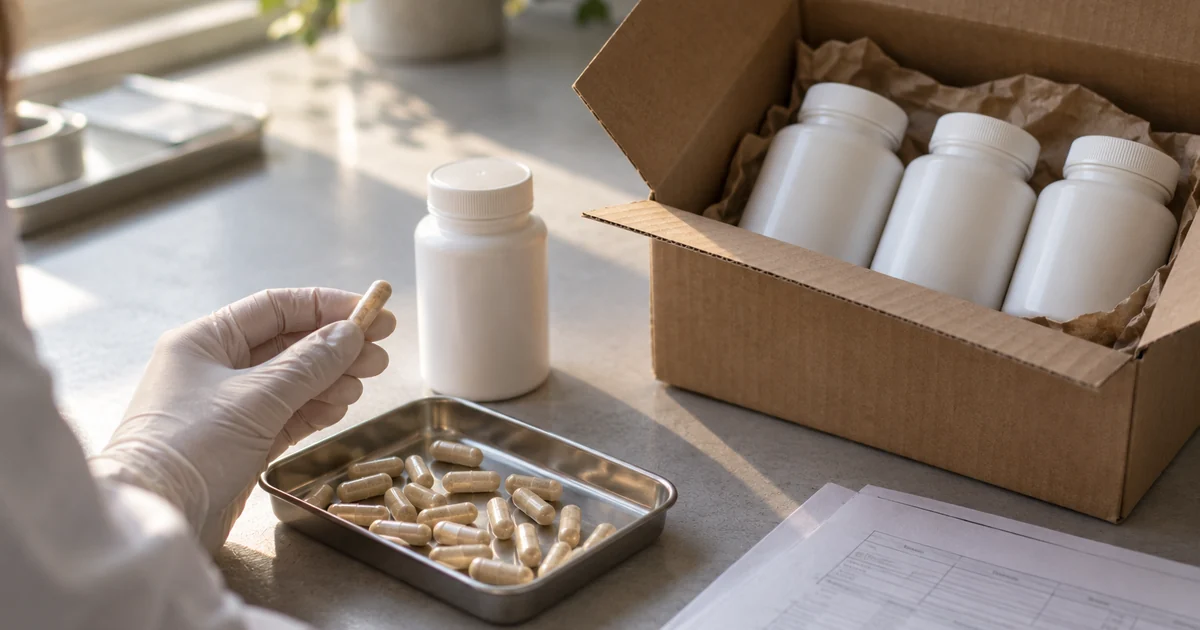
In-house QC — weight variation, hardness, disintegration, moisture — is same-day or next-day. Third-party testing for identity, potency, and heavy metals is usually 5 to 7 working days, and 10 days if you add microbials or a full certificate of analysis panel. If a result is out of specification, the batch goes to investigation, and that is a two-week conversation, not a two-day one.
Two practical rules:
- Ask whether the quoted lead time includes third-party testing. Many do not.
- Ask for the CoA before the goods ship, not after. If the CoA appears only when you chase it, the batch was probably released on in-house data alone.
Week 7–12: freight, and the difference between ex-works and landed
This is where the biggest misunderstanding lives. A supplier quoting 30 days is usually quoting ex-works: the day the pallet leaves the factory gate. Your goods are not sellable that day.
- Ocean freight, China to US West Coast: 18–25 days port to port, 30–40 days door to door with customs.
- Ocean freight, China to Europe: 28–35 days port to port, 40–50 days door to door.
- Air freight: 5–8 days door to door, at roughly 4 to 8 times the cost per kilo.
- Amazon FBA: add 5–10 days for appointment scheduling at the fulfilment centre, longer in Q4.
So when a supplier says "lead time 30 days", always ask the follow-up question: 30 days to what? Ex-works, FOB, or delivered duty paid. Three suppliers, three different answers, and only one of them is comparable.
Counting backwards from your launch date
Work backwards, not forwards. Suppose you want stock live on 1 June.
| Milestone | Date |
|---|---|
| Goods in your warehouse | 1 June |
| Ship departs factory | 1 May (ocean) |
| Testing complete, goods released | 24 April |
| Production finished | 17 April |
| Components and raw materials on site | 10 April |
| Artwork approved, PO placed | 20 March |
| Formula and samples signed off | 6 March |
That is a 12-week runway, and it assumes nothing goes wrong. If your launch is tied to a trade show, a Q4 push, or a retailer reset date, add two weeks of buffer. In practice, first orders run late far more often than they run early.
Chinese New Year is its own scheduling problem. Factories in Guangdong and Zhejiang typically close for two to four weeks around the Spring Festival, and the weeks before the closure are chaos as everyone tries to ship. Material ordered in January often lands in March. If your timeline crosses late January or February, plan around it rather than hoping.
What actually speeds an order up
Ranked by real-world impact:
- Use a stock formula. A formula the factory already runs needs no development, no sample round, and no new raw material sourcing. This is the single biggest lever — often 3 to 4 weeks.
- Use stock packaging. Standard bottle, standard cap, standard label size. Custom moulds are the second biggest delay after formula development.
- Approve artwork in one pass. Send the dieline to your designer before the supplier's regulatory review, not after.
- Pay the deposit immediately. A production slot is not reserved until money moves.
- Ship air for the first batch only. Air freight on 500 units costs less than missing a launch, and it buys you time to plan ocean freight for the reorder.
What does not speed an order up, despite what sales teams suggest: asking for a "rush" without changing any of the above. A factory can sometimes compress scheduling, but it cannot compress a label printer or a lab.
Red flags in a quoted lead time
- A number with no unit definition. "30 days" means nothing without ex-works or landed.
- No mention of testing. If testing is not in the timeline, it will happen after you expect to ship.
- No mention of Chinese New Year in a quote issued in November or December.
- Lead time quoted before the formula is confirmed. It is a guess until raw materials are checked against the spec.
- A very short lead time on a custom formula. Either the formula is not really custom, or the timeline is missing a stage.
The bottom line
Plan on 8 to 12 weeks for a first private label order from Asia to your warehouse, and 6 to 8 weeks for a reorder on a stock formula with stock packaging. The production line is the fastest part of the process. Artwork, components, testing, and freight are what you are really scheduling.
If you want the timeline to hold, decide the formula and the pack before you ask for a price. Everything downstream depends on those two decisions, and both of them are yours, not the factory's.
FAQ
How long does it take to manufacture supplements?
Production itself takes 3 to 7 days for most formats. The full order, from purchase order to delivered goods, typically takes 8 to 12 weeks once artwork, component lead times, testing, and freight are included.
Does a private label supplement take longer than a custom formula?
No. Private label using a stock formula is the fastest route, usually 6 to 8 weeks to your door. A custom formula adds 3 to 4 weeks for development, sampling, and stability work before production can start.
Can I shorten the lead time by paying more?
Partly. Air freight cuts 25 to 35 days off delivery, and a factory can sometimes prioritise scheduling. Neither shortens artwork approval, label printing, or lab testing, which are the stages most likely to slip.
Is the lead time the same for gummies and capsules?
Gummies usually take slightly longer. Capsules can be filled in 1 to 2 days; gummies need 48 to 72 hours of curing after moulding before they can be packed, and that curing time is often omitted from a quoted schedule.
What happens if a batch fails testing?
The batch goes into investigation and cannot ship. Re-testing typically adds 5 to 10 working days; reformulation or a re-run adds 2 to 3 weeks. This is why the CoA should be a condition of release, not an afterthought.