

Omega-3 Gummies That Do Not Taste Like Fish
Oil and gummy do not naturally coexist. The work is done by the powder grade, the antioxidant system and the oxidation numbers: we specify peroxide and anisidine values on the incoming ingredient and re-test TOTOX on the finished gummy.
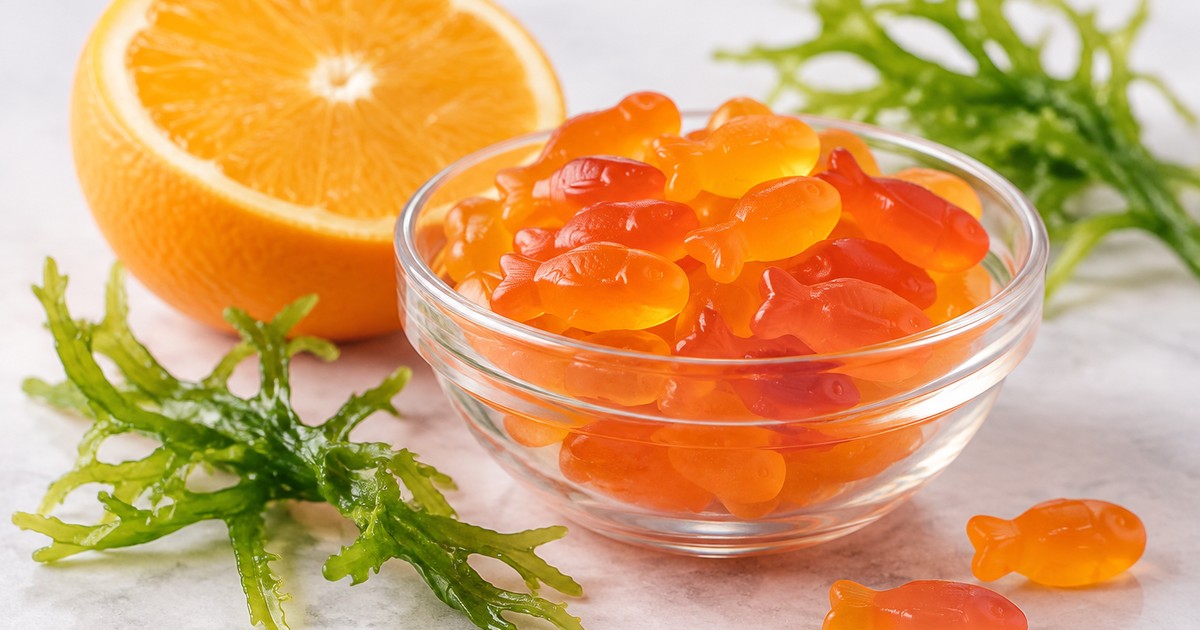
Where Omega-3 Gummies Go Wrong
Rancidity is the first failure and it is measurable. Peroxide value tracks primary oxidation, anisidine value tracks secondary oxidation, and TOTOX combines them; a specification of TOTOX below 26 is the usual commercial threshold, and below 10 is what a long-shelf-life gummy should start from. If the incoming powder is already at 15, the finished product will be unpalatable in four months.
The second is form. Liquid fish oil cannot be dosed into a pectin cook, so the industry uses microencapsulated or spray-dried algal oil powders at 10-30% oil load. That means 100-250 mg of DHA per serving is realistic, and 1,000 mg is not; the brands that claim the latter are usually counting total oil weight rather than DHA.
The third is taste. Even a good powder carries a marine note at 200 mg, so citrus and berry systems with a masking agent are standard, and an antioxidant blend of mixed tocopherols plus rosemary extract slows the return of the fishy note through shelf life.
What Our Omega-3 Gummy Line Covers
Omega-3 Gummy Capability
| Parameter | Range | Notes |
|---|---|---|
| DHA+EPA | 100-250 mg per serving | Depends on powder oil load |
| Powder oil load | 10-30% | Microencapsulated or spray-dried |
| TOTOX (incoming) | ≤ 26, target ≤ 10 | Peroxide and anisidine tested separately |
| Base | Pectin (vegan) or gelatin | Pectin is standard for algal DHA |
| Gummy weight | 3-4 g | Larger piece for higher powder load |
| Batch size | 50,000-2,000,000 gummies | Pilot runs from 3,000 units |
From Brief to Finished Omega-3 Gummy
Quality Control for Omega-3 Gummies
Two numbers define the batch: DHA on the finished piece and TOTOX after curing. A gummy that assays correctly but climbs past 30 in TOTOX will come back from customers as a taste complaint, so both are reported per lot rather than only at the pilot stage.
Production runs under GMP with ISO 9001, ISO 22000 and HACCP and the facility is registered with the US FDA as a food facility. Halal certification is held; third-party testing of DHA and oxidation values is available for each batch.
Omega-3 Gummy FAQ
How much DHA can one gummy hold?+
Will the gummies taste fishy?+
Do you test for oxidation?+
Can omega-3 gummies be vegan?+
Is the dose the same as a softgel?+
What packaging do you recommend?+
What is the minimum order?+
How long does production take?+
Send Your Omega-3 Gummy Brief
Tell us the DHA dose, whether the source is algal or fish, and the shelf life you need. We will send the powder specification we would use before quoting.