

Private Label Softgels With Ready Formulas
Skip formulation and stability work. Choose a proven softgel from our stock list, put your brand on it, and start selling in three to four weeks with a minimum of 3,000 units per SKU.
Your Label on a Formula That Already Works
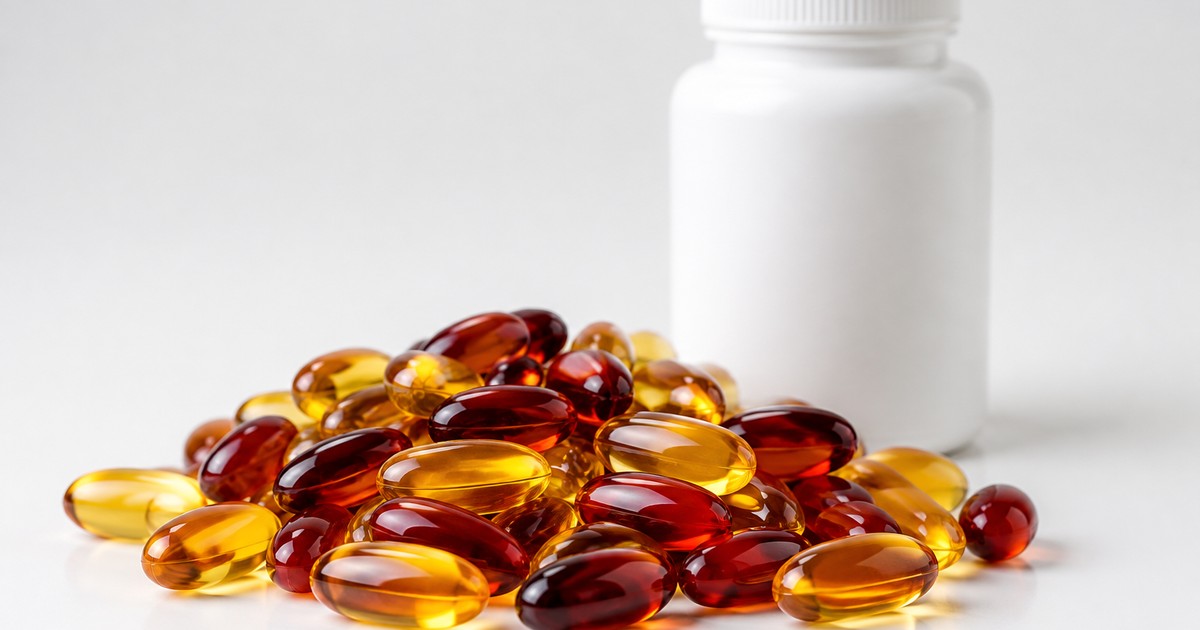
Private label softgels are stock formulas produced under your brand. You do not fund formulation development, stability studies or trial batches, because the recipe, shell specification and stability data already exist. You choose the product, approve the artwork and place a purchase order.
This is the fastest route to market for a first softgel SKU. Popular options include fish oil and omega-3, krill oil, CoQ10, vitamin D3, vitamin E, biotin, lutein and astaxanthin. Every formula has a fixed fill weight and shell specification, so the label you print today matches the batch you receive next quarter.
If you later need a different potency, a combination product or your own formula, the same plant can move you to contract manufacturing without changing supplier.
What Private Label Softgels Include
Private Label Softgel Range
| Parameter | Range | Notes |
|---|---|---|
| Stock formulas | Fish oil, krill, CoQ10, D3, E, biotin, lutein, astaxanthin | Full list on request |
| Fill weight | 200-1,200 mg | Fixed per stock formula |
| Shell | Gelatin, opaque or clear | Colour to your artwork |
| Minimum order | 3,000 units per SKU | Mixed SKUs can ship together |
| Lead time | 3-4 weeks | Stock formula, after artwork approval |
| Packing | Bottles, blisters, bulk | Your label and carton |
From Formula Choice to Delivery
Quality Behind Every Private Label Batch
Stock formula does not mean relaxed quality. Each batch is produced under the same GMP controls as a custom run: fill-weight checks, seam inspection, drying and polishing controls, and assay testing before release. Certificates of analysis are issued per batch and batch-specific samples are retained.
The plant holds GMP certification with ISO 22000 and HACCP controls and is registered with the US FDA as a food facility. Halal certification is available for relevant formulas, and third-party laboratory testing can be arranged for buyers who need independent verification.
Private label softgels: fill types, shell options and small-run reality
Softgels are the premium delivery format in supplements and the one with the least flexibility at low volume. The shell, the fill and the finishing line all interact, and changing any one of them moves the minimum order. This page covers what can be customised in a private label softgel programme, what should not be, and how to plan a first run that does not end in a shelf full of unsellable stock.
What the fill can and cannot be
A softgel fill is either an oil solution or suspension, or a paste-like suspension of powder in oil. Water-based fills are technically possible but rare, because water migrates into the gelatin shell and softens it. That single constraint determines most of the formulation decisions: water-soluble actives have to be suspended in oil with a dispersing agent, or moved to a different format.
Typical fills are triglycerides such as MCT or refined sunflower oil, with the active dissolved where it is oil-soluble (CoQ10, vitamin E, carotenoids, CBD) or suspended where it is not (most herbal extracts, minerals, water-soluble vitamins). Emulsified systems exist and allow higher payloads of hydrophilic material, but they need a validated emulsion stability package.
Payload limits are set by viscosity and by fill volume. A standard size 20 oblong softgel holds around 1,000 mg of fill; above that you move to larger shells, which consumers notice.
Shell options that matter
Gelatin is the default: bovine or porcine, with glycerin and water, and it gives the best oxygen barrier and the most robust shell. HPMC (vegetable) shells are available for vegetarian and halal positioning; they are more expensive, more sensitive to processing conditions and generally need a longer drying time.
Enteric softgels use a coating or a modified shell to delay release until the intestine, which is relevant for ingredients that irritate the stomach or degrade in acid. This is a genuine technical capability and worth asking about specifically, because not every softgel line can do it.
Colour, opacity and finish are cosmetic but commercially significant. Opaque shells protect light-sensitive actives such as astaxanthin or CoQ10; clear shells look premium but expose the fill to light. Print on the shell and a banded seam are common customisations and both add tooling cost.
Why small runs are expensive, and how to plan around it
Softgel manufacturing is a continuous process: the fill is prepared in a batch, the shell is cast on a drum, and the two are joined and cut on a rotary die. The rotary die is the constraint — it is set up for a particular shell size and shape, and a changeover consumes time and material. That is why softgel MOQs are higher than capsule MOQs and why a new shape is a tooling project rather than a label change.
For a first run, the sensible strategy is a stock shell size (oblong 20 or 16) with a custom fill, a custom opacity and a printed or banded finish. That combination delivers a product that looks brand-specific without tooling. A new die shape is usually a second-year decision, once the SKU is proven.
The other small-run lever is packaging: a stock bottle with a digitally printed label can be produced in the hundreds, while a custom moulded bottle cannot. Most brands should spend their customisation budget on the fill and the shell, not on the container.
Quality checks specific to softgels
Softgels are tested for fill weight, seam integrity, shell thickness, disintegration and, for enteric products, acid resistance. Fill weight is the parameter that most often drifts on a small run, so the batch record should include in-process checks rather than only finished-product testing.
Stability for a softgel includes the shell as well as the fill: moisture transfer, cross-linking (which slows disintegration), and colour change. Cross-linking is a known failure mode with gelatin shells and certain fill ingredients, particularly aldehydes from oxidised oils or from some flavour systems, so a peroxide value on the carrier oil is a cheap early warning.
Ask for the finished-product assay at release and at each stability point, a disintegration test at release, and a documented shell formulation. Without those three, a softgel claim is a hope rather than a specification.
Private Label Softgel FAQ
What is a private label softgel?+
How is private label different from contract manufacturing?+
What is the minimum order?+
How fast can I get the first shipment?+
Can I change the potency or add an ingredient?+
Who owns the label and the brand?+
Can you print my artwork and carton?+
Are the softgels tested before shipping?+
Request the Private Label Softgel List
Tell us which ingredients interest you and the market you sell into. We will send the stock formula list with fill weights, assays, pricing and the artwork requirements for your label.