

Sea Moss Gummies With an Iodine Number, Not a Mineral List
Sea moss is a seaweed, so its iodine content swings with species, harvest and season. We assay iodine and heavy metals on every lot before it goes into a cook, and we build the taste system around the marine note instead of hiding it under sugar.
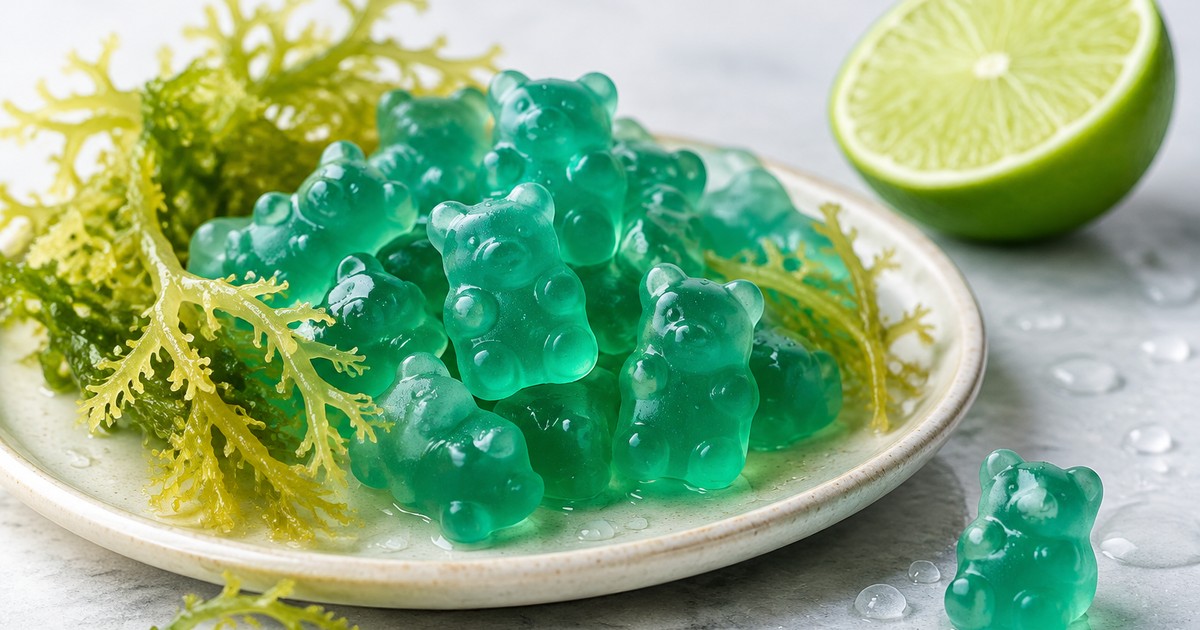
The Two Numbers That Decide a Sea Moss Gummy
The first is iodine. Chondrus crispus and Eucheuma cottonii are different seaweeds with different mineral profiles, and iodine in dried seaweed commonly ranges from tens to several thousand micrograms per gram depending on species and harvest. A 1,000 mg serving of one lot can deliver a sensible daily iodine intake; the same weight from another lot can exceed the tolerable upper intake level of 1,100 µg for adults.
The second is heavy metals. Seaweed accumulates arsenic, cadmium and lead from seawater, and the EU and US markets apply different limits to different species. Incoming lots are screened before formulation, not after the finished gummy exists.
Texture is the easy part by comparison. Sea moss powder is a hydrocolloid itself and thickens the cook, so a pectin base usually needs the load capped and the water activity watched closely. The marine, slightly fishy note is the harder brief, and we mask it with citrus or berry systems rather than with a heavy sugar load that contradicts the health positioning.
What Our Sea Moss Gummy Line Covers
Sea Moss Gummy Capability
| Parameter | Range | Notes |
|---|---|---|
| Sea moss powder | 250-500 mg per gummy | 500-1,000 mg per 2-piece serving |
| Species | Chondrus crispus, Eucheuma cottonii, bladderwrack | Single or blended |
| Iodine | Assayed per lot | Target set against the destination market |
| Gummy weight | 4-5.5 g | Heavier piece masks the marine note better |
| Base | Pectin, gelatin, sugar-free polyol | Pectin for vegan and clean label |
| Batch size | 50,000-2,000,000 gummies | Pilot runs from 3,000 units |
From Brief to Finished Sea Moss Gummy
Quality Control for Sea Moss Gummies
Every batch carries an iodine result and a heavy metal panel, because the raw material is the variable, not the process. Colour is checked against a retained standard as well: seaweed powders darken with storage, and a gummy that drifts from amber to olive signals oxidation before any assay does.
The plant operates under GMP with ISO 9001, ISO 22000 and HACCP controls and is registered with the US FDA as a food facility. Third-party laboratory verification is available for iodine, arsenic speciation and microbiological counts.
Sea Moss Gummy FAQ
How much sea moss goes into one gummy?+
Will the iodine content be consistent?+
Is there a risk of too much iodine?+
Do you test for heavy metals?+
Can sea moss gummies be vegan?+
Can you combine sea moss with bladderwrack or burdock?+
What is the minimum order?+
How long does production take?+
Send Your Sea Moss Gummy Brief
Tell us the species, the serving size and the market you are selling into. We will come back with the iodine range we can hold, the heavy metal panel that applies, and a quotation.