

Fiber Gummies That Still Chew Like a Gummy
Fiber is the hardest active to carry in a gummy: it thickens the cook, pulls water out of the air and turns texture gritty above a certain load. We build the base around the fiber type, not the other way round, and quote grams per piece instead of a vague blend claim.
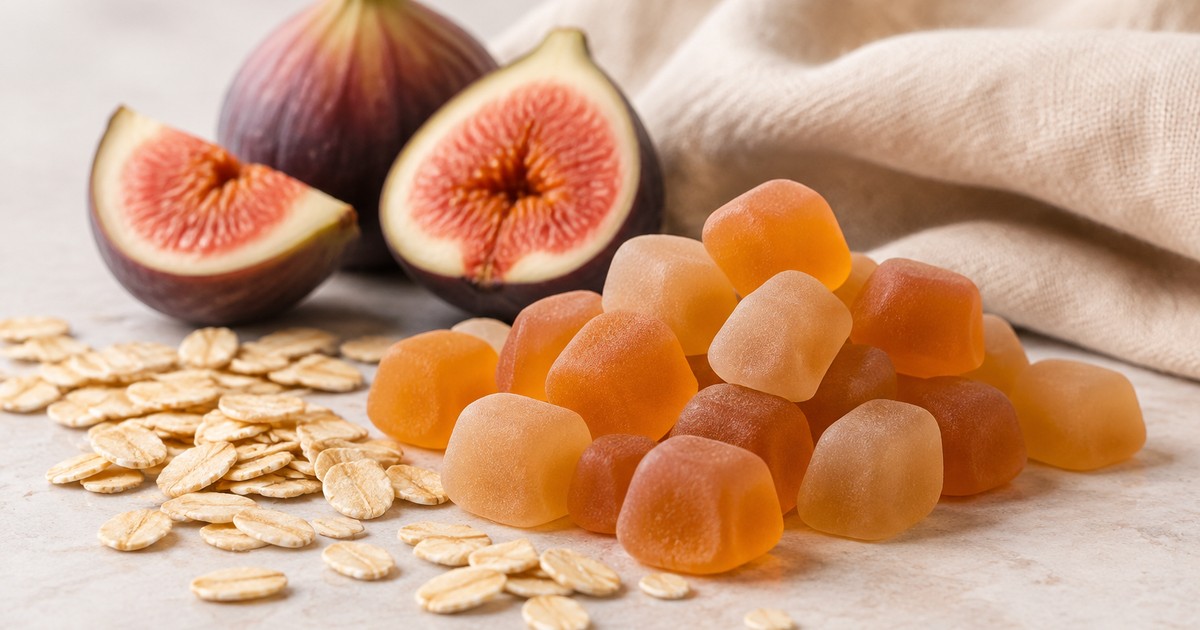
Why Fiber Gummies Fail on Texture
A gummy is mostly water-binding solids, and soluble fiber binds water far more aggressively than sugar or glucose syrup. Push inulin or polydextrose past roughly 25-30% of the cook and the mass turns ropey, deposits short, and cures into something closer to a wine gum than a soft chew.
The second problem is dose math. US labelling recognises a 'good source' claim at 2.5 g dietary fiber per serving and 'excellent source' at 5 g, so a product that wants a real claim needs either a heavy piece or two to three pieces per serving. We plan the serving size with you before formulation, because it sets the gummy weight, the mould and the price.
The third is tolerability. Inulin and FOS ferment in the colon and cause gas at higher intakes, which is why many brands blend them with soluble corn fiber or resistant dextrin. We can run either route and will tell you where the practical ceiling sits for your claim.
What Our Fiber Gummy Line Covers
Fiber Gummy Capability
| Parameter | Range | Notes |
|---|---|---|
| Dietary fiber | 3-5 g per gummy | 6-10 g per 2-piece serving |
| Fiber sources | Inulin, FOS, soluble corn fiber, polydextrose, resistant dextrin, acacia | Single or blended |
| Gummy weight | 4-6 g | Heavier piece for higher load |
| Base | Pectin, gelatin, sugar-free polyol | Pectin handles fiber load best |
| Water activity | 0.55-0.65 | Verified per batch before packing |
| Batch size | 50,000-2,000,000 gummies | Pilot runs from 3,000 units |
From Brief to Finished Fiber Gummy
Quality Control for High-Fiber Gummies
Fiber gummies are checked on three points that sugar gummies do not need: fiber assay on the finished piece (not the input), water activity after curing, and firmness over shelf life. A batch that passes assay but climbs in firmness will be returned by the customer six months later.
The plant works under GMP with ISO 9001, ISO 22000 and HACCP controls and is registered with the US FDA as a food facility. Heavy metals and microbiological testing are run per batch, and third-party laboratory verification is available on request.
Fiber Gummy FAQ
How much fiber can one gummy hold?+
Which fiber works best in a gummy?+
Can fiber gummies be sugar-free?+
Will the gummies sweat in the pack?+
Do fiber gummies actually work?+
Can you combine fiber with probiotics?+
What is the minimum order?+
How long does production take?+
Send Your Fiber Gummy Brief
Tell us the fiber grams, the source you prefer and the claim you want on the label. We will confirm the piece count that makes it work and come back with a quotation and assay scope.