

Gut Health Gummies That Survive the Cook
Most probiotic strains die at 80 °C, which is why the working formats are prebiotic fiber, spore-forming Bacillus, and enzymes added after the base cools. We build all three.
What Actually Works in a Chew
A gummy is cooked at 105-115 °C and deposited at around 80 °C, so a conventional Lactobacillus or Bifidobacterium blend does not survive unless it is added after cooling, which limits the format to a coated or filled piece. The practical route for a plain gummy is spore-forming Bacillus coagulans or B. subtilis, which tolerate the process and hold viability on the shelf.
The second route is prebiotic. Inulin, FOS and soluble corn fiber at 3-5 g per serving feed the existing flora and carry a defensible structure-function story. They also thicken the cook and pull water, so the base has to be pectin-heavy and the water activity controlled.
The third is enzymes. Protease, amylase and lipase are proteins and lose activity at cook temperature, so they are dosed into the cooled mass. Where a brand wants a visible enzyme claim, the assay is on activity units, not on weight.
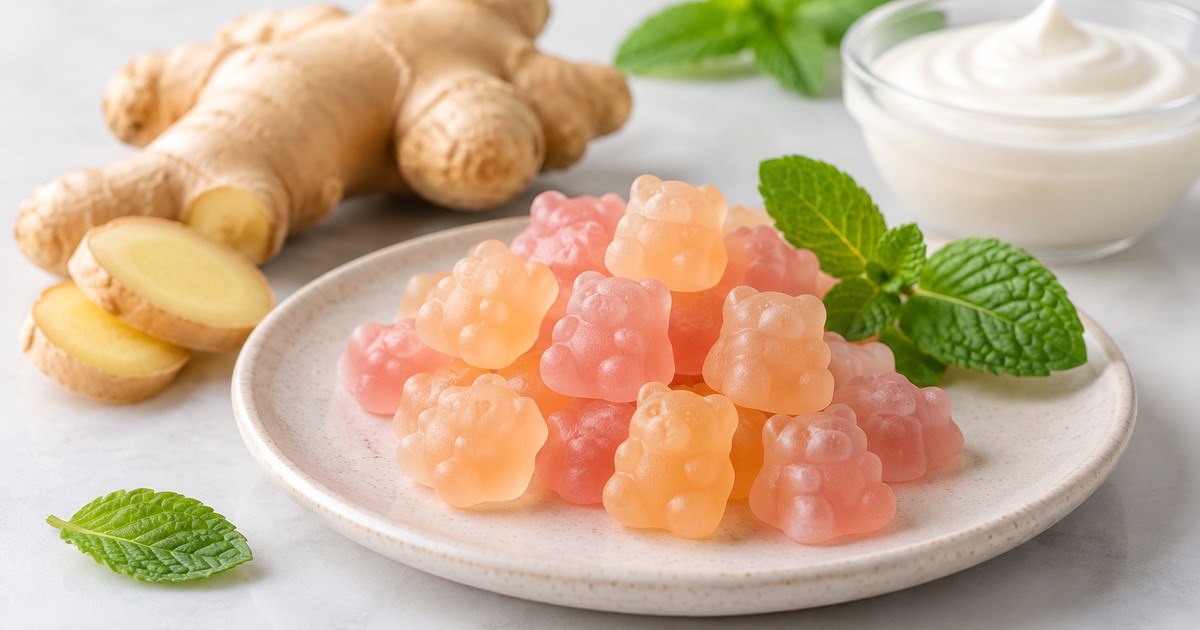
Ginger, peppermint and fennel are the flavour-side actives in this category. They are oils, they need an emulsifier, and peppermint at high load makes the piece taste like toothpaste rather than a supplement.
What Our Gut Health Gummy Line Covers
Gut Health Gummy Capability
| Parameter | Range | Notes |
|---|---|---|
| Prebiotic fiber | 3-5 g per serving | Inulin, FOS or soluble corn fiber |
| Bacillus coagulans | 1-2 billion CFU per serving | Spore form, heat tolerant |
| Digestive enzymes | 50-200 mg per serving | Post-cook addition, activity assayed |
| Ginger or peppermint | 10-50 mg per serving | Emulsified oil premix |
| Gummy weight | 4-6 g | Heavier piece for fiber load |
| Batch size | 50,000-2,000,000 gummies | Pilot runs from 3,000 units |
From Brief to Finished Gut Gummy
Quality Control for Gut Gummies
Spore counts are measured in CFU on the finished gummy, not calculated from the input, because depositing temperature and water activity both affect survival. Enzyme products are assayed in activity units per piece. Fiber is measured rather than declared from the formula.
The plant operates under GMP with ISO 9001, ISO 22000 and HACCP controls and is registered with the US FDA as a food facility. Heavy metals and microbiological testing run per batch, with third-party verification available.
Gut Health Gummy FAQ
Can you put live probiotics in a gummy?+
How much prebiotic fiber fits in a gummy?+
Do digestive enzymes survive manufacturing?+
Will fiber gummies cause gas?+
Can the gummy be sugar-free?+
Do you test CFU at end of shelf life?+
What is the minimum order?+
How long does production take?+
Send Your Gut Gummy Brief
Tell us whether the story is prebiotic, spore probiotic or enzyme-led, and the serving size you want to print. We will confirm what survives the cook and quote the run with the assay scope.