Collagen is the most dose-sensitive ingredient in the gummy category, and almost nobody says so on the label. Clinical trials use 2.5 to 10 g of hydrolysed collagen peptides per day. A typical collagen gummy weighs 2.5 g and contains 0.5 to 1 g of collagen — which means the consumer needs five to twenty gummies a day to reach the studied dose, and the brand needs a very good story to explain the gap.
This guide covers what a collagen gummy can and cannot deliver: peptide selection, dose reality, the gelatin paradox, texture without gelatin, hydroxyproline testing, stability, cost per gram, and the claims that survive regulatory review.
The dose problem, stated plainly
| Product type | Collagen per serving | Gummies needed for 5 g | Honest positioning |
|---|---|---|---|
| Powder, 10 g scoop | 8–10 g | — | Full clinical dose |
| Ready-to-drink shot | 5–10 g | — | Full dose, single serve |
| Large gummy, 4 g piece | 1.5–2 g | 3–4 pieces | Must disclose pieces per serving honestly |
| Standard gummy, 2.5 g piece | 0.5–1 g | 5–10 pieces | “With collagen”, not a collagen dose product |
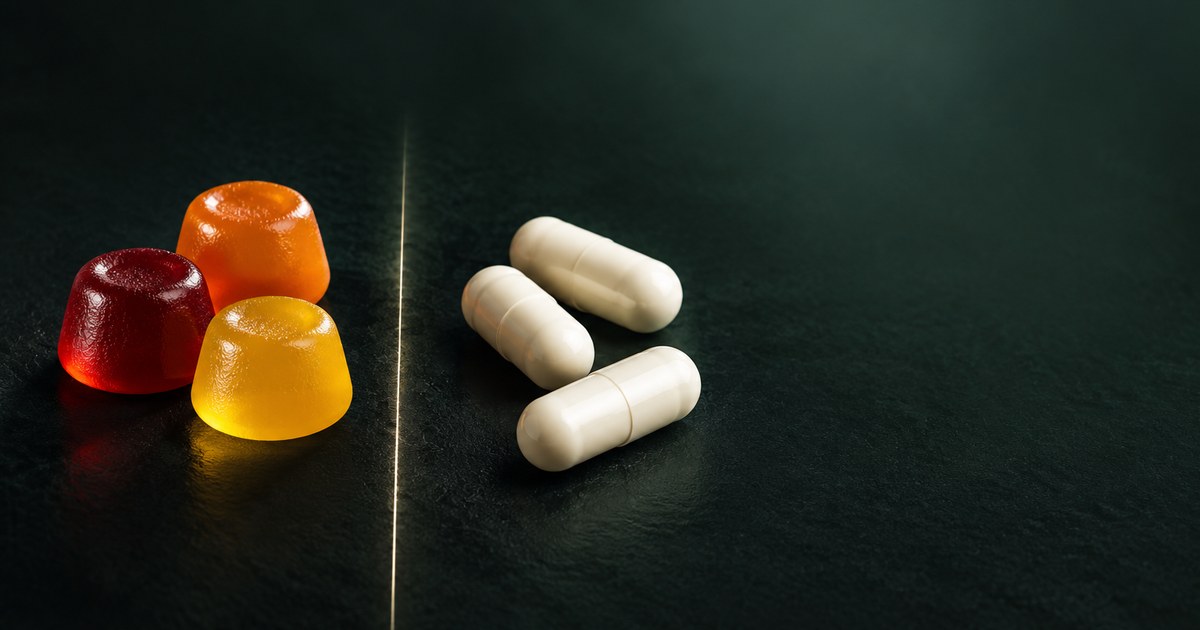
| Capsule | 0.4–0.6 g | 8–12 capsules | Worse than a gummy for dose; sold on convenience |
The ceiling is physics. Collagen peptides are a bulk powder with no sweetness and a distinctive taste; at more than about 20 % of the gummy mass, texture collapses and the flavour becomes savoury. So a 2.5 g gummy tops out around 0.5 g, and a 4 g gummy around 0.8–1 g unless the formula is deliberately built around the protein.
Peptide selection: not all collagen is the same input
| Type | Source | Molecular weight | Solubility | Gummy verdict |
|---|---|---|---|---|
| Hydrolysed collagen peptides (bovine) | Hide, bone | 2–10 kDa | High | Best fit; low taste impact |
| Hydrolysed collagen (porcine) | Skin | 2–10 kDa | High | Good; check halal/ positioning |
| Marine collagen peptides | Fish skin, scales | 1–5 kDa | High | Good; stronger odour, needs masking |
| Gelatin hydrolysate | Bovine/porcine | 10–30 kDa | Moderate | Causes gelling; conflicts with texture control |
| Undenatured type II collagen (UC-II) | Chicken sternum | Intact triple helix | Low | Micro-dose (40 mg) — fits, but is a joint product |
| Collagen di/tripeptides (Pro-Hyp, Hyp-Gly) | Enzymatic | <1 kDa | Very high | Premium; assay is harder, cost is 2–3× |
Two practical notes. First, marine collagen smells like fish when it is wet and warm; a gummy is a warm, wet process, so the masking budget is real. Second, gelatin hydrolysate is cheap and technically a collagen peptide, but it gels — the very property you do not want in a gummy matrix unless you are deliberately building a gelatin gummy.
The gelatin paradox
Many “collagen gummies” use gelatin as the gelling agent. That is defensible in a nutritional sense — gelatin is denatured collagen — but it creates three problems: the product cannot be vegan or halal-friendly, the label claim “collagen” may be double-counted, and the texture is set by the same ingredient that is supposed to be the active.
| Gelling system | Vegan | Texture | Collagen compatibility | Notes |
|---|---|---|---|---|
| Gelatin | No | Chewy, springy | Perfect chemically, awkward commercially | Cheapest; classic gummy |
| Pectin (HM/LM) | Yes | Soft, short bite | Good | Needs careful pH and calcium control |
| Starch moulding | Yes | Firm, matte | Good | Best for high-dose protein loading |
| Agar | Yes | Brittle | Moderate | Poor chew; use in combination |
| Carrageenan | Yes | Firm, slightly rubbery | Moderate | Texture drift over shelf life |
If the brand promise is vegan beauty, use pectin or starch and accept a softer bite. If the promise is a classic chewy collagen gummy at low cost, gelatin is the answer — and the marketing should not claim vegan.
Vitamin C and the cofactor story
| Component | Typical level | Function | Constraint |
|---|---|---|---|
| Vitamin C (ascorbic acid) | 40–80 mg | Cofactor for prolyl/lysyl hydroxylase in collagen synthesis | Acid taste, browning with reducing sugars |
| Vitamin C (sodium ascorbate) | 40–80 mg | Same, less acidic | Slightly salty; better in gummies |
| Zinc | 2–5 mg | Collagen synthesis enzyme cofactor | Metallic taste above 5 mg |
| Hyaluronic acid | 50–120 mg | Skin hydration positioning | Cost; viscosity at high load |
| Biotin | 30–5,000 µg | Hair/nail positioning | Interferes with lab immunoassays at high dose |
Vitamin C is the only cofactor with a defensible mechanistic story, and the dose needed for that role is small — 40–80 mg is enough. A 500 mg vitamin C claim in a collagen gummy adds acid taste for no additional benefit.
Testing: the assay that separates real from relabelled
| Test | Method | What it proves | Typical cost |
|---|---|---|---|
| Hydroxyproline content | Colorimetric (ISO 3496 style) or HPLC | Actual collagen protein present | $80–200 per sample |
| Nitrogen / protein by Kjeldahl | Kjeldahl | Total protein, not collagen-specific — easily gamed by other proteins | $40–100 |
| Molecular weight distribution | SEC-HPLC / GPC | Whether the peptide is actually hydrolysed | $150–350 |
| Amino acid profile | HPLC after hydrolysis | Glycine, proline, hydroxyproline ratios | $200–450 |
| Species identification | PCR | Bovine vs porcine vs marine, and adulteration | $150–300 |
Hydroxyproline is the marker that matters: it occurs almost exclusively in collagen, so it cannot be inflated with soy or whey protein. A supplier who reports only “protein” is reporting a number that any nitrogen source can produce.
Stability and taste over shelf life
| Issue | Cause | Timeline | Mitigation |
|---|---|---|---|
| Maillard browning | Peptides + reducing sugars + heat | 3–9 months | Non-reducing syrup, lower cure temperature, opaque jar |
| Savours/off-note | Peptide oxidation, marine odour | Immediate to 6 months | Masking flavour, antioxidant, low headspace oxygen |
| Texture hardening | Moisture loss through the jar | 6–12 months | High-barrier seal, aw control |
| Colour fade | Natural colours + light | 2–6 months | Opaque packaging, encapsulated colour |
| Vitamin C loss | Oxidation | 15–40 % at 12 months | Sodium ascorbate + overage |
How collagen actually gets into the gummy
Collagen peptides are not a trace ingredient, so how they are added changes the whole process. There are three routes, and they produce noticeably different products.
| Route | Method | Load achieved | Effect on texture | Best for |
|---|---|---|---|---|
| Dry blend into the syrup | Peptide powder dispersed in the cooked syrup before depositing | 10–20 % of mass | Softens the gel; reduces chew | Standard 0.5–1 g pieces |
| Slurry pre-dispersion | Peptide hydrated in water first, then folded into the base | 15–25 % | Better dispersion, fewer lumps | Higher-load pieces |
| Starch moulding with protein | High-protein base cast into starch trays | 25–35 % | Firm, matte, less elastic | Functional “protein gummy” formats |
Two process details decide success. First, dispersion: collagen peptides hydrate slowly and form lumps that survive depositing as hard specks. A high-shear pre-mix, or a slurry stage, is not optional at loads above 15 %. Second, temperature: every minute at 95 °C is a minute of Maillard reaction with the glucose syrup, so add the peptide as late as the process allows and cool before the flavour goes in.
Ask your manufacturer which route they use and what load they have actually run before. A factory that has only made 0.5 g collagen gummies will struggle to hit 1.8 g in the same mould, and the first sign is a batch that will not demould.
Comparing two collagen gummy quotes
| Specification | Why it changes the price | What to write down |
|---|---|---|
| Grams of collagen per piece | The single biggest cost driver | Actual grams, not “collagen blend” |
| Peptide source and MW | Marine and di-peptide grades cost 2–3× bovine | Species, MW range, supplier |
| Pieces per serving | Determines label claim and bottle size | Pieces, grams, per-serving totals |
| Gelling system | Gelatin is cheaper than pectin; starch moulding costs tooling | Named system, vegan or not |
| Cofactors included | Vitamin C, zinc, HA, biotin each add cost | Dose of each, per piece |
| Assay testing scope | Hydroxyproline testing is not standard | Named test, named lab, per batch |
| Piece weight and count | Bottle fill, carton size, freight | Nominal weight ± tolerance |
Two quotes at the same price per unit are rarely the same product. One may contain 0.4 g of bovine peptide and no assay; the other 1.2 g of marine peptide with hydroxyproline testing on every batch. Comparing them on price alone is how brands end up with the first one and a competitor with the second.
Cost per gram of collagen delivered
| Format | Cost per serving | Collagen per serving | Cost per gram collagen | Servings for 5 g |
|---|---|---|---|---|
| Powder, 10 g stick | $0.16 | 9 g | $0.018 | 1 |
| RTD shot, 60 ml | $0.55 | 7 g | $0.079 | 1 |
| Large gummy, 4 g | $0.085 | 1.8 g | $0.047 | 3 |
| Standard gummy, 2.5 g | $0.045 | 0.7 g | $0.064 | 8 |
| Capsule | $0.055 | 0.5 g | $0.110 | 10 |
Read that table twice. The cheap-looking gummy is the second most expensive way to deliver collagen, and the capsule is the worst. The format that wins on cost per gram is the one nobody markets as premium: powder.
Claims by market
| Market | Permitted framing | Risk |
|---|---|---|
| United States | Structure/function claims with DSHEA disclaimer | “Reduces wrinkles” drifts into a drug claim |
| European Union | No authorised collagen skin claim; protein claims only | Any skin benefit claim is unapproved |
| Japan | Foods with function claims (FFC) pathway if substantiated | Notification dossier cost |
| China | Blue-hat health food registration for function claims | 18–36 month approval timeline |
| Australia/NZ | Listed medicine or food depending on claims | Category choice changes compliance cost by 10× |
A worked formula: 4 g beauty gummy with 1.8 g collagen
| Ingredient | % of batch | Per 4 g piece | Role |
|---|---|---|---|
| Hydrolysed bovine collagen peptide | 45.0 % | 1,800 mg | Active |
| Glucose syrup (DE 42) | 21.0 % | 840 mg | Body, aw control, anti-crystallisation |
| Sucrose | 14.0 % | 560 mg | Sweetness, texture |
| Water | 12.0 % | 480 mg | Processing; driven off during curing |
| Gelatin (220 Bloom) | 5.0 % | 200 mg | Gel structure |
| Citric acid | 1.0 % | 40 mg | pH, flavour brightness |
| Sodium ascorbate | 1.5 % | 60 mg | Vitamin C cofactor, antioxidant |
| Natural flavour | 0.35 % | 14 mg | Masking |
| Colour (beetroot / beta-carotene) | 0.10 % | 4 mg | Appearance |
| Carnauba / oil polish | 0.05 % | 2 mg | Anti-stick, shine |
At 45 % peptide, this is close to the practical ceiling for a gelatin-set gummy: the gel is weak, the chew is short, and the piece must be cured carefully to reach aw 0.55–0.60 without case hardening. It is also the point where most factories will tell you the texture has “changed” — and they are right, which is why the texture reference must be agreed before the pilot run, not after.
The serving on this product should read three gummies (5.4 g collagen), not one. Three pieces at $0.085 each is $0.255 per serving — still cheaper per gram than capsules, and the label is honest.
If you are weighing formats before you choose a supplier, our pages on collagen manufacturing and beauty supplement production set out the equipment, testing and minimum volumes behind each one. For the next decision in the sequence, read how gummies compare with capsules.
Frequently asked questions
How much collagen should a gummy contain?
As much as the format allows while keeping texture — typically 0.5–1 g per piece. Then state the pieces per serving honestly, and do not imply a clinical dose at one gummy.
Is collagen in a gummy absorbed as well as collagen powder?
The peptides are the same; absorption depends on molecular weight, not format. Chewing a gummy may even help dispersion, but the limiting factor is the dose, not the delivery.
Are collagen gummies vegan?
Only if the collagen is a recombinant or plant-derived alternative and the gelling agent is pectin or starch. Standard collagen is animal-derived, and gelatin-based gummies are not vegan either.
Why does my collagen gummy taste savoury after a few months?
Peptide oxidation and Maillard reactions. Reduce headspace oxygen, use non-reducing syrup, and consider an antioxidant in the matrix.
Can I claim skin benefits?
In the EU, no — there is no authorised collagen skin claim. In the US, structure/function wording is possible with the DSHEA disclaimer, but “reduces wrinkles” is a drug claim.
Does vitamin C need to be in the formula?
It helps the mechanistic story and costs little at 40–80 mg. Above that, it adds acid taste without benefit.
Can collagen be combined with biotin and hyaluronic acid?
Yes, and the combination is the standard beauty positioning. Watch total powder load, taste, and note that high-dose biotin interferes with some lab assays.
What is the minimum order for a collagen gummy?
3,000–5,000 units with a stock formula, 10,000–30,000 with a custom mould or a new flavour, because the depositing batch sets the floor.
Sources and further reading
Regulatory and standards
- US FDA, 21 CFR Part 111; dietary supplement guidance.
- EU Regulation 1924/2006 via EUR-Lex; EU Register of health claims.
- European Commission, Food Information to Consumers; Codex Alimentarius standards.
Peer-reviewed research
- Oral and topical peptides for skin aging: systematic review and meta-analysis of randomized controlled trials. Front Med (Lausanne). 2026. PMID 41924746 — the current evidence base for oral collagen peptides and skin outcomes.
- Efficacy and safety of low-molecular-weight collagen peptides in knee osteoarthritis: a randomized, double-blind, placebo-controlled trial. Front Nutr. 2025. PMID 40977985 — the joint-health dose range used in the comparison above.
- Efficacy and tolerability of native (undenatured) type II collagen supplementation for joint health in healthy volunteers. Nutr J. 2026. PMID 41787523 — why UC-II works at 40 mg while hydrolysed peptides need grams.
Standards and industry references
- ISO 22000; GFSI; US FDA HACCP principles.
- United States Pharmacopeia, general chapters <2021>, <232>, <905>.
Doses referenced are those used in published trials; gummy ceilings are practical manufacturing limits from current depositing practice, and should be confirmed by a pilot run on the intended line.