

Resveratrol Gummies: The Trans Form Is the Product
Resveratrol has two isomers and only one of them is what buyers pay for. Light, heat and oxygen convert trans to cis, and a gummy exposes the molecule to all three unless the process and the pack are designed against it.
Isomer Chemistry in a Water-Based Piece
Resveratrol is a stilbene, and its two isomers behave very differently. Trans-resveratrol is the form that appears in the research literature; cis-resveratrol is what you get when the trans form is exposed to ultraviolet light or prolonged heat. Both are called resveratrol on a certificate of analysis, which is why a product can claim 500 mg and deliver a fraction of it in the useful form.
The gummy process exposes the molecule to heat during the cook, to light during cooling and packing, and to dissolved oxygen in a water-based matrix that a capsule never has. Solubility is poor at around 0.03 mg per millilitre in water, so at 100-500 mg per serving the material is a suspension, not a solution, and a suspension has far more surface area available for oxidation.
The dose expectation in the market is 100-500 mg, with 250 mg the most common single-serving figure and 500 mg sold as a high-strength variant. Five hundred milligrams is 12-15 percent of the dry mass of a 4 g piece, which is a heavy load for a gummy but possible if the piece is 4.5 g and the flavour system is lean.
The way to protect the molecule is layered. First, dose the resveratrol as a micronised powder into the cool stage rather than the cook, so it spends minutes at 45 degrees instead of twenty at 85. Second, exclude light from the piece with an opacifier or a dark colour, and pack in an opaque container. Third, purge oxygen from the headspace. Fourth, include an antioxidant pair, typically ascorbic acid in the water phase and tocopherol in any oil phase present.
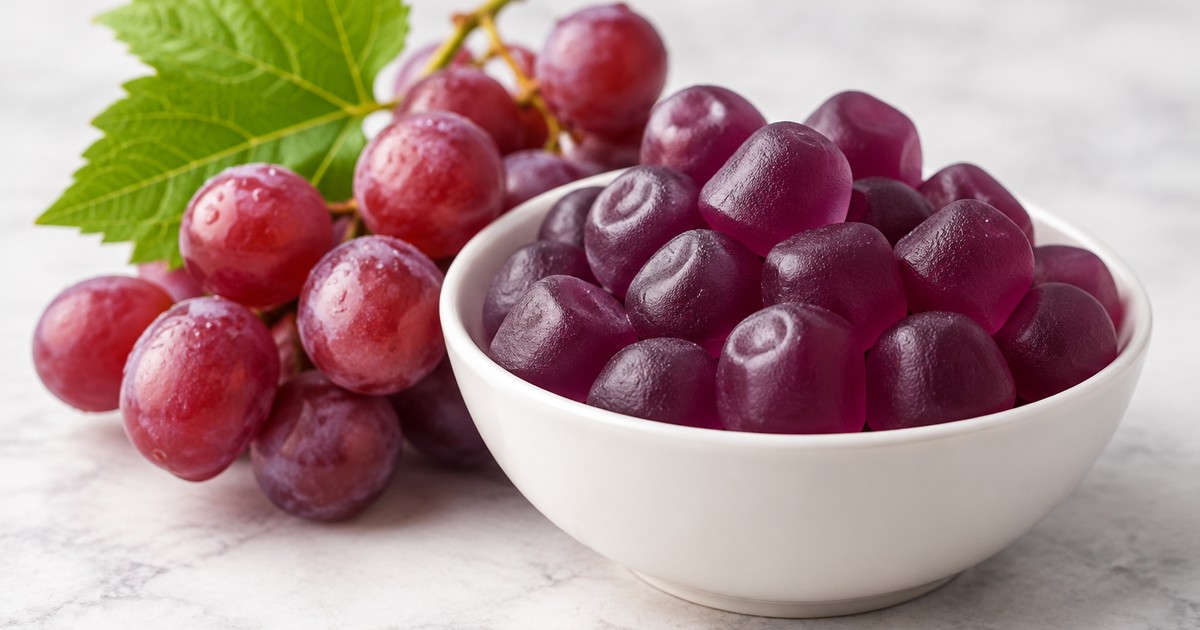
Taste is the second constraint. Resveratrol is bitter and slightly astringent at 250 mg and above, and the bitterness is of the drying, tannic kind that lingers. A dark berry or grape direction works because it matches the expectation the ingredient already sets; a citrus direction exposes the astringency.
Pterostilbene is the alternative some clients ask for. It is a dimethylated analogue with better oral bioavailability and a similar taste problem, and it is a different molecule with a different regulatory status in the EU. We will formulate it, but the label cannot describe it as resveratrol.
Dose expectation is moving upward. Five years ago 100 mg was a standard serving; now 250 mg is common and 500 mg is sold as the premium tier. That shift matters for a gummy, because the higher the dose the more surface area is exposed to oxygen and the shorter the practical shelf life becomes.
Source material is the other variable. Japanese knotweed extract is the usual commercial source, grape skin extract is used in lower-dose products, and the two have different stilbene profiles and different trans ratios at receipt. We qualify the source before the dose is calculated, because a 500 mg label built on a 90 percent trans raw material will not hold at twelve months.
Resveratrol Gummy Capability
Resveratrol Gummy Parameters
| Parameter | Target | Why it matters | Method |
|---|---|---|---|
| Trans-resveratrol dose | 100-500 mg | Evidence and label range | HPLC at 306 nm |
| Trans ratio at release | >90 % of total | Isomer purity | HPLC cis/trans split |
| Trans ratio at 12 months | >85 % of total | Shelf claim | Stability HPLC |
| Particle size | D90 < 50 µm | Suspension uniformity | Laser diffraction |
| Water activity | 0.55-0.60 | Texture and degradation | Aw meter |
| Piece opacity | Opaque or dark | Light protection | Colorimeter |
| Headspace oxygen | <2 % at pack | Oxidation control | Headspace analyser |
| Antioxidant system | Ascorbic acid + tocopherol | Biphasic protection | Formulation record |
| Dissolved oxygen | <1 ppm at deposit | Initial degradation rate | DO probe |
Resveratrol Gummy Development Sequence
Quality Control for Resveratrol Gummies
The release assay reports trans-resveratrol and total stilbenes separately, with the ratio stated. This is the only way to know whether the piece carries the isomer the buyer is paying for, and it is the test that most certificates leave out.
Light exposure is tested on the finished pack, not on a bare piece. Eight weeks under retail lighting at ambient temperature will convert a measurable fraction of trans to cis in a clear jar, and the number that matters is the one measured in the packaging the product actually ships in.
Water activity is held at 0.55-0.60. Resveratrol is a suspension in a water-based matrix, so a rise in aw increases both the degradation rate and the risk of the powder settling out of suspension during storage.
Colour and appearance are checked at release and at each pull, because cis conversion shows as a shift from off-white to a warmer tone in a pale piece, and as a dulling of colour in a pigmented one.
Resveratrol Gummy FAQ
How much resveratrol can you put in a gummy?+
Why does the trans/cis ratio matter?+
How do you stop the conversion?+
Is resveratrol soluble enough for a gummy?+
Can you use pterostilbene instead?+
What does resveratrol taste like at 250 mg?+
How long is the shelf life?+
Do you test for adulteration?+
What is the minimum order and lead time?+
Does the piece size change at 500 mg?+
Send Your Resveratrol Brief
Tell us the dose, the isomer specification and the pack format. We will come back with a suspension design, a light and oxygen control plan, and the stability data that supports the trans ratio you want to print.