

Weight Management Gummies Built on Fiber and Honest Labels
Most of this category is marketing with a thin formula behind it. We build the piece around fiber load, chromium and tea catechins, keep the sugar-free system clean, and write labels that survive a compliance review.
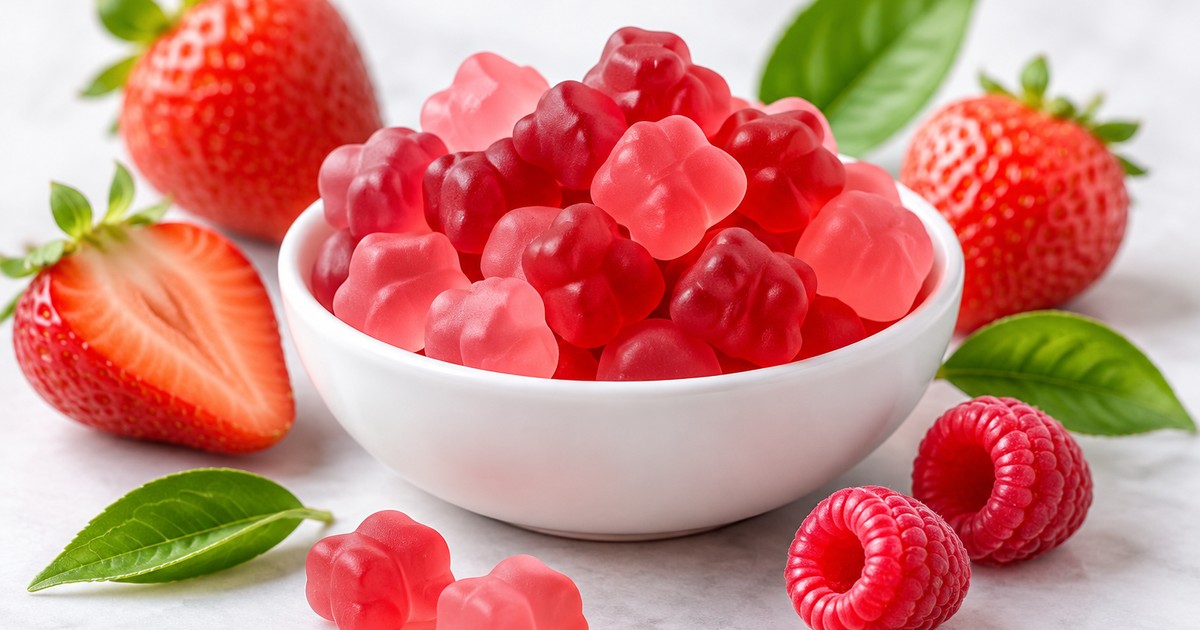
What Can Actually Go Into a Diet Gummy
The credible actives in this category are unglamorous. Soluble fiber at 3-5 g per serving supports a satiety message and is the only ingredient here with a structure-function basis that regulators accept without argument. Chromium picolinate at 200-1,000 µg is the other common one, and green tea extract with EGCG is the third.
Each brings a constraint. Fiber thickens the cook and pulls water, chromium is a trace mineral with a narrow useful range, and green tea extract is bitter and carries caffeine. Combining all three in one 4-5 g piece is possible but the fiber load and the taste both push back.
Sugar-free is close to mandatory in this category, which means a polyol system. Erythritol and allulose are the usual choices; both change texture and both have a laxative threshold that has to be respected at the serving size you print.
We do not write weight-loss claims, and we will flag any label that promises a result. The manufacturing brief can support satiety, chromium's role in macronutrient metabolism and antioxidant language where the market allows it; anything beyond that is a regulatory risk the brand carries.
What Our Weight Management Gummy Line Covers
Weight Management Gummy Capability
| Parameter | Range | Notes |
|---|---|---|
| Dietary fiber | 3-5 g per serving | Soluble corn fiber or inulin |
| Chromium | 200-1,000 µg per serving | Picolinate form |
| Green tea extract | 100-300 mg per serving | Standardised on EGCG, caffeine declared |
| Gummy weight | 4-6 g | Heavier piece for fiber load |
| Base | Pectin, sugar-free polyol | Pectin handles fiber best |
| Batch size | 50,000-2,000,000 gummies | Pilot runs from 3,000 units |
From Brief to Finished Diet Gummy
Quality Control for Diet Gummies
Fiber is assayed on the finished piece rather than calculated from the input, and water activity is checked after curing because high-fiber sugar-free pieces sweat. Where green tea extract is used, EGCG and caffeine are both measured, since the ratio drifts between lots.
The plant operates under GMP with ISO 9001, ISO 22000 and HACCP controls and is registered with the US FDA as a food facility. Heavy metals and microbiological testing run per batch, with third-party verification available.
Weight Management Gummy FAQ
What actives actually work in this category?+
Can you make a sugar-free diet gummy?+
Will you put weight-loss claims on the label?+
How much fiber fits in one gummy?+
Does green tea extract add caffeine?+
Can you add collagen or CLA?+
What is the minimum order?+
How long does production take?+
Send Your Diet Gummy Brief
Tell us the actives, the serving size and the claims you intend to make. We will confirm what the formula can support, what it cannot, and quote the run with the assay scope.