

Brain Health Gummies Where the Actives Are the Problem
Citicoline is hygroscopic, phosphatidylserine is an oil-derived phospholipid and bacopa tastes like swamp water. A gummy can carry two of the three comfortably, and all three with process work.
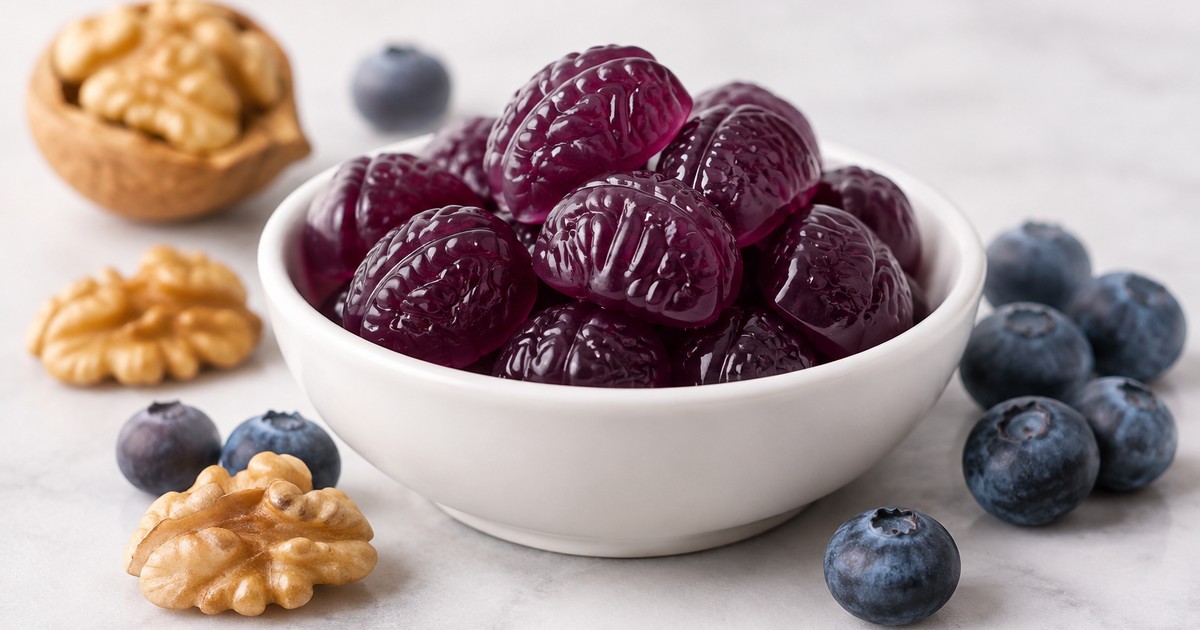
Three Actives, Three Different Constraints
Citicoline, or CDP-choline, is the anchor in this category at 250-500 mg per day. It is highly water-soluble and hygroscopic, which means a gummy carrying it picks up moisture and softens unless water activity is held low and the pack includes a desiccant or a high-barrier film.
Phosphatidylserine is a phospholipid at 100-300 mg per day. It arrives as a powder blended on a carrier, disperses poorly in water and oxidises, so it needs an antioxidant and a dispersion step before it meets the base.
Bacopa monnieri is dosed at 300 mg of a 50% bacoside extract and tastes strongly bitter and earthy. At that load a gummy needs a brown or dark berry system, or the flavour simply cannot cover it. Ginkgo and ginseng are easier but carry their own bitterness.
DHA from algal oil is the fourth option and the hardest: an oil in a water matrix needs an emulsion, and the resulting piece is opaque and prone to fish notes if the oil oxidises. Where DHA is the hero, a softgel usually beats a gummy.
What Our Brain Health Gummy Line Covers
Brain Health Gummy Capability
| Parameter | Range | Notes |
|---|---|---|
| Citicoline | 250-500 mg per serving | Hygroscopic, low water activity required |
| Phosphatidylserine | 100-300 mg per serving | Dispersed with antioxidant |
| Bacopa extract | 150-300 mg per serving | 50% bacosides, strong taste |
| Algal DHA | 100-250 mg per serving | Emulsified, opaque piece |
| Gummy weight | 3.5-5 g | Smaller piece limits moisture pickup |
| Batch size | 50,000-2,000,000 gummies | Pilot runs from 3,000 units |
From Brief to Finished Nootropic Gummy
Quality Control for Nootropic Gummies
Citicoline and phosphatidylserine are assayed on the finished gummy by HPLC, and water activity is measured after curing because hygroscopic actives soften the piece over weeks rather than days. Bacosides are measured where a standardised extract is used.
The plant operates under GMP with ISO 9001, ISO 22000 and HACCP controls and is registered with the US FDA as a food facility. Heavy metals and microbiological testing run per batch, with third-party verification available.
Brain Health Gummy FAQ
How much citicoline fits in a gummy?+
Why is phosphatidylserine difficult?+
Can you mask bacopa?+
Can DHA go into a gummy?+
Are these gummies stimulant-free?+
Can the formula be sugar-free?+
What is the minimum order?+
How long does production take?+
Send Your Nootropic Gummy Brief
Tell us the actives, the doses per serving and whether the product is stimulant-free. We will confirm which combination the format can carry and quote the run with the assay scope.