

In the ever-evolving world of skincare, countless creams, serums, and treatments promise youthful, glowing skin. However, what often gets overlooked is that the foundation of vibrant skin starts from within — specifically, with the nutrients you consume. One of the most critical building blocks for healthy, elastic, and firm skin iscollagen. By incorporating collagen-rich foods into your diet, you can naturally enhance your skin’s health, elasticity, and appearance.
In this article, we’ll explore the science behind collagen, the role it plays in skin health, and the top collagen-boosting foods to include in your diet — backed by research and practical insight.
What is Collagen and Why Is It Important for Skin?
Collagen is themost abundant proteinin the human body, accounting for nearly30% of total protein content. It’s a fibrous protein that forms the structural framework of connective tissues, including skin, tendons, ligaments, cartilage, and bones.
There are over 20 types of collagen, butType I, II, and IIIare the most relevant to skin health:
-
Type I: Comprises 80-90% of skin collagen, responsible for skin strength and structure.
-
Type III: Works alongside Type I to support elasticity and firmness.
-
Type II: More associated with cartilage but can indirectly affect overall skin and joint health.
Collagen’s Role in Skin
Collagen provides thescaffoldingthat maintains skin’s firmness, moisture retention, and overall tone. As we age,natural collagen production declines— beginning in our mid-20s and accelerating in our 30s and 40s — leading to fine lines, sagging, and dryness.
Environmental stressors such asUV exposure,pollution,smoking, andpoor nutritioncan further degrade collagen fibers, speeding up skin aging.
Scientific Evidence Supporting Collagen and Skin Health
Numerous studies highlight the benefits of collagen supplementation and collagen-rich diets in promoting skin health:
-
A2019 review in the Journal of Drugs in Dermatologyfound that collagen hydrolysate supplementation improved skin elasticity, hydration, and dermal collagen density.
-
A2014 study in Skin Pharmacology and Physiologydemonstrated that women aged 35–55 who took collagen peptides daily for 8 weeks experiencedimproved skin elasticityandmoisture content.
-
Research also indicates that collagen-rich foods help triggerfibroblast activity— the cells responsible for producing new collagen — when supported by key nutrients like vitamin C, zinc, and copper.
These findings underscore the importance of both consuming collagen directly and supporting your body’s natural collagen synthesis.
Best Collagen-Rich and Collagen-Boosting Foods (Expanded)
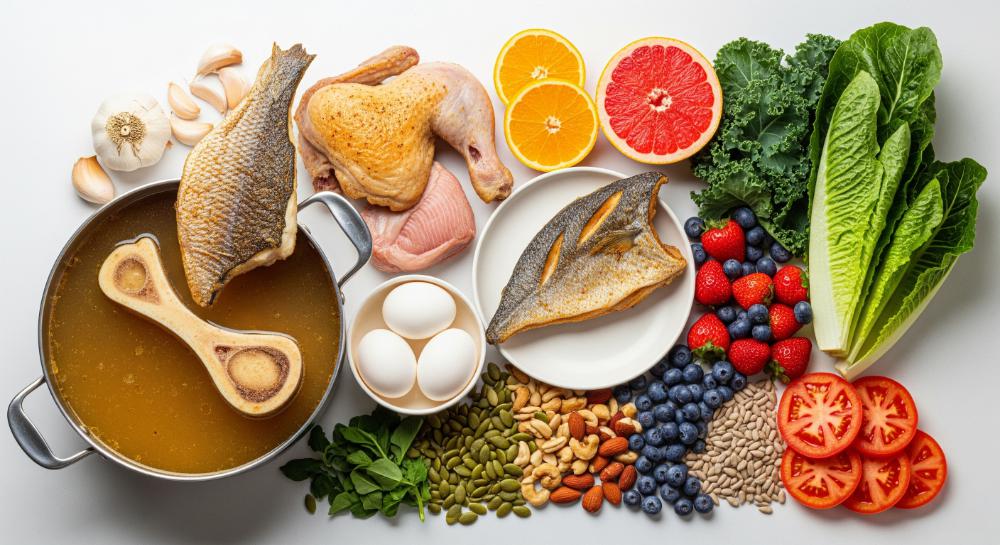
A diet rich in collagen and its precursors can significantly enhance your skin’s texture, elasticity, and hydration. Below are ten of the most effective collagen-rich and collagen-stimulating foods — including their benefits, nutrient synergy, and tips for optimal consumption.
1.Bone Broth
Why it works: Bone broth is widely regarded as thegold standardof dietary collagen. When animal bones (usually beef, chicken, or fish) are simmered for long periods (12–48 hours), collagen, gelatin, and amino acids such asglycine,proline, andhydroxyprolineare released into the broth. These amino acids are crucial for your body’s collagen synthesis.
Scientific support: A study published inNutrients (2019)showed that hydrolyzed collagen peptides derived from chicken bone broth improved skin hydration and reduced wrinkle depth in women after eight weeks.
How to consume:
-
Drink 1 cup daily on an empty stomach for maximum absorption.
-
Use it as a base for soups, stews, and grains like quinoa or rice.
Pro tip: Add vitamin C-rich vegetables like carrots and celery during cooking to boost collagen absorption.
2.Fish (Especially with Skin)
Why it works: Marine collagen, found abundantly in fish skin and bones, is rich in Type I collagen — the form most prevalent in human skin. Compared to bovine collagen, marine collagen has alower molecular weight, making it more bioavailable and faster absorbed.
Best sources: Salmon, cod, mackerel, sardines (especially with the skin and bones intact).
Nutritional synergy: Fish is also high inomega-3 fatty acids, which help fight skin inflammation and preserve the collagen matrix.
Serving ideas:
-
Bake salmon with the skin on.
-
Add sardines or mackerel to salads or toast.
-
Use fish heads or carcasses to make collagen-rich fish stock.
3.Chicken (With Skin and Cartilage)
Why it works: Chicken is a key ingredient in many commercially available collagen supplements due to its high content of Type II collagen (especially in the cartilage and neck areas). This collagen type also supports joint and skin elasticity.
Research highlight: A 2021 study inCurrent Developments in Nutritionshowed that chicken sternum-derived collagen significantly increased collagen synthesis biomarkers and improved skin barrier function.
Tips for consumption:
-
Opt for bone-in, skin-on chicken cuts (e.g., thighs, drumsticks).
-
Simmer chicken feet, necks, and wings to make nutrient-dense broth.
-
Use shredded chicken in collagen-boosting soups with leafy greens.
4.Egg Whites
Why it works: While egg whites do not contain collagen directly, they are packed withproline— a non-essential amino acid essential for the creation of new collagen strands.
Additional nutrients: Egg whites are also a source oflysine,arginine, andglycine, which together support collagen matrix formation.
Serving suggestions:
-
Add egg whites to breakfast scrambles or omelets.
-
Make high-protein pancakes or collagen-boosting smoothies.
Pair with: Fresh fruits or vegetables high in vitamin C (like bell peppers or oranges) to enhance the conversion of proline into collagen.
5.Citrus Fruits
Why they work: All collagen formation processes arevitamin C-dependent. This antioxidant helps hydroxylate amino acids like proline and lysine, allowing them to form stable triple-helix collagen fibers. Without adequate vitamin C, collagen synthesis significantly declines.
Top picks: Oranges, grapefruits, lemons, limes, tangerines.
Scientific insight: A 2017 study published in theAmerican Journal of Clinical Nutritionlinked higher vitamin C intake to reduced wrinkling, dryness, and better skin-aging appearance in middle-aged women.
Easy ways to eat more:
-
Start your day with warm lemon water.
-
Add grapefruit segments to salads.
-
Use orange zest in smoothies or yogurt bowls.
6.Berries
Why they work: Berries are antioxidant powerhouses. Their rich content ofvitamin C,ellagic acid, andpolyphenolshelps protect the skin from free radical damage and supports new collagen production.
Best choices: Blueberries, strawberries, raspberries, blackberries, goji berries.
Bonus benefit: Ellagic acid found in berries has been shown toprevent collagen degradationby inhibiting matrix metalloproteinases (MMPs) — enzymes that break down collagen.
How to enjoy:
-
Blend into smoothies with collagen powder.
-
Add to oatmeal, yogurt, or chia pudding.
-
Freeze for a refreshing summer treat.
7.Leafy Greens
Why they work: Leafy greens like spinach, kale, collards, and arugula are rich invitamin C,magnesium, andchlorophyll. Chlorophyll has been shown in some studies to increaseprocollagen synthesisin the skin and reduce oxidative stress.
Scientific backing: A small study inThe Journal of Clinical Biochemistry and Nutrition (2015)found that topical and dietary chlorophyll improved skin elasticity and hydration in women over 40.
How to incorporate:
-
Add spinach or kale to morning smoothies.
-
Use arugula in fresh salads with lemon vinaigrette.
-
Sauté collards or Swiss chard with garlic and olive oil.
8.Nuts and Seeds
Why they work: Many nuts and seeds containzinc,copper,selenium, andvitamin E— all of which are crucial for collagen synthesis, repair, and skin barrier protection.
Top choices:
-
Pumpkin seeds: high in zinc
-
Sunflower seeds: rich in vitamin E
-
Cashews: contain copper, which helps stabilize collagen structure
Serving suggestions:
-
Sprinkle mixed seeds on yogurt or salads.
-
Blend nuts into smoothies or homemade energy balls.
-
Use almond or sunflower butter as a spread with fruit.
9.Tomatoes
Why they work: Tomatoes are a top source oflycopene, a carotenoid antioxidant that protects the skin from UV-induced collagen breakdown. They also provide vitamin C, supporting collagen synthesis at the cellular level.
Scientific insight: A 2001 study inThe Journal of Nutritionfound that lycopene supplementation reduced sunburn severity andincreased skin smoothness and density.
Preparation tips:
-
Cooked tomatoes (e.g., tomato paste, sauce) have higher lycopene bioavailability.
-
Add cherry tomatoes to salads or roast them with olive oil for enhanced flavor and nutrient absorption.
10.Garlic
Why it works: Garlic is rich insulfur-containing compounds(like taurine and lipoic acid), which are essential for collagen cross-linking and structural integrity. Sulfur also supports detoxification, which helps reduce inflammation that can damage skin cells.
Bonus nutrients: Garlic also contains trace amounts ofvitamin B6andselenium, both beneficial for skin and collagen health.
How to use:
-
Sauté with vegetables or greens.
-
Mix into homemade bone broth.
-
Combine with olive oil and lemon for a collagen-friendly salad dressing.
Lifestyle Habits That Support Collagen Retention
In addition to eating collagen-rich foods, certain lifestyle habits can help preserve and enhance your collagen levels:
✅ Hydration
Water keeps skin cells plump and functioning properly. Aim for at least 8 glasses a day.
✅ Sleep
Growth hormone released during deep sleep supports collagen regeneration. Strive for 7–9 hours of quality rest.
✅ Sun Protection
UV rays degrade collagen. Always wear SPF 30+ and protective clothing outdoors.
✅ Quit Smoking
Tobacco toxins reduce collagen synthesis and increase skin wrinkling.
✅ Reduce Sugar Intake
High sugar consumption leads toglycation, a process where sugar molecules damage collagen and elastin proteins.
Collagen Supplements: Worth the Hype?
Although this article focuses on whole foods, it's worth noting that collagen supplements — especiallyhydrolyzed collagen peptides— are well-studied and can be effective.
Look for:
-
Type I and III for skin health
-
2.5–10 grams per day as shown in clinical studies
-
Pair with vitamin C for enhanced absorption
However, supplements shouldcomplement, not replace, a nutrient-dense diet.
Final Thoughts
Healthy, radiant skin isn’t achieved through expensive creams alone — it’s a reflection of what you nourish your body with daily. Collagen is fundamental to skin structure and resilience, and by incorporatingcollagen-rich and collagen-boosting foods, you’re giving your skin the essential tools it needs to look and feel its best.
Whether you're sipping bone broth, adding berries to your morning smoothie, or tossing spinach into your salad, each collagen-supporting choice helps rebuild your skin from the inside out. Combine these dietary changes with smart lifestyle habits, and you’ll be well on your way to youthful, vibrant skin for years to come.