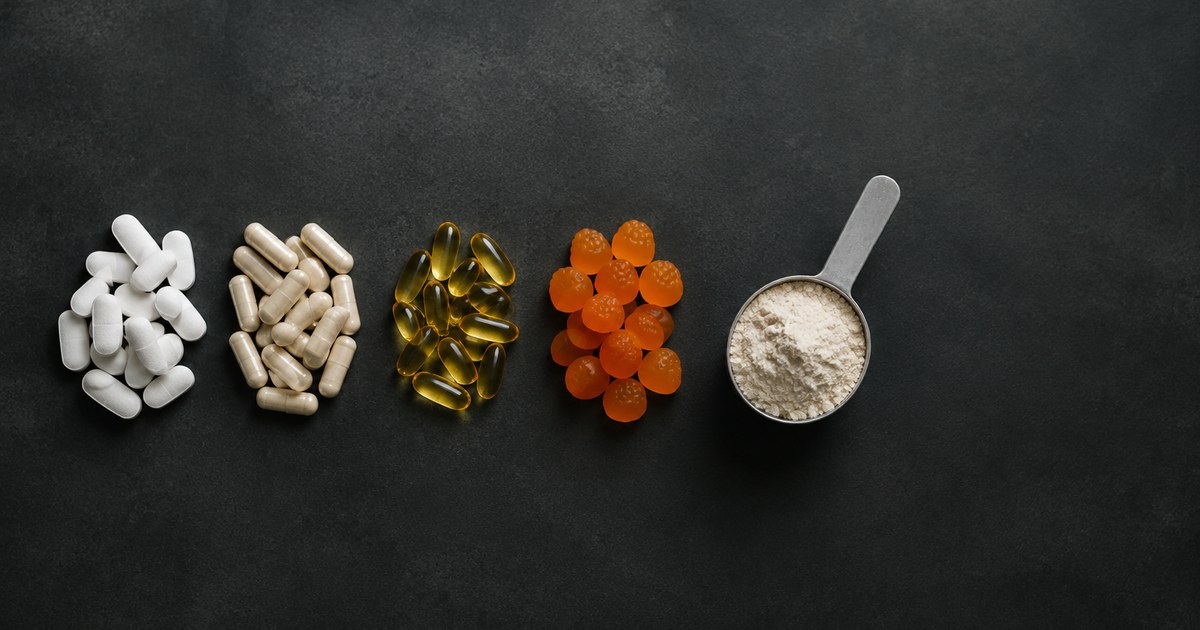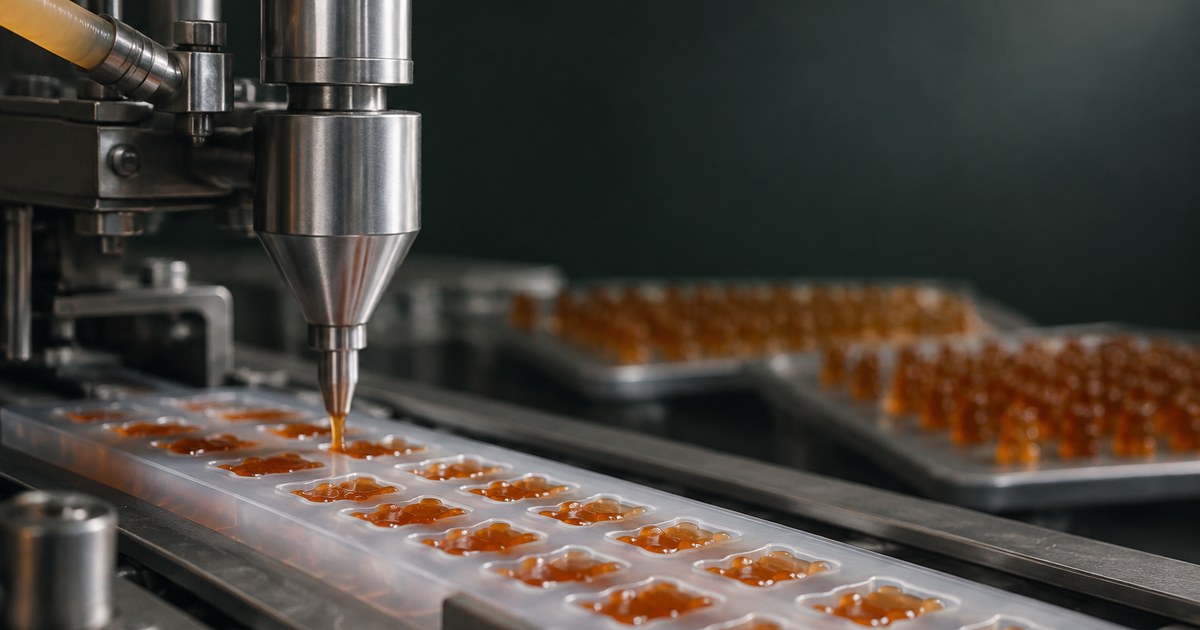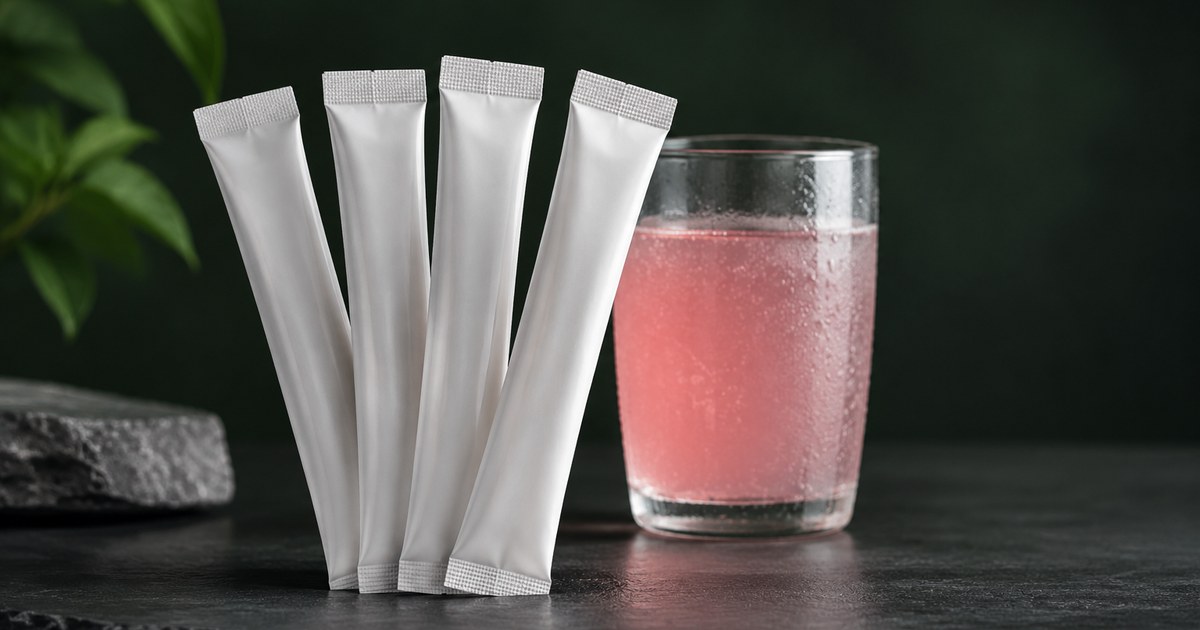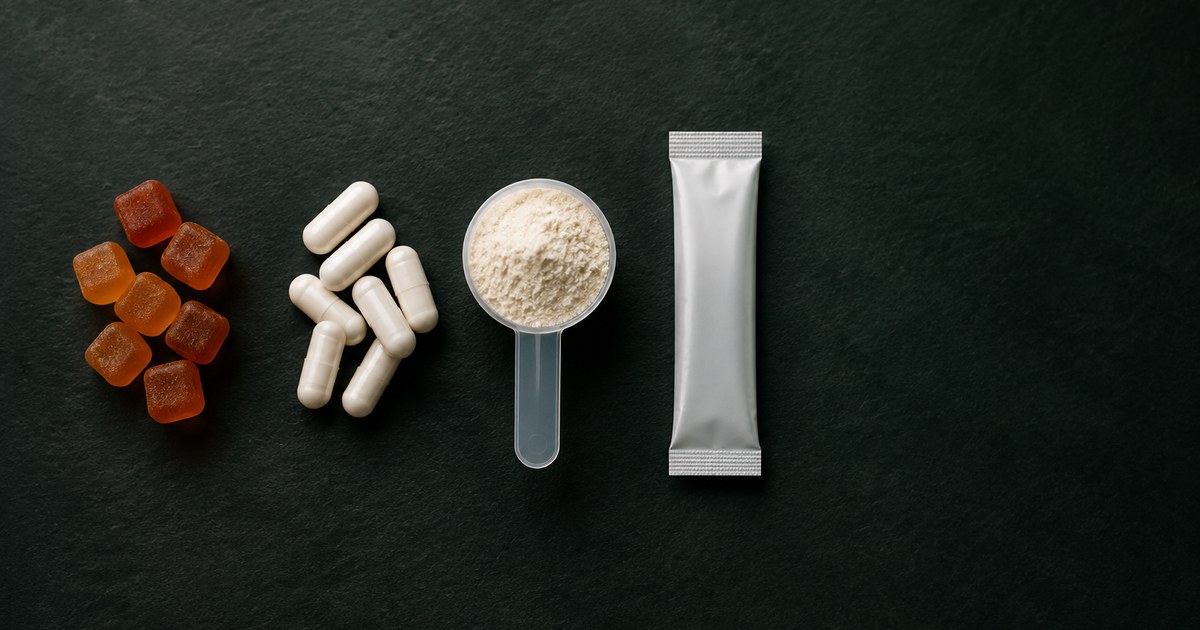

Every supplement brand eventually faces the same question: gummy, capsule, softgel, tablet or powder? The answer is not a matter of taste. Each format has a hard ceiling on how much active it can carry, a different cost floor, a different shelf-life risk and a different manufacturing lead time. Choosing badly is expensive in a way that shows up 12 months later as a stability failure, a refund rate, or a product that cannot hit a gross margin.
This guide compares the formats on the variables that actually decide the outcome: dose ceiling, cost per serving, MOQ, lead time, stability risk and consumer fit.
Dose ceiling: what each format can physically carry
| Format | Typical unit | Max active per unit | Servings per day needed for a 1 g dose |
|---|---|---|---|
| Capsule (size 0) | 500–800 mg | ~700 mg | 2 capsules |
| Tablet | 800–1,500 mg | ~1,200 mg | 1 tablet |
| Softgel | 500–1,200 mg fill | ~600 mg (oil-based) | 2 softgels |
| Gummy | 2.5–4 g | ~2 g (at 55–60% loading) | 1–2 gummies |
| Powder (tub) | 5–30 g per serving | Effectively unlimited | 1 scoop |
| Stick pack | 3–12 g | ~10 g | 1 stick |
| Liquid / drops | 10–30 ml | Dose-volume limited | 1 measure |
This is the first filter. A 3 g creatine or 5 g collagen dose cannot go into a capsule at any price. A 500 mg herbal extract should never be a powder, because you would be asking the customer to drink it.
Cost per serving, not cost per unit
Formats are usually compared on unit price, which is misleading because serving counts differ. Normalised to cost per serving, ex-works, 2026:
| Format | Cost per serving | MOQ | Lead time |
|---|---|---|---|
| Tablet | $0.018–0.035 | 3,000 bottles | 4–6 weeks |
| Capsule | $0.028–0.055 | 1,000–3,000 bottles | 4–6 weeks |
| Softgel | $0.040–0.090 | 5,000–10,000 bottles | 5–7 weeks |
| Gummy | $0.045–0.120 | 3,000–5,000 units | 6–8 weeks |
| Powder tub | $0.030–0.090 | 3,000 units | 4–6 weeks |
| Stick pack | $0.060–0.140 | 30,000 sticks | 6–8 weeks |
| Liquid | $0.050–0.150 | 3,000–5,000 bottles | 6–8 weeks |
Gummies look expensive per serving because they are: the gel base, the cure time and the packaging all cost more than a capsule shell. They also sell at two to three times the price per serving, which is the entire reason the category grew.
Stability risk by format
| Format | Main risk | What to test | Typical shelf life |
|---|---|---|---|
| Tablet | Hardness loss, moisture uptake, actives degrading under compression heat | Hardness, friability, assay at 0/3/6/12/24 months | 24–36 months |
| Capsule | Cross-linking (gelatin), brittleness at low humidity | Dissolution + assay, shell moisture | 18–24 months |
| Softgel | Oil oxidation, shell hardening, fill leakage | Peroxide value, anisidine value, assay | 18–24 months |
| Gummy | Moisture migration, active degradation in aqueous gel, texture change | Water activity, assay and degradant, texture | 12–18 months |
| Powder | Caking, flavour fade, hygroscopic actives | Moisture, flowability, sensory | 18–24 months |
| Stick pack | Seal leaks, moisture ingress, film pinholes | Seal strength, moisture, assay | 12–18 months |
| Liquid | Preservative efficacy, precipitation, pH drift | Preservative challenge test, pH, assay | 12–24 months |
Gummies carry the most stability risk of any solid format, and the risk is concentrated in the active rather than the gel. If your active is sensitive to water or heat, a gummy is the wrong choice regardless of how well it sells.
Consumer fit: the part that decides reorders
- Gummies win on adherence and on gifting/trial. They lose on dose ceiling, on sugar-free texture, and on heat during shipping in summer. Best for: beauty, immunity, sleep, kids, stress, mainstream vitamin C and D.
- Capsules win on dose flexibility, cost and a “serious supplement” signal. They lose on pill fatigue. Best for: herbal extracts, nootropics, high-potency single actives.
- Softgels win for oils — omega-3, vitamin D, CoQ10, astaxanthin — because the fill protects the oil from oxidation. They lose on cost and on vegan claims.
- Tablets win on cost per serving at scale and on high-dose minerals. They lose on swallowability and on the perception of being cheap.
- Powder and sticks win on dose and on ritual (the shaker, the water bottle). They lose on convenience away from home unless the format is a stick.
- Liquids and drops win on fast absorption claims and on kids/seniors who cannot swallow. They lose on preservatives, weight and shipping cost.
A decision sequence that works
- Dose first. If the clinically studied dose does not fit the format, the format is out. Do not reformulate down to fit a gummy and then claim the study.
- Then stability. If the active degrades in water or heat, remove gummies and liquids from the list.
- Then economics. Compute cost per serving at your real volume and compare against the retail price your channel supports.
- Then MOQ and cash. A format with a $0.05 per-serving advantage but a 30,000-unit MOQ is not cheaper for a first run.
- Only then brand. If two formats tie on the first four filters, pick the one that fits the audience — that is when the marketing argument is allowed to decide.
FAQ
Which format has the lowest MOQ?
Capsules and powder tubs, usually 3,000 units. Gummies start at 3,000–5,000 because of mould plates and cure time.
Can the same formula be made in two formats?
Usually yes, with adjustments: a gummy needs the active to survive an aqueous gel, and a tablet needs compression-friendly flow. Expect a separate stability study for each.
Are gummies less effective than capsules?
Not inherently — the dose is what matters. A gummy delivering the studied dose is equivalent; the problem is that many gummies deliver a fraction of it because of loading limits.
What sells best for a new brand?
Gummies convert best in DTC and social; capsules convert best on marketplaces where shoppers search by ingredient. If budget allows one SKU only, match the format to the acquisition channel, not to the ingredient.
How much does packaging affect the choice?
Heavily at low volume. A premium bottle on a capsule product can be 25–30% of unit cost; on a gummy it can be nearly half. Choose the format before the packaging brief.
Which format is easiest to certify organic or halal?
Capsules and powders, because there are fewer processing aids. Gummies involve gel bases, colours and coatings that each need certification.
If you have a dose and a retail price in mind, the fastest way to settle the format question is a side-by-side cost and feasibility note across two or three options. Our gummy, capsule, softgel, tablet and powder teams all run on the same site, so the comparison uses one set of assumptions — and the dosage form reference covers the regulatory labelling differences.
The commercial case for each format, by category
Format choice is usually decided by ingredient science, then justified by marketing. But the categories that actually sell tell a very consistent story about which format fits which promise.
| Category | Dominant format | Why it won | Where it breaks |
|---|---|---|---|
| Beauty (collagen, biotin, glutathione) | Gummy, powder, liquid | Large doses, daily ritual, giftable | Collagen at 5–10 g cannot fit a gummy — forces a powder or a low-dose claim |
| Sleep (melatonin, magnesium, L-theanine) | Gummy, powder, capsule | Night-time ritual, low doses | Melatonin above 3 mg plus botanicals exceeds gummy loading |
| Immunity (vitamin C, zinc, elderberry) | Gummy, effervescent, capsule | Family purchase, seasonal spikes | Zinc at 25 mg tastes metallic in a gummy |
| Sports (creatine, protein, pre-workout) | Powder, stick pack | Dose is 3–30 g | Capsules become a 6–10 pill serving — poor adherence |
| Digestive (probiotics, enzymes) | Capsule, stick pack | Viability needs low moisture and enteric protection | Gummies kill viable counts within weeks |
| Heart (omega-3, CoQ10, plant sterols) | Softgel | Oil fill, oxidation protection | Vegan positioning requires algal oil and HPMC softgel, at a premium |
| Kids | Gummy, liquid | Swallowability | Sugar content and dosing accuracy are the two complaints |
| Seniors | Softgel, liquid, powder | Swallowability plus high dose | Gummies are seen as childish in many markets |
Format and dose: the calculations that decide the SKU
Work these numbers before the brief goes to a factory, because each one can eliminate an option in a single line of arithmetic.
| Ingredient | Studied dose | Gummy serving needed | Capsule serving needed | Verdict |
|---|---|---|---|---|
| Creatine monohydrate | 3–5 g | 1.5–2.5 pieces at 2 g loading | 5–8 capsules | Gummy viable only with a 2-piece serving |
| Collagen peptides | 5–10 g | Not feasible | Not feasible | Powder, stick or liquid only |
| Omega-3 EPA+DHA | 500–1,000 mg | Not feasible (oil) | 1–2 softgels | Softgel |
| Vitamin D3 | 1,000–4,000 IU | 1–2 pieces (tiny dose) | 1 small capsule | Any format; gummy wins commercially |
| Magnesium glycinate | 200–400 mg elemental | 2–3 pieces (bulky) | 2–4 capsules | Powder or capsules |
| Probiotic | 10–50 billion CFU | Viability collapse | 1 capsule (DR) | Capsule or stick |
| Ashwagandha KSM-66 | 600 mg | 1 piece | 1–2 capsules | Either; gummy for DTC |
| Electrolytes | 500–1,500 mg sodium | Not feasible at full dose | 3–6 capsules | Stick pack |
The pattern: formats are decided by grams per serving. Under 700 mg, anything works and marketing chooses. Between 700 mg and 2 g, gummies and tablets compete. Above 2 g, only powders, sticks and liquids exist.
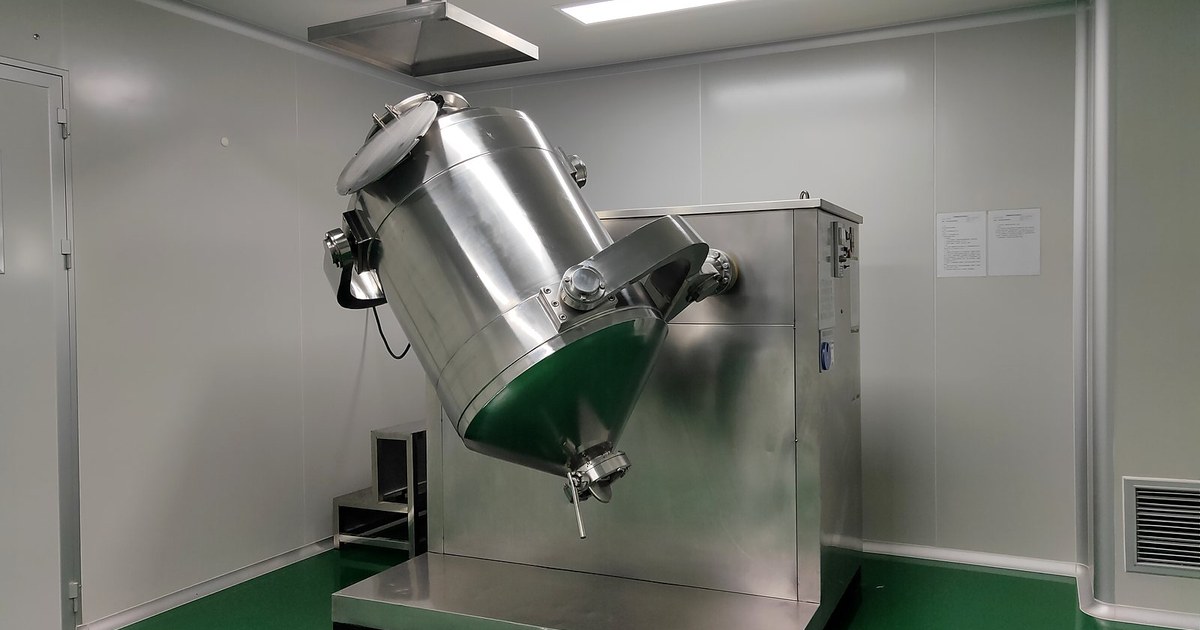
Line economics: what the factory has to run
| Format | Typical line speed | Minimum economic batch | Changeover |
|---|---|---|---|
| Tablet | 100,000–500,000/h | 100–300 kg | 2–4 h |
| Capsule | 60,000–150,000/h | 50–200 kg | 2–3 h |
| Softgel | 30,000–80,000/h | 100 kg fill | 4–8 h (die change) |
| Gummy | Depositing 500–1,500 kg/h, cure 24–48 h | 300–500 kg | 2–4 h plus cure-room scheduling |
| Stick pack | 40–80 strokes/min × 8–12 lanes | 200 kg | 3–5 h (film and former) |
| Powder tub | 20–60 tubs/min | 100 kg | 1–2 h |
This table explains most MOQ differences. A tablet line that runs 300,000 units an hour cannot stop for a 5,000-unit order; a gummy line's constraint is not speed but the 300–500 kg minimum batch that fills a depositor and justifies a cure room slot.
Stability testing: what changes by format
| Format | Critical attribute | Test at | Common failure |
|---|---|---|---|
| Tablet | Hardness, friability, assay | 0/3/6/12/24 months | Hardness drop and capping after transport |
| Capsule | Dissolution, shell moisture | 0/3/6/12/24 months | Cross-linking; dissolution plateau at 6 months |
| Softgel | Peroxide value, assay, shell integrity | 0/3/6/12/24 months | Oil oxidation; leakage at the seam |
| Gummy | Assay, water activity, texture | 0/1/3/6/9/12/18 months | Active loss; texture drift; sweating |
| Powder | Moisture, flow, sensory | 0/3/6/12/24 months | Caking; flavour fade |
| Stick | Seal integrity, moisture, assay | 0/3/6/12/18 months | Pinholes; powder in seal |
Two conditions, minimum: 25 °C/60 % RH for the label claim, and 30 °C/65 % or 40 °C/75 % RH as accelerated. If you sell into the Gulf, add 30 °C/75 % RH as a real-time condition, not an accelerated one — that is the climate your product will live in.
Packaging decisions that follow the format
- Gummies need a high-barrier jar or pouch, often with a desiccant canister, and a neck wide enough for fingers. Cost of the pack can reach 35–45 % of unit cost.
- Capsules and tablets work in HDPE with an induction seal; a 60–120 cc bottle is standard and cheap. This is where a small brand can look premium for $0.40.
- Softgels need protection from light and oxygen; opaque HDPE or amber glass, and often nitrogen flushing.
- Powders need a wide-mouth tub with a scoop recess and a foil seal; the scoop itself is a cost and a compliance item (it must measure the label serving).
- Sticks are their own packaging: the film is the product. A 12 µm PET / 9 µm foil / 70 µm PE structure is the default for anything with a flavour or a hygroscopic active.
Switching format later: what it actually costs
Brands often assume they can launch in capsules and “upgrade” to gummies once revenue allows. The real cost of that switch:
| Item | Cost | Notes |
|---|---|---|
| Reformulation | $800–3,000 | Different excipients, taste masking, moisture targets |
| New tooling | $600–2,500 | Moulds or dies |
| New stability study | $1,200–4,000 | Per formula, 6–12 months |
| New artwork and plates | $300–900 | Different net weight, serving count, Supplement Facts |
| Old inventory write-down | 20–100 % of remaining stock | The unavoidable one |
| Marketplace listing reset | Reviews and rank | New ASIN or a variation; sales history does not transfer cleanly |
The lesson: choose the format you can grow into, not the one that is cheapest to start. If the category is gummies, start with gummies at 3,000 units even if the unit cost is higher.
A one-page brief that gets comparable quotes
- Dose per serving, in the clinically studied amount, with the source of that dose.
- Servings per container and the retail price you intend to charge.
- Format and, if you are open, the two alternatives you would consider.
- Claims you intend to make, per market.
- Markets you will sell into in the first 12 months.
- Volume for the first order and the expected annual volume.
- Packaging: stock or custom, and who supplies artwork.
- Timeline: sample date, first production date, on-shelf date.
- Certifications required (organic, halal, vegan, non-GMO).
- Testing expectations: release panel, third-party verification, stability scope.
A factory that answers all ten in writing, with numbers, is a factory you can hold to a schedule. One that answers in generalities will deliver a product that is late and slightly different from what you imagined.
Sources and further reading
Regulatory and standards
- US FDA, Dietary Supplements; 21 CFR Part 111 — cGMP and the specification requirements referenced in the stability section.
- Directive 2002/46/EC, EUR-Lex; Regulation (EC) 1924/2006 and the EU Register of health claims.
- Health Canada, Natural and Non-prescription Health Products; TGA listed medicines.
Peer-reviewed research
- Kreider RB et al. ISSN position stand: safety and efficacy of creatine supplementation. J Int Soc Sports Nutr. 2017;14:18. PMID 28615996 — the dose figures used in the comparison table.
- Effect of water activity and temperature on the stability of creatine during storage. PMID 19635041 — why gummy stability testing runs longer than capsules.
- Challenges of dissolution method development for soft gelatin capsules. PMID 33557167
Standards and industry references
- United States Pharmacopeia, general chapters <711>, <701>, <2021>, <232>.
- ISO 22000; GFSI; US FDA HACCP principles.
Line speeds, batch sizes and cost ranges are 2026 indicative figures from contract manufacturers and vary with equipment and specification. Dose ceilings are formulation-dependent and must be confirmed by a bench trial for your specific active.