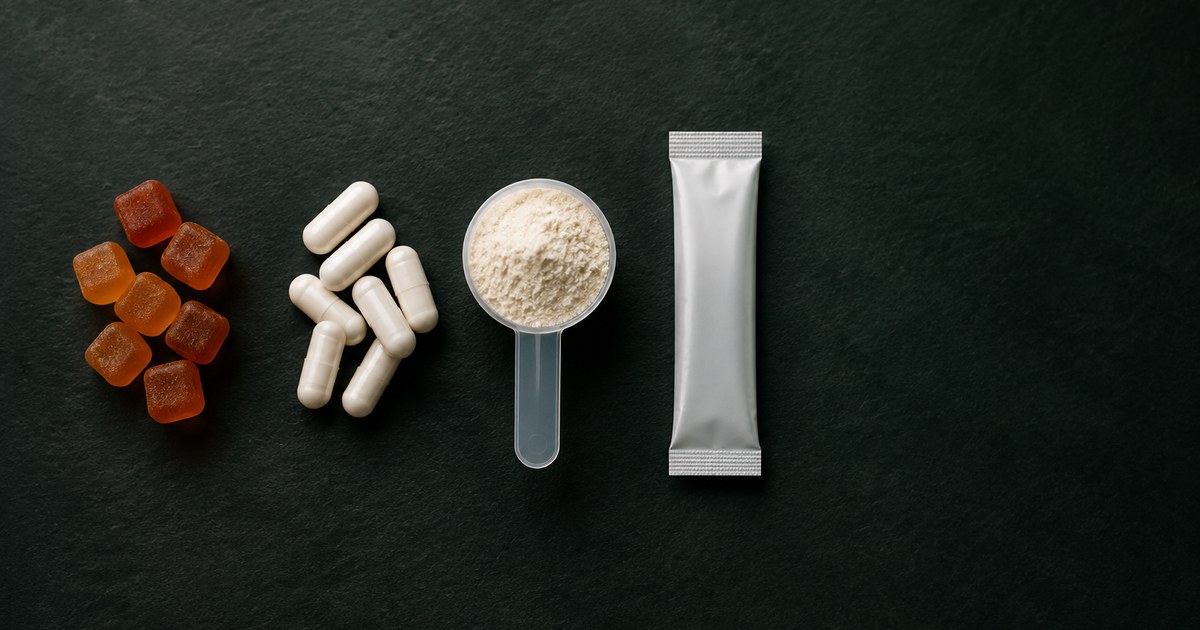
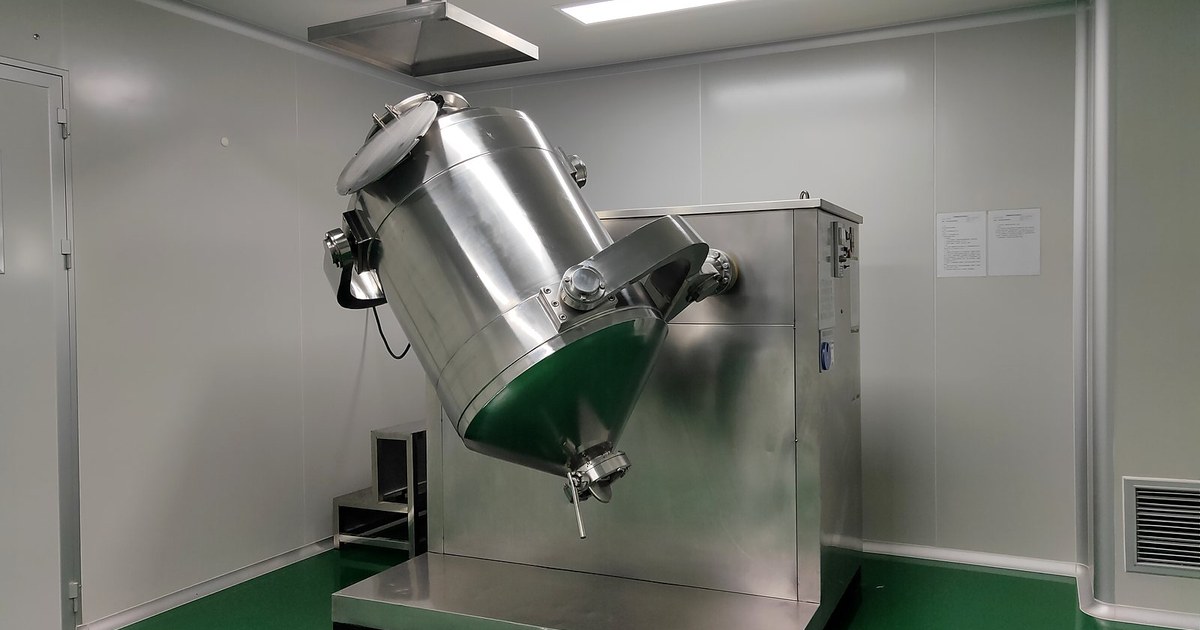
Almost every first quote a new brand receives is too high, and almost every cheap quote hides something. Private label supplement manufacturing has a small number of real cost drivers and a long list of decorative ones, and knowing which is which is the difference between a viable margin and a product that cannot afford paid acquisition.
This is a working cost model, not a brochure. It covers what a private label SKU actually costs at three order sizes, where MOQs really sit by format, which line items are negotiable, and how to compare two quotes without being fooled by the unit price.
Private label vs white label vs custom formulation
| Model | Who owns the formula | Typical MOQ | Timeline | When it makes sense |
|---|---|---|---|---|
| White label | Factory; you buy a stock SKU and apply your label | 500–3,000 units | 2–3 weeks | Testing a category fast, low capital |
| Private label | Factory; you get exclusivity on the formula in your market | 1,000–5,000 units | 4–6 weeks | Building a real brand with differentiation |
| Custom formulation | You, via the factory's R&D; often a custom mould or dosage form | 3,000–10,000 units | 8–14 weeks | Defensible product, retail listings, IP |
The word “private label” is used loosely in this industry. Ask one question to place any supplier on the table above: if I order this formula, will you sell the identical formula to another brand in my country? A yes means you are buying white label with a nicer contract.
What a SKU actually costs
Worked example: a 60-count capsule bottle, 500 mg active per capsule, HDPE bottle with a printed label, no carton. Ex-works pricing, 2026.
| Cost line | 3,000 units | 5,000 units | 25,000 units |
|---|---|---|---|
| Formula and actives | $1.10 | $0.86 | $0.68 |
| Capsule shells (HPMC) | $0.22 | $0.18 | $0.14 |
| Encapsulation and labour | $0.36 | $0.24 | $0.16 |
| Bottle, closure, induction seal | $0.42 | $0.34 | $0.29 |
| Label (printed, applied) | $0.28 | $0.16 | $0.09 |
| Testing and QC | $0.30 | $0.10 | $0.04 |
| Carton and pallet | $0.14 | $0.10 | $0.07 |
| Total ex-works | $2.82 | $1.98 | $1.47 |
Two things to notice. First, the gap between 1,000 and 25,000 units is roughly 48% per unit, and most of that comes from setup amortisation, not materials. Second, testing is the line that gets cut hardest at small quantities — which is exactly backwards, because a failed assay at 3,000 units is a total loss.
MOQ by dosage form
| Format | Realistic MOQ | Why |
|---|---|---|
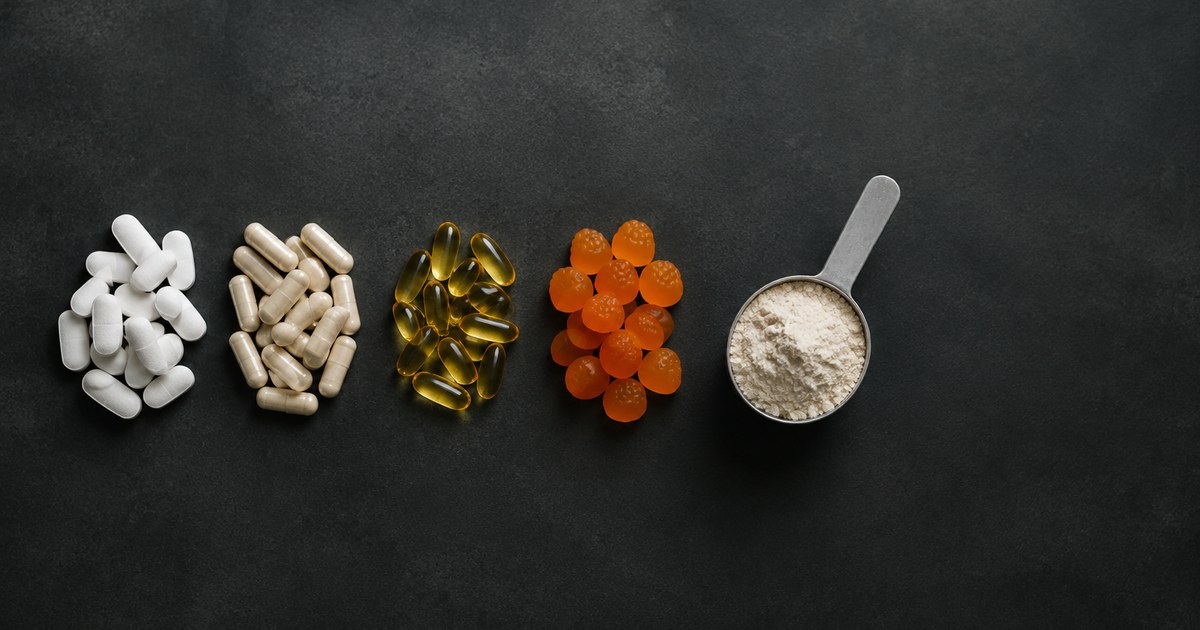
| Capsules | 1,000–3,000 bottles | Encapsulation lines run continuously; cleaning between runs is the cost |
| Tablets | 3,000–5,000 bottles | Tooling, compression setup, coating batch minimums |
| Softgels | 5,000–10,000 bottles | Gelatin ribbon and drying tunnel occupancy |
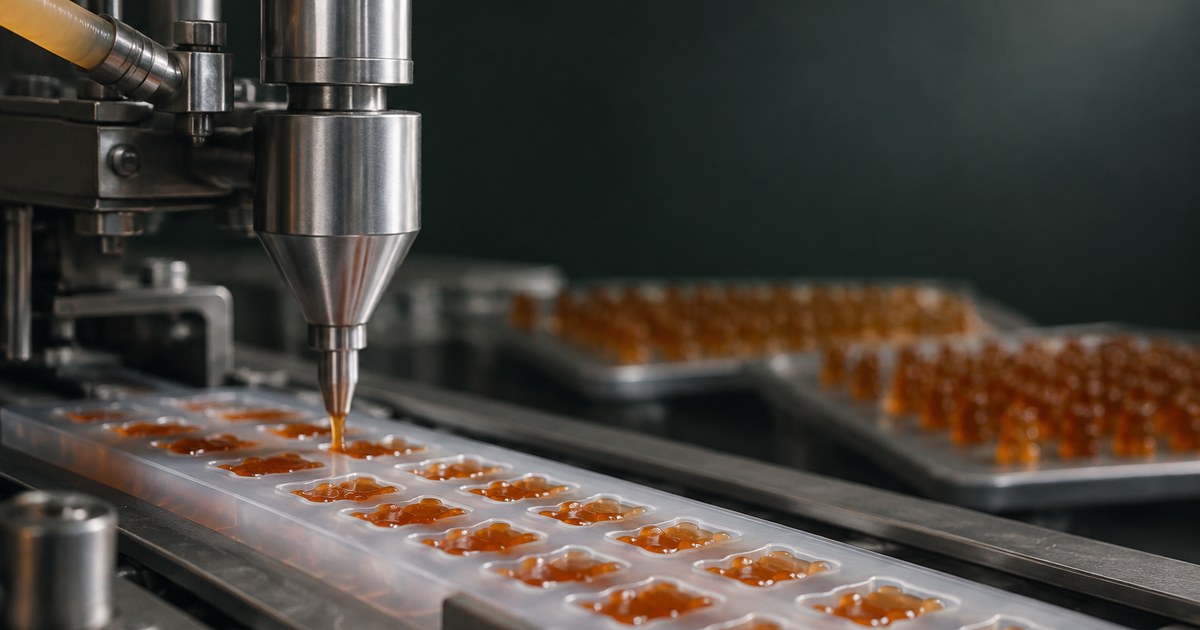
| Gummies | 3,000–5,000 units | Mogul trays, 24–48h cure time, mould plates |
| Powder tubs | 3,000 units | Blender minimum batch is usually the limit, not the filler |
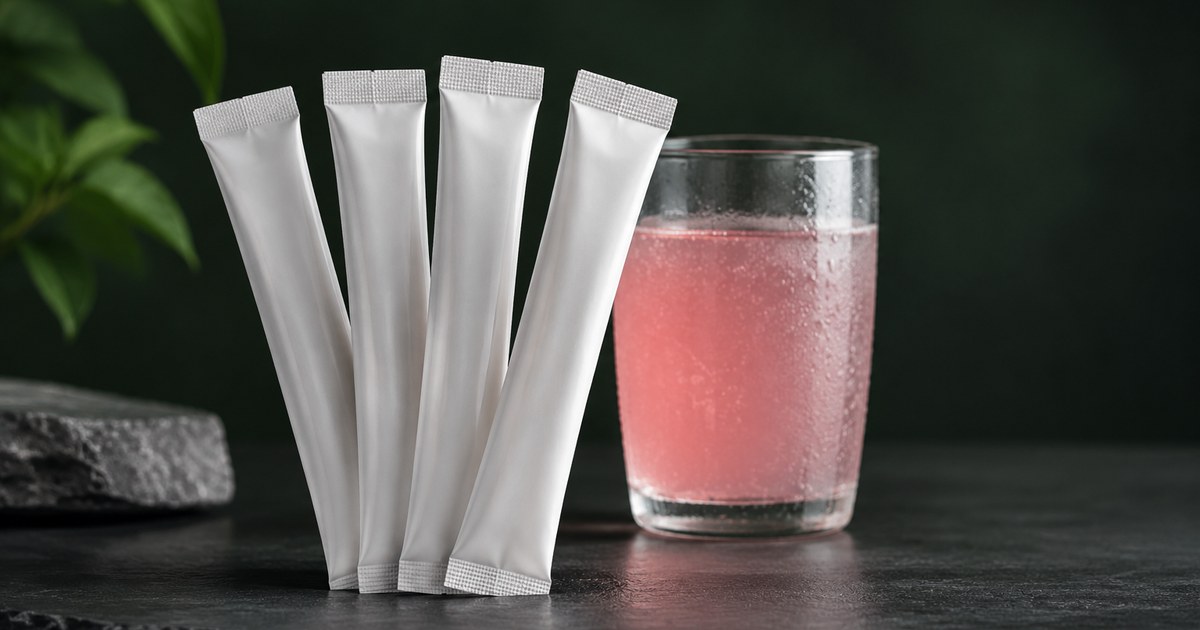
| Stick packs | 30,000 sticks | Film web length and forming setup |
| Liquids / drops | 3,000–5,000 bottles | Filling line changeover and stability batch |
Custom moulds are the one place MOQ jumps. A bespoke gummy shape typically needs 50,000–100,000 units to justify the tooling, unless you pay for the mould outright — and even then the factory will push back, because a slow-moving mould occupies a tray line.
Where brands overspend
- Four-colour cartons at low volume. Printing plates are a fixed cost. At 3,000 units a fancy carton can add $0.60–1.20 per unit; at 25,000 it adds $0.06.
- Exotic actives in small doses. A patented ingredient at $900/kg in a 50 mg dose adds $0.045 — fine. The same ingredient at 500 mg adds $0.45 and kills the SKU.
- Rush orders. Air freight plus line reshuffling typically adds 15–30%. It is the most expensive way to buy time.
- Custom moulds below 50,000 units. Pay for a stock shape, spend the money on the label instead.
- Over-specifying the bottle. A premium bottle is a real brand asset, but a $0.42 bottle on a $1.47 product is a 28% cost line; on a gummy at $0.90 it is 46%.
Hidden costs that are not in the quote
- Tooling and setup — $0–1,500 depending on format and whether plates exist.
- Stability study — $800–2,500 if you need it documented for a retail or marketplace listing. Some factories bundle it, some charge.
- Artwork and dieline work — $150–600, plus regulatory label review.
- Freight and duties — ocean LCL from China to the US west coast typically runs 8–14% of goods value; air is 3–5× that.
- Compliance registrations — FDA facility registration and DSHEA labelling are the supplier's side, but state-level notifications and foreign equivalent registrations can be yours.
- 3PL intake and storage — budget $0.35–0.60 per unit per month all-in for a small SKU count.
- Re-order lead time — if the first run is 25,000 units and sells out in 10 weeks with a 7-week lead time, you will air-freight the second run. That cost belongs in the first model.
How to compare two quotes properly
Convert everything to cost per serving, then add landed cost, then divide by your target retail price to get gross margin. A quote of $1.98 for 60 capsules is $0.033 per serving; a quote of $2.40 for 90 capsules is $0.027 per serving — the “more expensive” bottle is 18% cheaper.
| Check | What good looks like |
|---|---|
| Is the assay per active stated, with overage? | Yes, with a COA template and a named lab |
| Is stability included? | At least 0, 3, 6, 12 months, with a written report |
| Are certifications current? | GMP, ISO 22000, HACCP; organic and halal only if you need them |
| Payment terms | 30% deposit / 70% before shipment is normal; 100% upfront is a red flag |
| Who owns the formula? | Written exclusivity, and clarity on what happens if you leave |
| What is the re-order lead time? | In writing, with a stated capacity assumption |
FAQ
What is the minimum order for private label supplements?
3,000 units for capsules and powder tubs, 3,000–5,000 for gummies and liquids, 30,000 sticks for stick packs. Below those numbers you are usually buying white label with a custom label.
How long does a first order take?
Four to six weeks for private label on an existing formula, eight to fourteen weeks for custom formulation with a new dosage form. Add two to three weeks for ocean freight.
Can I get exclusivity on a formula?
Yes, but it is a contract term, not a default. Ask for it in writing, scoped to your country and channel, with a stated duration.
Do I need my own FDA registration?
The manufacturing facility must be registered; as the brand owner you are responsible for labelling and claims compliance. Most factories will review your label copy but the liability stays with you.
Is a lower MOQ worth paying more per unit?
For a first run, often yes. Paying $2.82 instead of $1.47 per unit on 3,000 units costs $1,350 — less than the cost of dumping 4,000 units of a product that does not sell.
What payment terms are normal?
30% deposit on order, balance before shipment, for a first order with a new supplier. Established relationships move to net 30. Never pay 100% upfront to a factory you have not audited.
If you want the model built for your own SKU, the useful inputs are format, serving count, target retail price and annual volume. Our private label and low MOQ teams will return a cost-per-serving comparison across two formats, and the custom formulation page covers what changes when the formula is yours.
Why two quotes for the same product differ by 40 %
Brands routinely collect three quotes for an identical brief and find a spread of 30–60 %. Almost none of it is margin. It is specification ambiguity: each factory fills the gaps in your brief with a different assumption, and the cheapest quote is usually the one that assumed the most.
| Line in the quote | What the low quote assumes | What the high quote assumes | Impact |
|---|---|---|---|
| Active ingredient | Cheapest trader grade, no site declaration | Named producer, COA per lot, /halal | 15–40 % of ingredient cost |
| Overages | None — label dose at t=0 | 10–15 % overage for shelf life | 2–6 % of BOM |
| Primary packaging | Generic white bottle, no liner | Branded bottle, foil seal, child-resistant cap | 2–4× on the pack line |
| Testing | COA only, no third-party | Full release panel + stability study | $1,200–4,000 per SKU |
| Wastage | Assumes 2 % loss | Assumes 5–8 % on small runs | 3–6 % |
| Payment terms | 100 % upfront | 30/70 with balance on shipment | Cash, not price |
The response is not to pick the middle. Write a specification that removes the ambiguity — named grade, named pack components, stated overage, test panel, AQL and payment terms — and the spread collapses to 5–15 %, which is genuine efficiency difference.
The cost model, built from the bottom up
A private label supplement has six cost layers. Understanding them is what lets you argue about the right thing.
| Layer | Share of ex-works cost | Leverage available to a brand |
|---|---|---|
| Active ingredients and excipients | 25–45 % | Grade, source, overage, dose |
| Primary packaging | 15–30 % | Stock vs custom, liner, cap, decoration |
| Secondary packaging | 4–8 % | Carton, leaflet, shrink |
| Manufacturing and labour | 12–25 % | Batch size, line efficiency, dosage form |
| Quality and testing | 3–8 % | Panel scope, in-house vs contract lab |
| Factory overhead and margin | 12–20 % | Volume commitment, payment terms, seasonality |
Note that a 10 % cut in packaging outweighs a 10 % cut in the active for most capsule and gummy products, and that tooling sits outside this model entirely.
Tooling, setup and one-off costs
| Item | Typical cost | Notes |
|---|---|---|
| Tablet tooling (per size) | $400–1,200 | Embossed logo adds $150–400 per punch set |
| Gummy mould plates | $600–2,500 | Depends on cavity count and whether the factory will amortise |
| Softgel die | $800–3,000 | Shape and size specific |
| Stick pack film plate / forming set | $300–900 | Usually shared, sometimes waived |
| Label and carton artwork and plates | $300–900 | Per SKU per market; multilingual labels multiply this |
| Stability study | $1,200–4,000 | Per formula, 6–12 months, more for multi-climate |
| Third-party release testing | $180–450 | Per batch |
| Regulatory registration (NPN, AUST L, etc.) | $500–3,000 | Plus 3–9 months of timeline |
| MOQ buy-in (first order) | See MOQ table | Cash, not cost, but it is what kills launches |
Budget this column before choosing a factory: $1,800 of one-off cost on a 3,000-unit run adds $0.60 per unit, often the whole difference between a viable and a non-viable launch.
MOQ economics: why 3,000 units is not always cheaper
The instinct is to order the minimum. The arithmetic rarely supports it.
| Quantity | Setup amortised per unit | Unit ex-works | Cash outlay | Cost per unit sold (at 70 % sell-through) |
|---|---|---|---|---|
| 1,000 | $1.80 | $3.42 | $3,420 | $4.89 |
| 3,000 | $0.60 | $2.82 | $8,460 | $4.03 |
| 10,000 | $0.18 | $2.21 | $22,100 | $3.16 |
| 25,000 | $0.07 | $1.79 | $44,750 | $2.56 |
The right column is the one that matters, because unsold inventory is a 100 % loss. At 3,000 units you pay a 90 % premium over 10,000, so a small run only makes sense if you expect to sell under ~1,500 units or expect the formula to change before reorder.
Hidden costs that never appear in the quote
- Freight and duty. Ocean LCL from China to the US west coast runs $1,800–3,500 for 8–15 m³; air is 6–10× that per kg. US duty on most supplement preparations is 0–6.4 %, but the classification depends on the ingredient list and the broker's ruling.
- Compliance review. A label review by a regulatory consultant runs $300–1,200 per SKU per market. Doing it after printing costs 10× more.
- Payment fees. Card processing 2.9 % + $0.30, marketplace referral 8–15 %, distributor margin 25–35 %.
- Returns and refunds. 3–8 % on supplements, higher if the taste is poor.
- Storage. A pallet position in a 3PL runs $18–35/month; a 10,000-unit run can occupy six to ten pallets.
- Re-order lead time. 4–8 weeks means you must reorder before you know whether the first run sells. Working capital, not cost — but it is why many brands die with a great product.
- Label revisions. Every market add-on (Canada, EU, Gulf) usually means new artwork, new plates and sometimes a new stability run.
China vs United States vs Europe: the honest comparison
| China | United States | Europe | |
|---|---|---|---|
| Unit cost (capsule, 3,000 units) | $0.024–0.045 | $0.045–0.090 | $0.050–0.095 |
| MOQ | 1,000–3,000 | 1,000–5,000 | 3,000–10,000 |
| Lead time | 4–6 weeks + 4–6 weeks transit | 3–5 weeks | 4–6 weeks |
| Certifications | GMP, ISO 22000, HACCP widely held | cGMP 21 CFR 111, NSF/UL audits | GMP, IFS |
| Flexibility on small changes | High, but communication overhead | High | Medium |
| Best fit for | Cost-driven DTC and Amazon, high volume | US-only brands needing speed and FDA familiarity | EU-labelled products, retail listings |
Both reflexes are wrong. China stops being cheaper once freight, duty, carrying cost and a 10–12 week replenishment cycle are counted; domestic is not safer if the factory cannot produce a stability report and a mock recall. Let the channel decide: high-volume marketplace and DTC favours Asia, retail with compliance scrutiny favours domestic.
A quote-comparison sheet you can send to three factories
| Field | What to demand |
|---|---|
| Ingredient | Name, grade, particle size, producer, origin country, COA attached |
| Overage | Percent per active, and the basis (label claim vs initial assay) |
| Excipients | Full list with levels, allergen and vegan status |
| Primary pack | Material, size, liner/seal, cap type, supplier, decoration method |
| Fill weight / count | Target and tolerance, plus the AQL for count and weight |
| Testing | Release panel per batch, third-party lab named, stability protocol |
| Certificates | GMP, ISO 22000, HACCP, organic/halal/ as applicable, with expiry dates |
| Lead time | Sample, first production, reorder, and the buffer they recommend |
| Payment | Deposit %, balance trigger, currency, Incoterm |
| Tooling | Who owns it, whether it is exclusive, what happens on exit |
Where the money actually leaks after launch
- Overage paid but not needed, 2–5 % of BOM — match overage to real stability data instead of habit.
- Packaging over-specified, 5–12 % of unit cost — a stock bottle with a great label beats a custom mould at low volume.
- Small-run repeat orders, 15–35 % per unit — consolidate to the next MOQ break once sell-through is proven.
- Emergency air freight, $2–6 per unit — hold 6–8 weeks of safety stock and reorder at 10 weeks of cover.
- Dead SKUs, 100 % of the inventory — launch fewer SKUs deeper, and kill the bottom 20 % at 90 days.
- Label reprints, $300–900 per event — compliance review before print, for every market, every time.
Sources and further reading
Regulatory and standards
- US FDA, Dietary Supplements; 21 CFR Part 111 (cGMP for dietary supplements).
- US FDA, labeling guidance for dietary supplements — the reference for Supplement Facts formatting used in the artwork brief.
- Directive 2002/46/EC, EUR-Lex; Regulation (EC) 1924/2006 and the EU Register of health claims.
- Health Canada, Natural and Non-prescription Health Products (NPN licensing).
Standards and industry references
- ISO 22000; GFSI benchmarked schemes (, IFS, FSSC 22000).
- US FDA, HACCP principles.
- United States Pharmacopeia, USP reference standards and monographs.
Peer-reviewed research
- Kreider RB et al. ISSN position stand: safety and efficacy of creatine supplementation. J Int Soc Sports Nutr. 2017;14:18. PMID 28615996 — cited here only as an example of dose-based overage decisions.
All figures are 2026 indicative ranges compiled from supplier quotes and freight data; they are not a quotation. Duty rates and classification must be confirmed with a customs broker for your specific formulation and market.