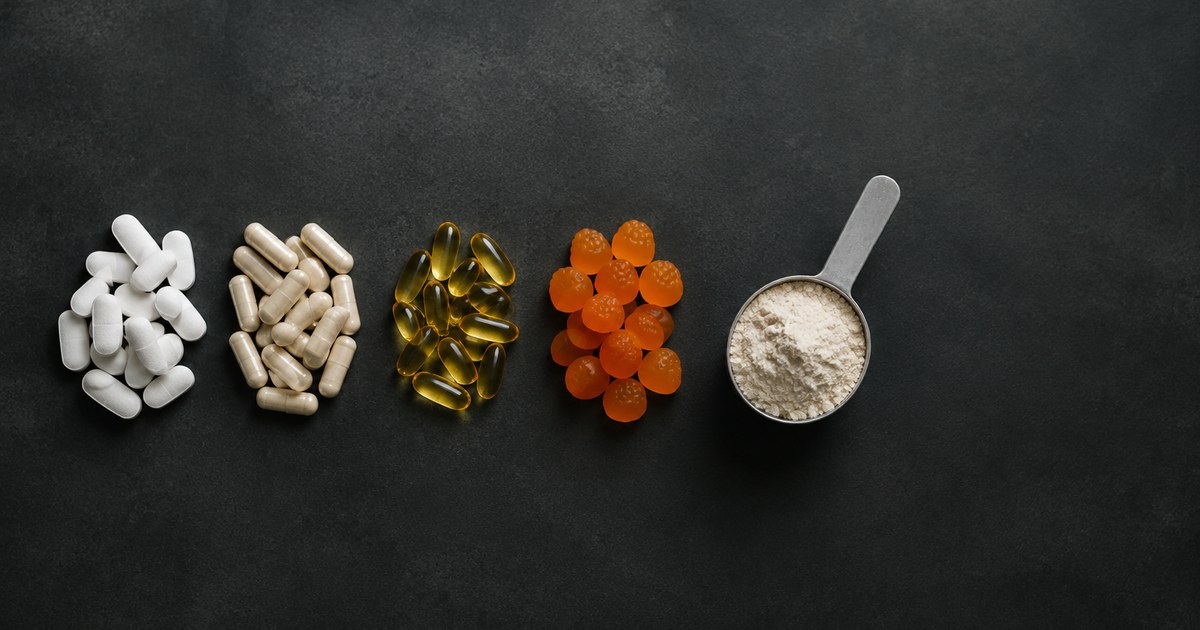
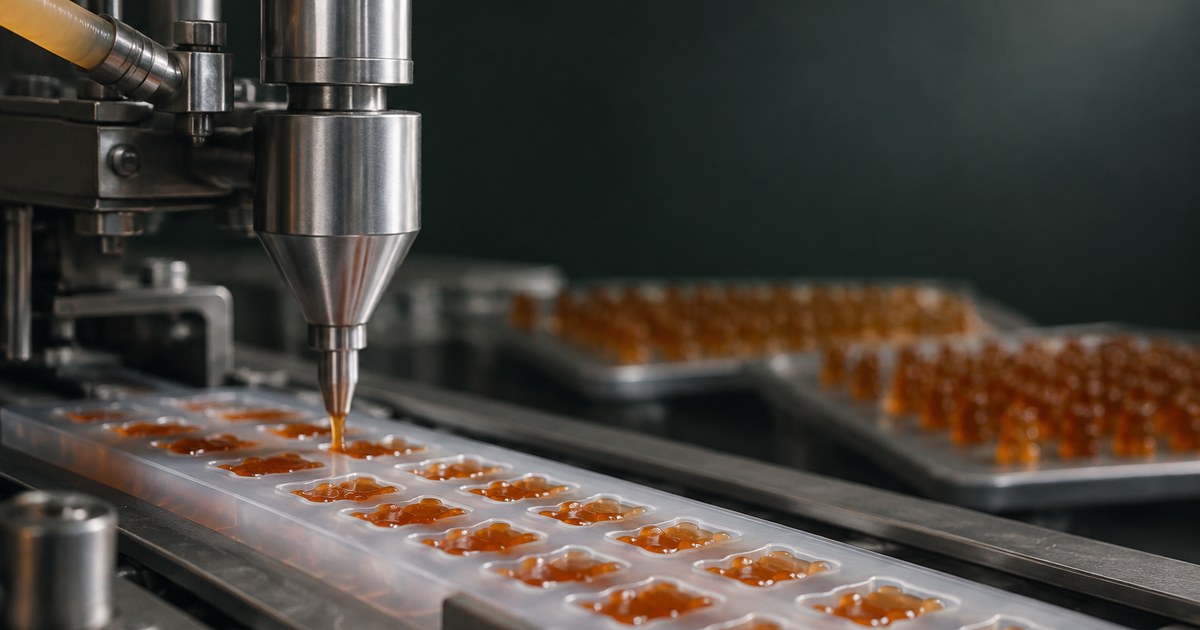
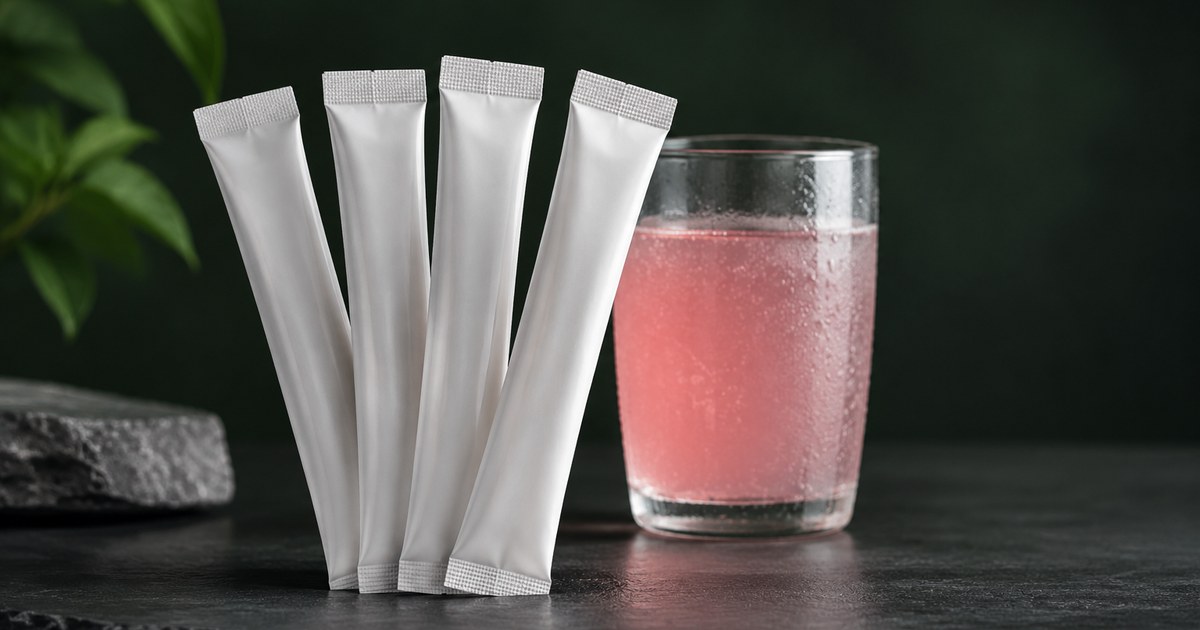
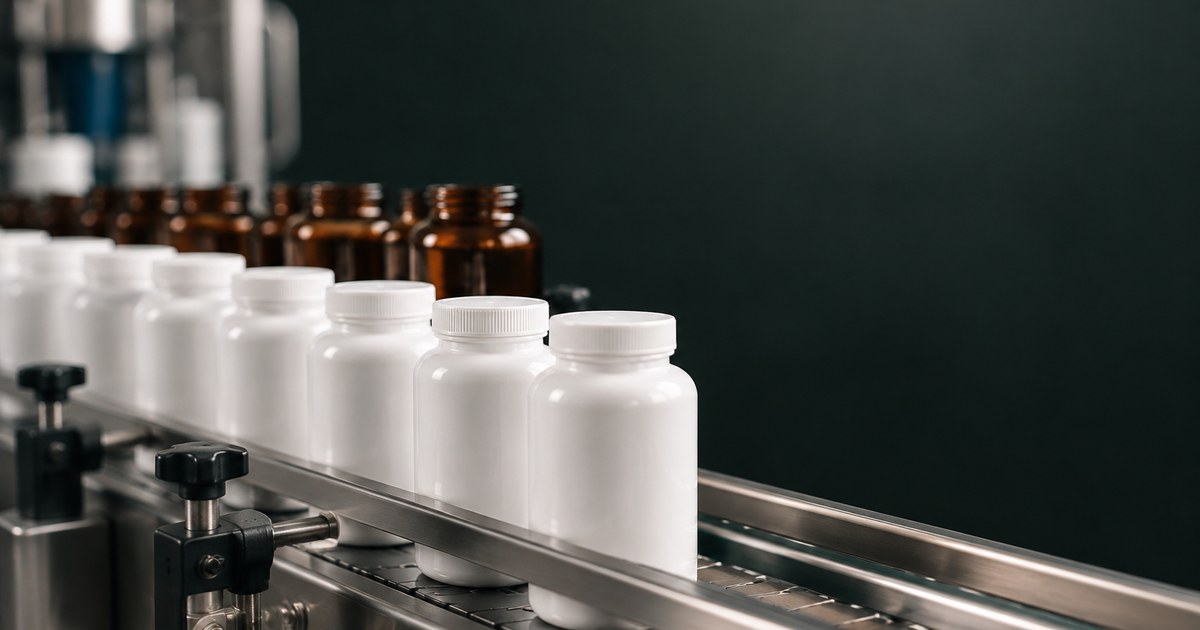
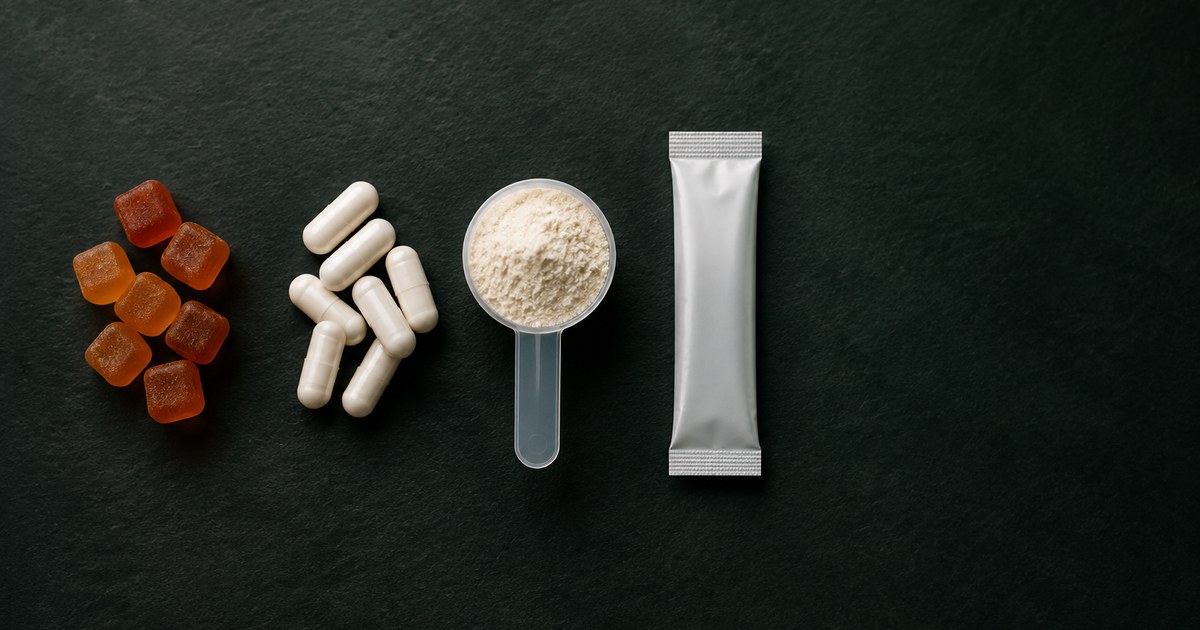
The minimum order quantity is the number that decides whether a supplement brand launches or stalls. It is also the number most often quoted without context: “3,000 units” sounds small until you add tooling, artwork, stability testing, freight and the fact that you have to pay for all of it before a single unit sells.
This is the honest economics of a first order across the five main formats, with the per-unit cost at four volumes, the one-off costs nobody quotes, and the break-even maths that tells you whether to launch with a stock formula or a custom one.
What actually sets the MOQ
| Format | What sets the floor | Typical MOQ | Custom MOQ |
|---|---|---|---|
| Tablet | Tooling changeover, press batch | 1,000–3,000 | 10,000–30,000 |
| Hard capsule | Capsule filling batch, encapsulator hopper | 1,000–5,000 | 10,000–30,000 |
| Softgel | Die change, oil batch | 3,000–10,000 | 30,000–50,000 |
| Gummy | Depositor batch, cure-room slot, mould | 3,000–5,000 | 20,000–50,000 |
| Powder tub | Blender minimum batch (200–500 kg) | 1,000–3,000 | 3,000–5,000 |
| Stick pack | Film print run, multi-lane setup | 20,000–50,000 | 100,000 |
| Liquid / shot | Pasteuriser batch, filling line | 5,000–10,000 | 30,000–50,000 |
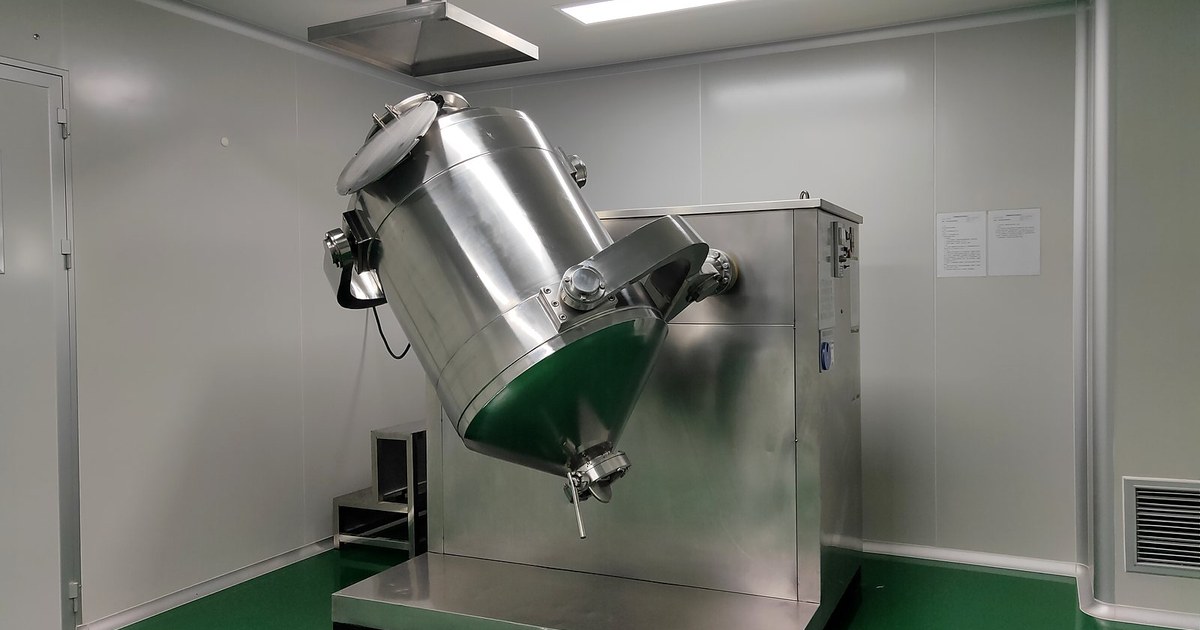
The pattern: the MOQ is not arbitrary, it is the smallest run where the equipment and the batch record make economic sense. A gummy depositor cannot make 800 kg of syrup usefully; a capsule machine wastes a shift on setup for 2,000 capsules. When a factory quotes a number far below these ranges, it is usually planning to run your label on a stock product.
Per-unit cost at four volumes
| Format (60-count, 30 servings) | 3,000 units | 10,000 units | 30,000 units | 100,000 units |
|---|---|---|---|---|
| Tablet | $1.85 | $1.42 | $1.21 | $1.08 |
| Hard capsule | $2.10 | $1.66 | $1.44 | $1.30 |
| Softgel | $2.95 | $2.35 | $2.05 | $1.86 |
| Gummy | $3.40 | $2.70 | $2.35 | $2.10 |
| Powder tub (30 servings) | $5.20 | $4.30 | $3.85 | $3.45 |
Two things to read from this table. First, the volume discount is steepest between 3,000 and 10,000 — typically 20–25 % — and flattens after 30,000. Second, the gap between formats narrows at scale: a gummy costs 84 % more than a tablet at 3,000 units and 94 % more at 100,000, because the fixed costs that gummies carry (cure room, mould, polishing) are already amortised.
The one-off costs nobody quotes
| Item | Tablet / capsule | Gummy | Powder |
|---|---|---|---|
| Formula development | $0–1,500 | $300–2,000 | $0–1,500 |
| Custom mould / tooling | $500–3,000 (dies) | $800–3,500 | — |
| Flavour development | — | $300–1,200 | $250–1,000 |
| Stability programme | $1,200–3,500 | $1,500–4,500 | $1,000–3,000 |
| Assay method | $800–3,000 | $1,000–4,000 | $800–2,500 |
| Artwork and plates | $300–1,000 | $300–1,000 | $300–1,000 |
| Compliance review | $150–800 | $150–800 | $150–800 |
| Freight and duty | 5–12 % of goods | 5–12 % | 8–18 % (heavy) |
On a 3,000-unit gummy order, one-off costs of $5,000 add $1.67 per unit — half the ex-works cost again. On 30,000 units the same costs add $0.17. This is the entire argument for launching at a higher volume or with a stock formula, and it is the number most first-time brands omit from their plan.
Cash flow: the part that kills brands
| Stage | When | Cash out |
|---|---|---|
| Deposit (30–50 %) | Order confirmation | $3,000–15,000 |
| Balance before shipment | Before loading | Remainder |
| Freight and duty | At arrival | 5–18 % of goods value |
| 3PL inbound and storage | On receipt | $200–800 |
| Marketing and creative | Before launch | $2,000–20,000 |
| Amazon / retail fees | On sale | 15–45 % of price |
A 10,000-unit gummy order at $2.70 ex-works is $27,000 of goods, plus roughly $6,000 of one-offs, plus freight — call it $35,000 committed before revenue. At a $29.99 retail price with a 40 % channel margin, you need to sell about 2,000 units to recover the goods cost, and roughly 3,500 to recover everything. That is a realistic first quarter for a brand with any distribution, and a disaster for one that assumed the factory would invoice after selling.
Stock formula versus custom
| Approach | Time to first pallet | MOQ | Differentiation | Best for |
|---|---|---|---|---|
| Stock formula, stock packaging, new label | 4–6 weeks | 1,000–3,000 | Low | Testing a channel or a niche |
| Stock formula, custom colour and flavour | 8–10 weeks | 5,000–10,000 | Medium | Most first brands |
| Custom formula | 12–16 weeks | 10,000–30,000 | High | Brands with a real formulation story |
| Custom formula plus custom mould | 16–20 weeks | 30,000–50,000 | Very high | Funded brands with retail distribution |
The strategic error is treating “custom” as automatically better. In a market where the top-selling gummies are all broadly similar, the differentiator is usually brand and channel, not the 5 % of formula that a custom project changes. Launch on a stock formula, learn what sells, then spend the custom project on the SKU that is actually working.
Break-even by channel
| Channel | Retail price | Your net | Units to recover $35,000 |
|---|---|---|---|
| DTC site | $34.99 | $28 (after payments, shipping, fees) | 1,250 |
| Amazon FBA | $29.99 | $16 (after referral and fulfilment) | 2,190 |
| Specialty retail (wholesale) | $29.99 | $13.50 | 2,600 |
| Mass retail | $24.99 | $10 | 3,500 |
This table explains a pattern in the category: gummy brands launch DTC because the break-even volume is lowest there, then move to Amazon for scale, then to retail for credibility — and each step needs a lower unit cost to keep the margin. A brand that starts at mass retail with a 10,000-unit order is usually undercapitalised.
Where the volume discount actually comes from
| Cost element | At 3,000 units | At 30,000 units | Why it changes |
|---|---|---|---|
| Raw materials | $0.62 | $0.52 | Supplier tier pricing, full-drum buying |
| Packaging components | $0.44 | $0.31 | Print run amortisation, MOQ breaks |
| Line time | $0.71 | $0.39 | Setup spread across more units |
| QC and release testing | $0.28 | $0.09 | Fixed per batch, not per unit |
| Labour | $0.35 | $0.22 | Fewer changeovers per unit |
| Factory overhead and margin | $1.00 | $0.82 | Percentage of a smaller base cost |
The instructive row is QC. Release testing costs roughly the same for 3,000 units as for 30,000 — the same assay, the same micro panel, the same stability pull. At 3,000 units it is 28 cents a unit; at 30,000 it is nine. That is why a factory that offers “small batches at the same price” is almost always cutting the testing.
Packaging: the silent MOQ
| Component | Stock MOQ | Custom MOQ | Lead time |
|---|---|---|---|
| HDPE jar, white | None (stock) | 10,000–30,000 | 3–6 weeks |
| Child-resistant jar | 1,000–5,000 | 20,000+ | 4–8 weeks |
| Label (digital) | 100 | — | 3–7 days |
| Label (flexo, 4 colour) | 5,000–10,000 | — | 2–3 weeks |
| Stand-up pouch | 1,000–3,000 | 10,000–30,000 | 3–6 weeks |
| Carton (retail-ready) | 1,000 | 5,000–10,000 | 2–4 weeks |
Packaging is often the real constraint, not the product. A brand that can afford 5,000 gummies but orders 30,000 custom jars has doubled its cash requirement for a component it could have bought stock. Digital labels on stock jars are the standard way to launch at low volume and still look deliberate.
Timing: order date versus cash date
| Week | What happens | Cash position |
|---|---|---|
| 0 | Deposit paid, batch scheduled | −30 to −50 % of goods |
| 2–4 | Raw materials and packaging arrive | No cash, but no flexibility |
| 4–6 | Production and release testing | Balance due on readiness |
| 6–8 | Ocean freight | −freight, −duty on arrival |
| 8–10 | 3PL inbound, listing setup | −storage, −creative |
| 10–12 | First sales | Cash begins returning |
Ten to twelve weeks between the deposit and the first sale is normal, and it is why a first order should be sized to the cash you can leave untouched for a quarter — not to the volume discount you would like to unlock.
Decision matrix for a first order
| If your budget is… | If your channel is… | Choose |
|---|---|---|
| Under $10,000 | DTC, testing the market | Stock capsule or tablet, 2,000 units |
| Under $10,000 | Gummy specifically | Stock gummy formula, 3,000 units, accept stock jar |
| $10,000–30,000 | DTC plus Amazon | Stock formula gummy, custom flavour, 10,000 units |
| $30,000–100,000 | Retail conversations underway | Custom formula, 30,000 units, own mould if funded |
| Over $100,000 | Multi-channel | Two SKUs, custom formula, 50,000+ units, dedicated stability programme |
If you are weighing formats before you choose a supplier, our pages on low-MOQ production and private label programmes set out the equipment, testing and minimum volumes behind each one. For the next decision in the sequence, read how a gummy order is actually run.
Frequently asked questions
Why is the gummy MOQ higher than a capsule MOQ?
The depositing batch and the cure room. A gummy run needs a minimum mass of syrup and 24–72 hours of climate-controlled curing, so the floor is set by equipment time, not by demand.
Can I get 500 units to test?
Only from a white-label stock product, and usually at a per-unit price 2–3× the volume price. Below 3,000 units the factory is selling you a sample, not a production run.
Is a custom mould worth it?
Only when the shape is part of the brand and you can commit to 30,000+ units. Otherwise spend the money on packaging and creative, which the customer actually sees.
How much should I budget beyond the goods?
Plan 40–60 % on top of the ex-works goods value for one-offs, freight, duty, 3PL and launch marketing. The goods are rarely the majority of a first order.
Do smaller orders cost more per unit?
Yes, steeply. Between 3,000 and 30,000 units the per-unit price typically falls 30–40 %, most of it in the first jump to 10,000.
Can I split one MOQ across two flavours?
Sometimes, if the base is identical and only the flavour is added at the end. Ask before assuming; changeover cleaning is charged either way.
What payment terms are normal?
30–50 % deposit and the balance before shipment for a first order. Net terms come after a track record, not before.
What is the cheapest legitimate way to start?
A stock capsule or tablet with your label at 1,000–2,000 units. It is the lowest cash commitment that still produces a compliant, sellable product.
Sources and further reading
Regulatory and standards
- US FDA, 21 CFR Part 111 — the obligations that scale with batch size and testing scope.
- US FDA, dietary supplement guidance; labelling requirements.
- ISO 22000; GFSI; US FDA HACCP principles.
Peer-reviewed research
- Klayraung S, Viernstein H, Okonogi S. Development of tablets containing probiotics: effects of formulation and processing parameters on bacterial viability. Int J Pharm. 2009;370:54–60. PMID 19059323 — why small batches behave differently from production batches.
- Challenges of dissolution methods development for soft gelatin capsules. Pharmaceutics. 2021. PMID 33557167 — the testing cost that scales with format complexity.
- Gorissen SHM et al. Protein content and amino acid composition of commercially available plant-based protein isolates. Amino Acids. 2018;50:1685–1695. PMID 30167963 — how incoming-material variability forces bigger safety stock and larger runs.
Standards and industry references
- United States Pharmacopeia, general chapters <2021>, <711>, <905>.
- WHO guidance on production of oral rehydration salts — a useful public reference for batch sizing logic in powder formats.
Prices are 2026 China-based contract manufacturing ranges for planning; actual quotes depend on formula complexity, packaging, testing scope and payment terms.