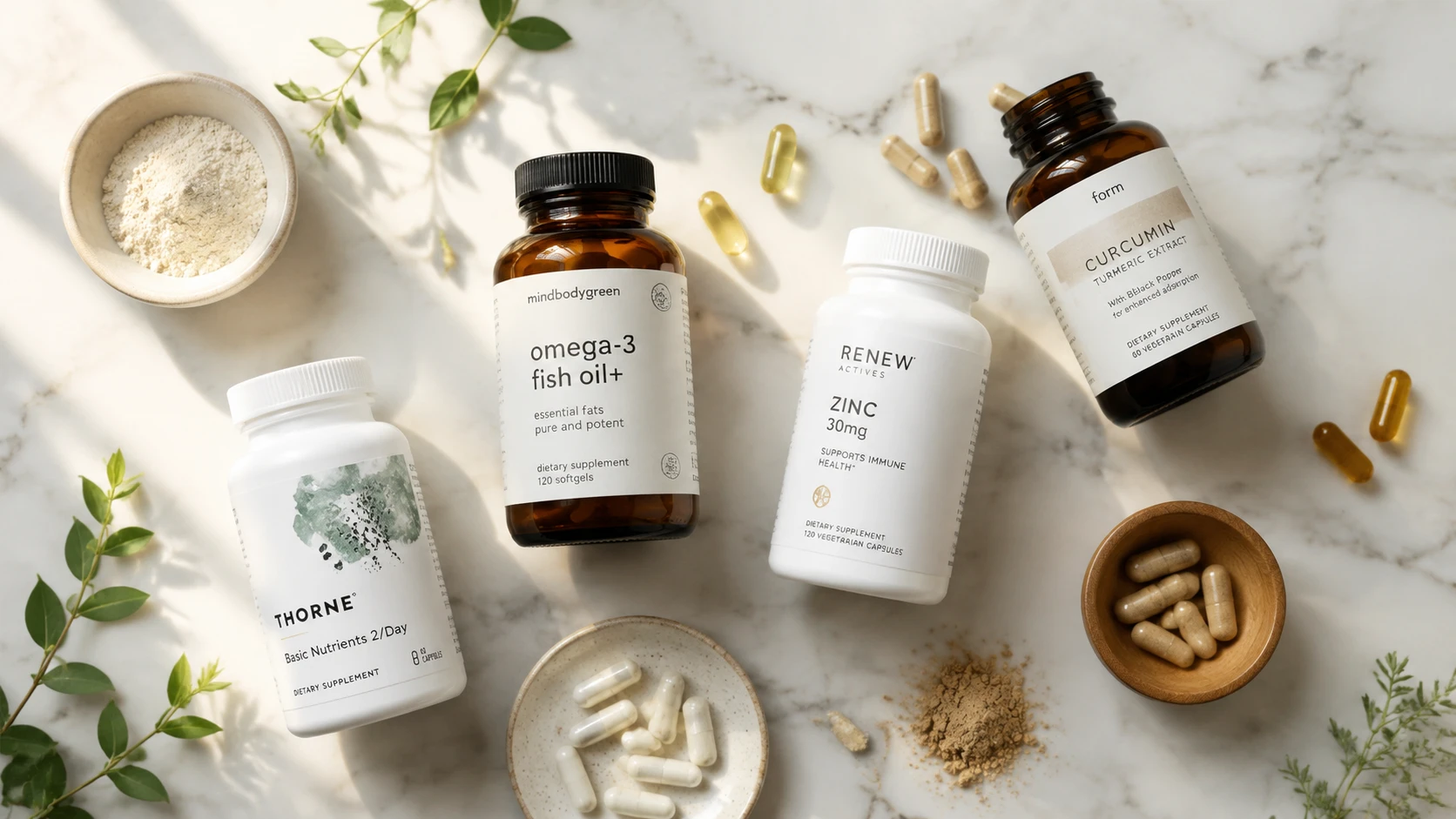
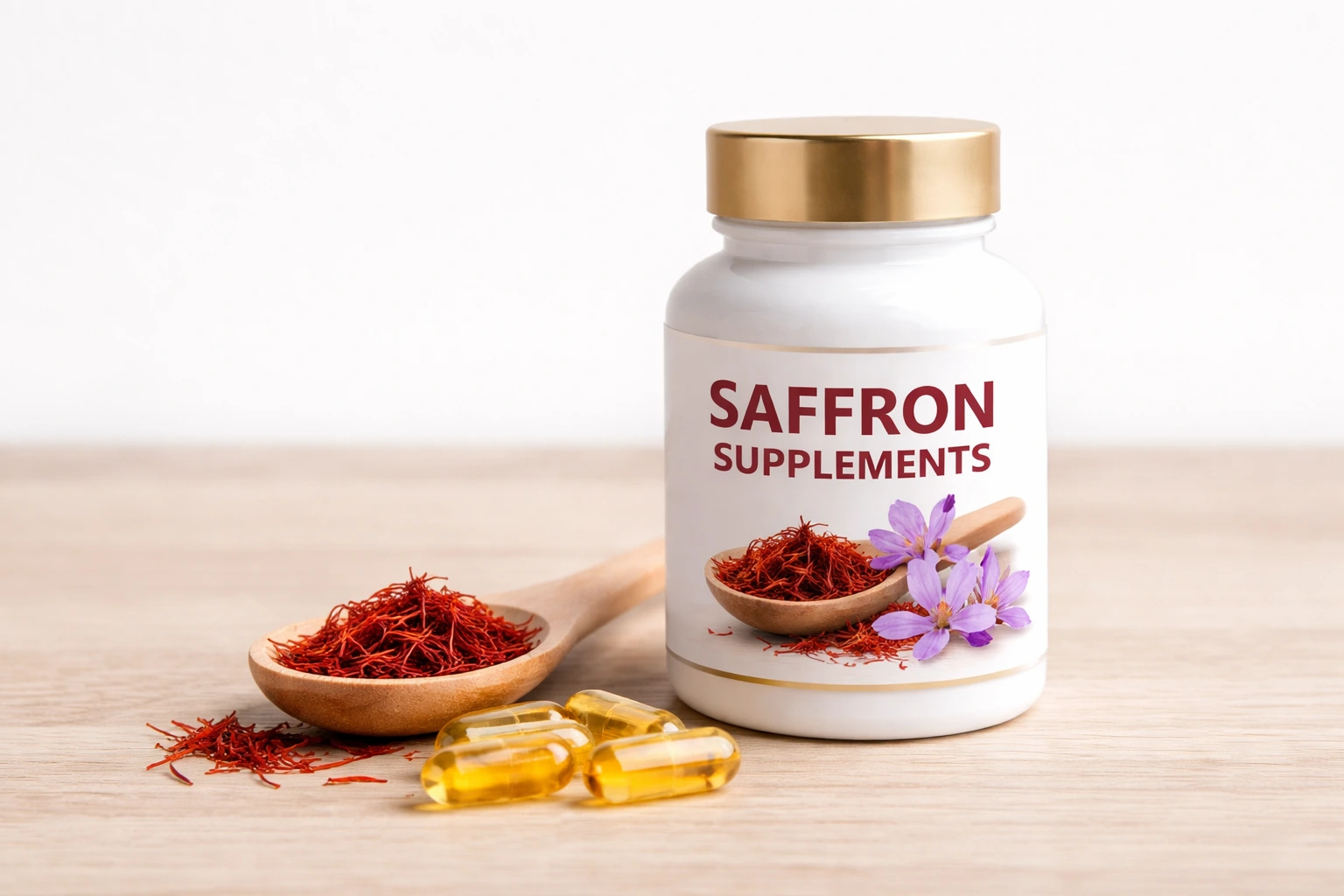
Quick answer: A multivitamin supplies vitamins and minerals at defined doses; a greens capsule supplies dried vegetable powders and their phytonutrients. They do different jobs. The multivitamin covers known nutrient gaps with measurable amounts. The greens capsule adds plant compounds, but doses are usually small and evidence for whole-body benefits is thin. Buy both on specification and batch testing, not on the label story.
What these two products are, and what they are not
A multivitamin is a formulated blend. Each nutrient has a target dose, a salt or ester form, and a reason for being there. You can audit it against a label and a certificate of analysis.
A greens capsule is dried plant material. Broccoli powder, spinach powder, kale powder, carrot powder. The label lists a weight, not a marker compound. That is the key difference. With a multivitamin you can ask "how much B12 per capsule?" and get a number. With a greens blend you often cannot say how much sulforaphane precursor survived drying and storage.
Neither product treats disease. In the US, dietary supplements have no pre-market approval. FDA facility registration is not FDA approval. Anyone who tells you otherwise is selling, not explaining.
At our plant in Huadu District, Guangzhou, we run both categories on the same GMP lines. Zhongci Health Products Technology Development Co., Ltd. has done contract manufacturing for 23 years. ZOOMSHEAL is our export brand. We own the factory; we are not a trading company.
How a multivitamin actually works in the body
Vitamins are cofactors. They do not burn fuel themselves. They let enzymes do it.
B vitamins, for example, sit inside the machinery that converts food into ATP. B12 and folate are involved in red blood cell formation and DNA synthesis. Vitamin D acts through a nuclear receptor and influences calcium handling and immune cell behaviour. Zinc is a cofactor for hundreds of enzymes. Iron carries oxygen in haemoglobin.
This is why deficiency shows up as fatigue, poor wound healing, or low mood. Correct the deficiency and function returns. Give the same nutrient to someone who is already replete and little changes. That distinction matters for how you position a product.
Water-soluble vitamins are absorbed fast and excreted fast. Fat-soluble vitamins (A, D, E, K) are stored and need tighter upper limits. Minerals compete for transporters, so calcium, iron, zinc and magnesium are usually split across a tablet or spread over a day.
How a greens capsule is made, and why that limits it
Vegetables arrive as juice concentrates or drum-dried powders. We blend them, add carriers, and encapsulate. Heat during drying degrades heat-sensitive compounds. Vitamin C and many polyphenols drop. Fibre and minerals survive well.
A capsule holds roughly 500 to 800 mg of powder. If a label claims 16 vegetables in a serving of two capsules, the average amount per vegetable is small. That is arithmetic, not criticism. It tells you the product is a supplement to vegetables, not a substitute for a portion.
Powders in a jar or stick pack can carry 5 to 10 g per serving. That is where meaningful vegetable mass lives. Capsules win on convenience and taste. Powders win on payload. Choose based on what the customer will actually use.
Forms and delivery systems: a comparison
| Form | Typical payload per unit | Best fit | Practical notes |
|---|---|---|---|
| Hard capsule | 300–800 mg | Multivitamin blends, greens powders, herbals | Low cost, easy to audit, no taste masking needed |
| Softgel | 300–1,200 mg fill | Oil-soluble vitamins, carotenoids, omega oils | Good for fat-soluble nutrients; pilot runs from 1,000–2,000 units |
| Tablet | 500–1,500 mg | High-dose minerals, effervescent base | Compression needs binders; check disintegration time |
| Gummy | 2–4 g | Consumer-friendly vitamins | Heat limits some nutrients; sugar and pectin carry cost |
| Powder (jar, sachet, stick) | 3–10 g | Greens blends, protein, electrolytes | Highest vegetable payload; taste and flowability matter |
| Liquid drops | 0.5–1 mL | Vitamin D, B12, kids' formats | Preservative system and stability are the hard part |
Most forms start at 500 units per SKU, or 1,000 for capsules, tablets and softgels. Softgels can start at 1,000–2,000 for a pilot. Lead time is 4–6 weeks after formula and artwork approval. Sampling takes 7–10 days.
Dosing and specification ranges
Doses should sit between the recommended intake and the tolerable upper limit. That window is wide for most B vitamins and narrow for vitamin A, vitamin D, selenium and zinc.
| Nutrient | Common supplement range per day | Watch point |
|---|---|---|
| Vitamin D3 | 400–2,000 IU | Upper limit is set; do not stack with other D products |
| Vitamin B12 | 2.4–100 µg | Absorption is limited; excess is excreted |
| Folate | 200–800 µg DFE | Use folate forms clearly on the label |
| Iron | 0–18 mg | Only include if the target group needs it |
| Zinc | 5–15 mg | Competes with copper over long use |
| Magnesium | 50–200 mg | Oxide is cheap but poorly absorbed; citrate and glycinate cost more |
| Greens blend | 500 mg–5 g | Ask for the marker compound, not just the blend weight |
For a greens capsule, spec the input powders by identity and microbial limits. Ask whether the broccoli powder is standardised for glucosinolates or just sold as "broccoli powder." The answer tells you what you are buying.
Who benefits, and who should be careful
Multivitamins make sense for people with restricted diets, low sun exposure, pregnancy planning, older adults with reduced absorption, and anyone with a diagnosed deficiency. They also make sense as a simple habit for people whose intake is erratic.
Greens capsules suit people who want a plant-compound habit and will not drink a powder. They are a convenience product, not a nutritional rescue.
Be careful with iron unless deficiency is confirmed. Be careful stacking multiple products that contain vitamin D, vitamin A or zinc. People on anticoagulants should check vitamin K and fish oil content. Anyone with a medical condition or on medication should talk to their clinician before adding products. We do not give medical advice, and a label should not either.
What the evidence actually shows
For correcting a deficiency, evidence is strong. That is basic nutrition science.
For multivitamins preventing chronic disease in well-fed adults, the picture is weak. Large trials have generally not shown clear benefit for cardiovascular events or cancer in healthy populations. Some trials suggest modest signals in specific subgroups, but nothing that justifies a bold claim on a label.
For greens powders and capsules, evidence is weaker still. Studies exist on individual vegetables and specific compounds, but not on commercial blends. A blend of 16 dried vegetables has not been tested as a blend. Anyone citing a study to sell a greens capsule is usually citing work on a single vegetable, at a dose the capsule does not contain.
Say this plainly in your marketing. Buyers trust a brand that admits the limits. Regulators notice the ones that do not.
Quality signals and how to read a CoA
Every batch we ship comes with a certificate of analysis. A CoA is only useful if it lists the test, the method, the specification and the result.
| Test | What it catches | What to look for |
|---|---|---|
| Identity (FTIR or HPLC) | Wrong raw material | Method named, reference standard used |
| Assay / potency | Underdose or overdose | Result within a stated range, not just "pass" |
| Heavy metals (Pb, As, Cd, Hg) | Contaminated plant powders | Numbers against a named limit |
| Microbiology (TPC, yeast, mould, E. coli, Salmonella) | Poor drying or storage | Actual counts, not a tick box |
| Disintegration | Tablet or capsule passes through intact | Time in minutes against the pharmacopoeial method |
| Residual solvents | Extraction residues | Relevant for extracts, not for plain powders |
On the label, look for the form of each nutrient (D3 vs D2, methylfolate vs folic acid, citrate vs oxide) and the amount per serving. Look for an allergen statement and a country of manufacture. Look for a lot number that matches the CoA you were sent.
Our facility holds GMP certification audited by Intertek, ISO 9001:2015, ISO 22000:2018, HACCP, an NSF audit, and Halal certification on specific lines. We hold FDA facility registration through a US agent. None of that is FDA approval.
Common mistakes we see in briefs
Copying a competitor's label without checking upper limits. Overloading a capsule until it no longer closes cleanly. Using oxide minerals to hit a price and wondering why the customer sees no effect. Claiming "16 vegetables" when the total blend is 400 mg. Skipping a stability study and finding the vitamin C gone at month nine.
The most expensive mistake is a vague specification. "Broccoli powder, food grade" is not a specification. "Broccoli powder, 10% glucosinolates, TPC under 10,000 cfu/g" is.
How it is manufactured at scale
Raw materials arrive and are quarantined. Identity is confirmed before release. We weigh and blend in a defined order, adding small-dose actives last with a premix step to spread them evenly. Capsules are filled on automatic machines, then polished and inspected. Tablets are compressed and tested for hardness and disintegration. Powders are blended and filled into jars or sachets.
Finished batches go to the QC lab for assay, microbiology and metals. Retained samples stay for the shelf life. Documentation follows the batch from purchase order to shipping carton.
A practical checklist before you order
Write the specification first. Name each ingredient, its form, its assay and its limit tests. Decide the dose per serving and check it against upper limits. Choose the form based on payload, not fashion. Ask for a CoA from a recent batch of each raw material. Confirm the MOQ and the pilot option. Confirm the lead time from approval, not from enquiry. Ask who signs the stability protocol. Ask what happens if a batch fails assay. Get the artwork approval process in writing.
If a supplier cannot answer these in one email, keep looking.
Frequently asked questions
Is a multivitamin the same as a greens capsule?
No. A multivitamin delivers defined amounts of vitamins and minerals, each with an assay you can test. A greens capsule delivers dried vegetable powder, where the active compounds are often unmeasured. They overlap only in the sense that both are sold as capsules. If you want to close a known nutrient gap, choose the multivitamin. If you want a plant-compound habit, choose the greens product.
Can a greens capsule replace vegetables in my diet?
No. A capsule holds a few hundred milligrams of powder. A portion of broccoli is around 80 grams. The fibre, water content and volume are not there. A greens capsule can add some plant compounds to a diet that is already reasonable. It cannot compensate for a diet with no vegetables. Treat it as an addition, not a swap.
Why does the CoA matter more than the label?
The label is a claim. The CoA is a measurement. A CoA should name the test method, the specification and the actual result for that batch. If a supplier sends a generic certificate with no lot number, it tells you nothing about the product in the box. Ask for the lot-specific document and compare it to the lot number printed on the packaging.
What is a realistic MOQ for a first run?
Most forms start at 500 units per SKU. Softgels can run 1,000–2,000 for a pilot, which lets you test the market before committing to a full batch. Sampling takes 7–10 days and production takes 4–6 weeks after formula and artwork approval. Plan the artwork review into that timeline, because late label changes are the most common cause of delay.
Does FDA registration mean the product is approved?
No. FDA facility registration is a listing requirement, not an approval. Dietary supplements in the US have no pre-market approval process. The manufacturer is responsible for safety and for label compliance. A registered facility can still produce a non-compliant label. Read the label and the CoA, and do not rely on a registration number as a quality signal.
Which nutrients are easiest to get wrong in a formula?
Vitamin A, vitamin D, selenium, zinc and iron. Each has a narrow window between a useful dose and a problematic one, and each can appear in several products a customer already takes. Iron should only be included when the target group needs it. Zinc competes with copper over long-term use. Check the total daily intake across the whole regimen, not just one product.
Are capsules or powders better for greens?
Powders carry more vegetable mass per serving, often 3–10 g, so they can include meaningful amounts of a blend. Capsules carry 300–800 mg and win on convenience, taste and portability. If the customer will actually drink a powder daily, the powder delivers more. If they will not, a capsule they take consistently beats a powder that sits in the cupboard.
How long does a batch stay stable?
That depends on the formula, the packaging and the storage conditions, and it should be established by a stability study rather than assumed. Water-soluble vitamins and plant polyphenols are the first to drop. Ask for accelerated and real-time data on the finished product in its final pack. If a supplier quotes a shelf life without data, treat the number as a wish.
References
- NIH Office of Dietary Supplements: Multivitamin/mineral supplements
- NIH ODS: Vitamin D fact sheet for health professionals
- NIH ODS: Vitamin B12 fact sheet for health professionals
- PubMed search: multivitamins and chronic disease prevention trials
- PubMed search: cruciferous vegetables and glucosinolates
- EFSA: Dietary reference values for nutrients
- FDA: Dietary supplements guidance and regulatory information
- WHO: Healthy diet fact sheet
Reviewed by Dr. Xu Wei, PhD, formulation scientist at ZOOMSHEAL in Guangzhou (23 years of supplement contract manufacturing). Last updated: November 2026. This article is for education and does not replace medical advice.