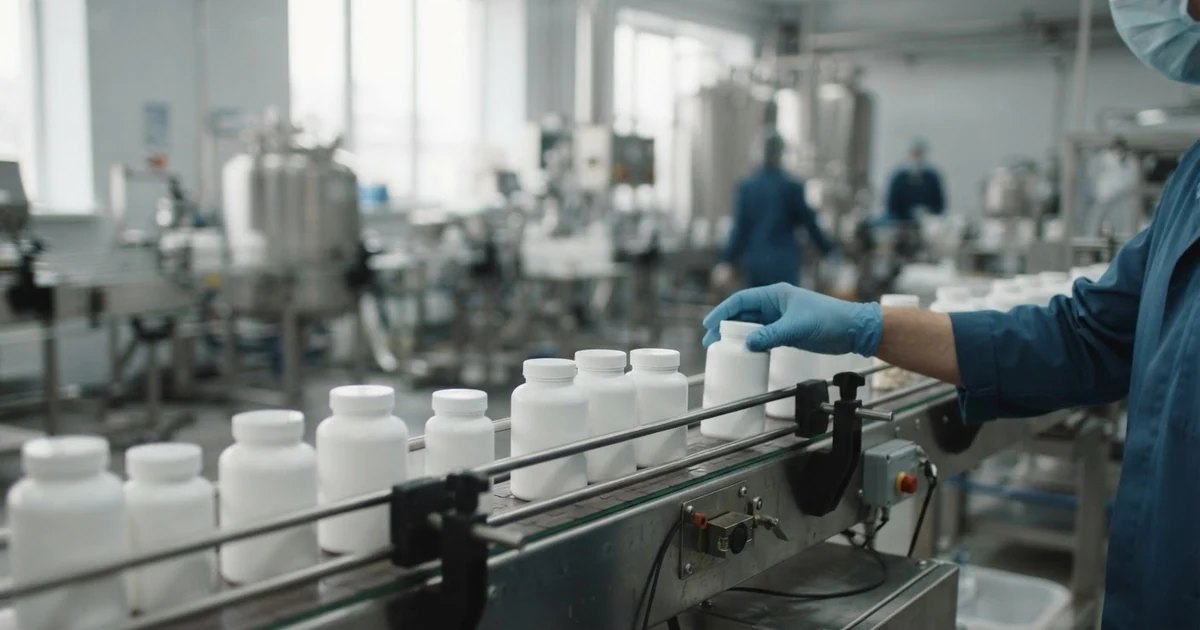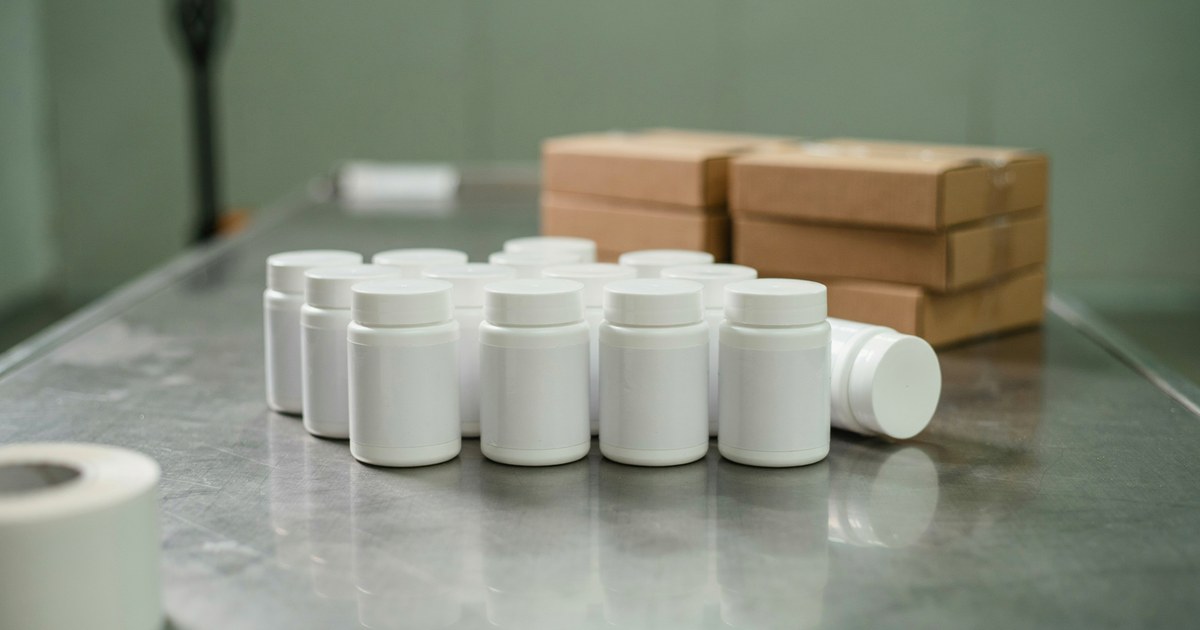

Buyers often use "white label," "private label," and "contract manufacturing" interchangeably, but they describe different levels of control, cost, and regulatory exposure. Choosing the wrong model for your stage leads to two common failures: paying for custom development you did not need, or launching a stock formula you cannot defend when a retailer or auditor asks who owns the specification. This article separates the three models on the dimensions that matter in practice — scope, timelines, cost ranges, documentation, and failure modes.
Definitions that hold up in a supplier conversation
The terms are not defined in US regulation, so definitions vary by supplier. What follows is the working distinction most US and EU supplement manufacturers use.
- White label: you buy a finished product that already exists. The formula, specification, and often the label design belong to the manufacturer or a third party. You apply your brand, sometimes with limited label changes. You have little or no say in the formula.
- Private label: the manufacturer produces a product exclusively for your brand, usually from a standard or semi-custom formula. You control the label, the brand, and often the SKU configuration (capsule size, count, packaging). Formula ownership depends entirely on the contract — this is the clause to read twice.
- Contract manufacturing: you own or co-own the formula and specification, and the manufacturer produces to your documented requirements. You carry more development cost and more responsibility for the specification, stability, and label claims. This is the model behind most OEM manufacturing arrangements.
The boundary between private label and contract manufacturing is contractual, not technical. A private label deal where you own the formula and the master batch record is functionally contract manufacturing; a "custom" project where the manufacturer retains the formula is white label with extra steps.
Scope, timelines, and typical cost ranges
Timelines below assume a manufacturer with capacity, a formula that already exists or needs only minor adjustment, and labels that are print-ready. Treat them as typical industry ranges, not commitments.
- White label: 2–6 weeks from purchase order to shipment if stock exists; 4-6 weeks if a production run must be scheduled. Minimum order quantities are often the lowest of the three models. Unit costs sit at the high end because you are buying a finished good, not a manufacturing service.
- Private label: 8–14 weeks for a standard formula with your label and packaging. Add 4-6 weeks if a new label design, new packaging component, or a minor formula tweak is involved. MOQs are higher than white label, typically in the low thousands of units per SKU.
- Contract manufacturing: 12–24 weeks for a new formula, including development, pilot batch, analytical testing, stability initiation, and first commercial run. A formula transferred from another manufacturer with full documentation can compress this to 8–12 weeks. MOQs and tooling or packaging commitments are the highest.
Cost is driven more by dose, actives, and packaging than by the model itself. As a rough planning range, white label finished goods commonly land in the low-to-mid single digits per unit at volume, private label somewhat higher once your packaging is included, and contract manufacturing higher again at first run because development and testing are front-loaded. Ask for a line-item quote separating formula development, testing, components, fill, and freight — blended quotes hide where the risk sits.
Documents to demand before you sign
Under US 21 CFR 111, the party that releases the finished product is responsible for cGMP compliance regardless of who made it. In practice that means you need documentation, not assurances. Request the following for any model, and expect more for contract manufacturing.
- Current certificate of analysis (COA) per lot, with identity, potency, and microbiological results.
- Heavy metals testing to USP <232>/<233> and, where relevant, residual solvents.
- Disintegration or dissolution data to USP <711> for solid dosage forms.
- Stability data or a stability protocol aligned with ICH Q1A(R2), including accelerated and real-time conditions.
- Allergen, gluten, and country-of-origin statements for each ingredient.
- Supplement Facts panel built to 21 CFR 101.36, with ingredient lists conforming to 21 CFR 101.4; for EU sales, labeling to EU 1169/2011.
- Copies of the manufacturer's registrations and audit reports — see our overview of certifications for what each one actually covers.
- For imported ingredients or finished goods, FSVP records under 21 CFR 117 and Prior Notice filings under 21 CFR 1005.
- Written confirmation of formula ownership, exclusivity, and what happens to the formula if the relationship ends.
If a supplier cannot produce a lot-specific COA within a business day, treat that as a signal about their quality systems, not their filing habits.
Failure modes by model
Each model fails in predictable ways. Knowing them in advance is cheaper than discovering them at launch.
- White label: formula lock-in. You cannot change the dose, the excipients, or the source of an active, and the manufacturer can sell the identical product to a competitor. Retail buyers increasingly ask whether a product is exclusive; a white label answer is often no.
- Private label: ambiguous ownership. Contracts that are silent on formula ownership default to the manufacturer in practice. You also inherit the manufacturer's sourcing decisions, which may change between lots without notice unless the specification forbids it.
- Contract manufacturing: specification drift and timeline slippage. New formulas attract scope creep, and stability failures discovered late can force reformulation after packaging is printed. Budget contingency for a second pilot batch.
- All three: label claims that outrun the evidence, undisclosed changes to actives or excipients between lots, and certificates that describe a specification rather than the actual lot. Prop 65 exposure in California and general advertising-claim risk apply regardless of model.
Questions to ask your supplier
Ask these in writing and keep the answers. Vague answers are themselves information.
- Who owns the formula and the master batch record, and is that ownership exclusive to my brand?
- Can you supply a lot-specific COA, and how quickly after release?
- What is your change-control process when an ingredient supplier or specification changes?
- Which certifications do you hold, and can I see the most recent audit report and any open corrective actions?
- What are your real lead times for the last four quarters, not your standard quote?
- What is the MOQ per SKU, and what are the terms if I reorder below it?
- Who writes and approves the Supplement Facts panel, and who is liable if it is wrong?
- What happens to my formula, artwork, and remaining inventory if we terminate?
Frequently asked questions
Is white label cheaper than private label?
Per unit, often yes at low volumes, because you avoid packaging tooling and label development. Over time it can be more expensive: you cannot negotiate on formula, you may pay for brand-building on a product a competitor sells identically, and switching suppliers means starting over. Compare total cost of ownership over two or three reorder cycles, not the first purchase order.
Can I move from white label to private label later?
Usually, but not always. If the white label formula belongs to the manufacturer, you cannot take it with you; you can only ask for a private label version, which may be the same formula under an exclusivity clause at a higher price. Plan the transition before you build brand equity on a product you do not control.
Does contract manufacturing mean I need my own regulatory registrations?
It depends on the market. In the US, the finished-product responsibility under 21 CFR 111 sits with the party that releases the product, and facility registration obligations attach to the manufacturing site. In the EU, the responsible person and notification duties fall on the brand. Confirm in writing which party holds each registration before the first batch.
How much stability testing do I need before launch?
At minimum, accelerated data to support the label's shelf life claim plus a real-time study running in parallel, structured to ICH Q1A(R2). Many buyers launch on accelerated and confirmatory early timepoints while real-time data accumulates. Do not accept a shelf life that has no underlying data, and do not accept data from a different formula or dosage form.
What is a realistic first production timeline for a new capsule product?
For a new formula with new packaging, plan 12–24 weeks from signed specification to released first batch, including development, pilot, testing, and commercial run. Capsule format adds its own fill-weight and disintegration considerations; see our notes on capsule manufacturing for the variables that affect timelines.
The model matters less than the contract behind it. Decide what you need to own — formula, specification, label, or nothing but the brand — and then match the model to that decision rather than the other way around. Get formula ownership, change control, documentation obligations, and exit terms in writing before the first purchase order, and treat every supplier claim that is not backed by a lot-specific document as unverified.