Quick answer: Pepper drops are liquid supplements built around cayenne extract, usually combined with beet root, hawthorn, turmeric, or vitamins D3 and K2. Capsaicin, the active in cayenne, can dilate blood vessels and raise thermogenesis in short studies, but evidence for long-term cardiovascular benefit in humans is limited. Treat them as a convenience format, not a treatment.
What pepper drops are, and what they are not
A pepper drop is a liquid dietary supplement. The base is usually water, glycerin, or a glycerin-alcohol mix, with a cayenne (Capsicum annuum) extract standardized to capsaicin. Many formulas add beet root for nitrates, hawthorn for flavonoids, turmeric for curcumin, and vitamins D3 and K2.
What they are not: a drug, a blood pressure treatment, or a replacement for prescribed cardiovascular medication. In the US, supplements have no pre-market approval. A facility registration with the FDA is not an approval. Any brand implying otherwise is telling you something about its compliance culture.
The liquid format is the main selling point. It is also the main source of confusion. More on that below.
How capsaicin works in the body
Capsaicin binds TRPV1, a receptor on sensory nerve endings. Activation triggers a local release of calcitonin gene-related peptide and substance P, which relaxes vascular smooth muscle. That is the mechanistic basis for the warming sensation and the reported flushing.
Thermogenesis is a separate effect. Capsaicin can nudge resting energy expenditure upward in acute settings. The magnitude is small and varies between people. It is not a weight-loss mechanism on its own.
Beet root works through a different route. Dietary nitrate is reduced to nitrite by oral bacteria, then to nitric oxide in tissue. Nitric oxide signals smooth muscle relaxation. Hawthorn contributes oligomeric proanthocyanidins and flavonoids with antioxidant activity. Turmeric adds curcumin, which modulates inflammatory signaling in vitro. These are plausible mechanisms, not proven clinical outcomes.
Liquid drops versus capsules, tablets, and gummies
Liquid formats skip the disintegration step that tablets and hard capsules require. That can mean faster onset for some actives. It does not automatically mean higher total absorption. A well-made capsule with a proper dissolution profile can match a liquid for overall bioavailability.
Sublingual absorption is often claimed for drops. The sublingual mucosa is thin, but residence time is short and the dose volume is small. Most of a drop dose is still swallowed. Expect faster onset, not a dramatically different total exposure.
Glycerin-based drops are stable and taste acceptable. Alcohol-based tinctures extract different compounds and burn more. Emulsified drops can carry lipophilic actives like curcumin and vitamin K2 more evenly, which matters because those ingredients settle in simple water-glycerin systems.
| Format | Onset | Dose precision | Best fit | Watch-outs |
|---|---|---|---|---|
| Liquid drops | Faster | Depends on dropper markings | People who dislike pills; flexible dosing | Overdosing by eye; separation of lipophilic actives |
| Softgel | Moderate | Fixed per unit | Oil-soluble actives; travel | Lower MOQ flexibility for small brands |
| Hard capsule | Moderate | Fixed per unit | Powdered extracts; clean labels | Disintegration depends on excipients |
| Tablet | Slower | Fixed per unit | High-dose minerals; effervescent variants | Compression can slow dissolution |
| Gummy | Moderate | Fixed per unit | Compliance, taste-forward products | Sugar load; heat sensitivity in shipping |
Dosing and specification ranges
Capsaicin dosing is the hardest part of formulating a pepper drop. Pure capsaicin is pungent at microgram levels. Most products use a cayenne extract standardized to a percentage of capsaicinoids, then dose to a tolerable Scoville-equivalent heat.
Typical label ranges I see: cayenne extract providing a few milligrams of capsaicinoids per serving, beet root extract in the hundreds of milligrams, hawthorn extract standardized to flavonoids, and vitamin K2 as MK-7 in the 45-180 mcg range with D3 at 400-2,000 IU. These are label ranges, not clinical recommendations. A formulator sets them from supplier data and sensory trials, then confirms with a CoA.
Start low. Pungency is dose-limiting before any pharmacological effect appears. If a drop burns the throat, the dose is above what most people will tolerate daily.
| Ingredient | Typical label range per serving | Formulation note |
|---|---|---|
| Cayenne extract (capsaicinoids) | Low milligram range | Pungency limits dose; needs masking |
| Beet root extract | Hundreds of mg | Nitrate content varies by batch |
| Hawthorn extract | Standardized to flavonoids | Specify the marker compound |
| Turmeric extract | Standardized to curcuminoids | Needs emulsification or piperine |
| Vitamin D3 | 400-2,000 IU | Oil-soluble; check carrier |
| Vitamin K2 (MK-7) | 45-180 mcg | Light-sensitive; amber glass |
Who may benefit, and who should be careful
People who want a convenient liquid format and tolerate spicy food are the natural audience. Athletes interested in dietary nitrate have a clearer evidence base for beet root than for cayenne.
Be careful with gastrointestinal sensitivity. Capsaicin can irritate the stomach lining. Anyone with reflux, ulcers, or IBS should approach pepper drops cautiously. People on blood pressure medication, anticoagulants, or with a cardiovascular diagnosis should talk to their clinician before adding a vasoactive botanical. Vitamin K interacts with warfarin, so K2-containing drops need a conversation with the prescriber, not a label claim.
Pregnancy and breastfeeding: insufficient data for concentrated capsaicin extracts. Skip it.
What the evidence actually shows
Be honest here. Capsaicin has decent mechanistic and acute physiological data. Long-term randomized trials on cardiovascular endpoints are thin. Most studies use capsaicinoids for pain, appetite, or thermogenesis over weeks, not years, and not in liquid drop form.
Dietary nitrate from beet root has stronger support for blood pressure and exercise performance in short-term trials. Effects are modest and fade when oral antibacterial mouthwash is used, which tells you the oral microbiome matters.
Hawthorn has been studied for heart failure and mild hypertension. Results are mixed, and it is not a substitute for guideline therapy. Curcumin bioavailability is poor without enhancement, and clinical cardiovascular outcome data are limited.
Vitamin K2 has reasonable data for arterial stiffness markers in some populations. Vitamin D3 evidence for cardiovascular outcomes is weak. Do not let a label imply otherwise.
Quality signals and how to read a CoA
A Certificate of Analysis should list the lot number, the test methods, and the results. Look for identity by HPLC or TLC, assay against the label claim, heavy metals, microbial limits, and residual solvents. For a liquid, add pH, density, and a preservative efficacy test.
Ask whether the capsaicinoid content is measured or calculated from the raw extract specification. Measured is better. Ask whether the K2 is MK-7 and whether the D3 is cholecalciferol. Ask for the allergen statement and the carrier list.
Facility signals matter too. GMP audit by a third party such as Intertek, ISO 9001:2015, ISO 22000:2018, HACCP, and Halal on specific lines are checkable claims. NSF audit status is worth confirming. None of these guarantee a good product, but their absence is a red flag.
| Test | What it catches | Why it matters for drops |
|---|---|---|
| Identity (HPLC/TLC) | Adulteration, wrong species | Cheap cayenne substitutes |
| Assay vs label | Over/underage | Liquid settling skews dose |
| Heavy metals | Lead, arsenic, cadmium | Botanical concentrates |
| Microbial limits | Pathogens, total plate count | Water-based systems |
| Preservative efficacy | Failed preservation | Multi-use bottles |
| pH and density | Process drift | Batch consistency |
Common mistakes formulators and buyers make
Overloading the formula. Eight botanicals in one drop means each is underdosed. Pick a lead active and support it.
Ignoring taste. Capsaicin at effective levels is hot. Masking with sweeteners alone fails. Emulsifiers and cooling agents help.
Skipping the emulsion. Curcumin and K2 are lipophilic. In a simple water-glycerin base they separate. Shake-well instructions are a workaround, not a fix.
Claiming absorption superiority without data. "Liquid equals better bioavailability" is a marketing line until you run a comparison.
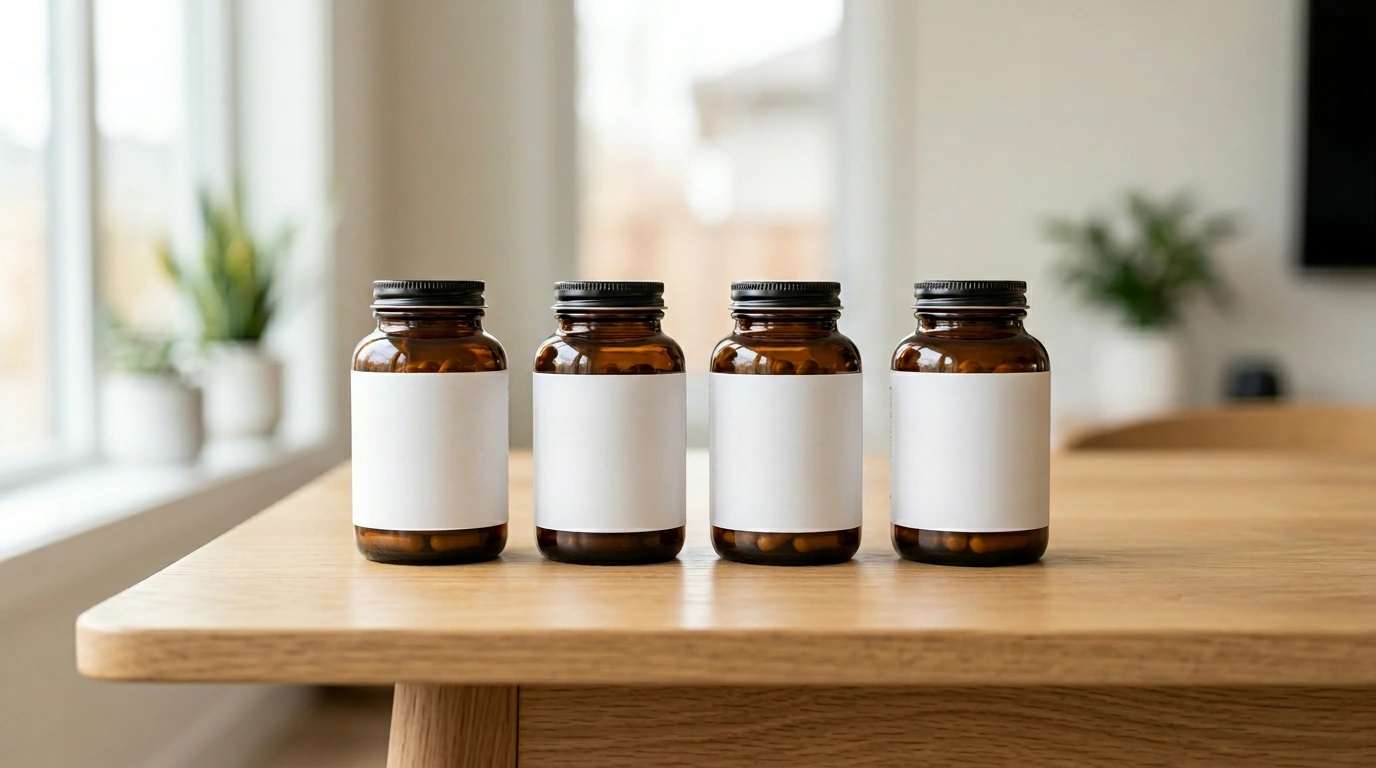
Using amber glass but clear droppers. Light degrades K2 and curcumin. The bottle is only half the protection.
How pepper drops are made at scale
At our Guangzhou facility, the process starts with extract qualification: identity, assay, and microbial testing on incoming lots. The aqueous and oil phases are prepared separately, then emulsified under controlled shear and temperature. Actives that are heat-sensitive go in after cooling. The batch is homogenized, pH-adjusted, and filtered.
Filling runs on automated lines into amber glass or PET, with dropper assemblies torqued to a set specification. Every batch is sampled for assay, microbials, and organoleptic checks, and a CoA ships with it. Lead time is typically 4-6 weeks after formula and artwork approval. Sampling takes 7-10 days. MOQ starts at 500 units per SKU for gummies, powders and liquids and 1,000 for capsules, tablets and softgels; softgels can run 1,000-2,000 for a pilot.
We make hard capsules, softgels, tablets, gummies, powders in jars, sachets and stick packs, liquid drops, and effervescent tablets in-house. ZOOMSHEAL is the export brand of Zhongci Health Products Technology Development Co., Ltd. in Huadu District, Guangzhou. 23 years of contract manufacturing, own factory, not a trading company.
A practical checklist before you buy or brief a formula
One: identify the lead active and its standardized marker. Two: confirm the dose per serving against the extract specification. Three: ask for a CoA from the actual lot, not a sample. Four: check the carrier and preservative system. Five: verify the facility claims. Six: read the allergen statement. Seven: check the dropper markings for dose accuracy. Eight: confirm the light-protection packaging. Nine: ask about stability data for the finished liquid. Ten: run a small pilot batch before committing to a full run.
Frequently asked questions
Do pepper drops really improve circulation?
Capsaicin can relax blood vessels through TRPV1-mediated pathways, and acute studies show local blood flow changes. That is not the same as treating poor circulation. If you have diagnosed vascular disease, drops are not a therapy. For general wellness, the effect is modest and short-lived. Judge the product on its full formula and its CoA, not on the pepper alone.
Are liquid drops absorbed better than capsules?
Liquids can act faster because they skip tablet disintegration. Total absorption depends on the active, the dose, and the formulation. A well-made softgel can match a liquid. Sublingual claims are overstated for most drop volumes. If a brand says "superior bioavailability" without a comparison study, treat it as marketing.
What dose of cayenne extract is typical?
Most drops dose to a tolerable pungency rather than a fixed pharmacological target. Labels usually show a cayenne extract standardized to capsaicinoids in the low milligram range per serving. Start at the lowest serving and assess tolerance. Pungency, not the number on the label, is what limits daily use for most people.
Can I take pepper drops with blood pressure medication?
Ask your prescriber first. Capsaicin and beet root both affect vascular tone, and stacking them with antihypertensives can shift blood pressure unpredictably. Vitamin K2 in the formula also matters if you take warfarin. This is a clinical conversation, not a label decision. Bring the supplement facts panel to the appointment.
Do pepper drops contain vitamin K2, and does it matter?
Many formulas add K2 as MK-7 alongside D3 to direct calcium toward bone and away from soft tissue. The mechanistic rationale is sound. Human outcome data for arterial stiffness are encouraging but not definitive. If you take anticoagulants, K2 is a reason to check with your clinician before starting.
How do I verify a CoA is real?
Match the lot number on the CoA to the lot on the bottle. Check that the test methods are named and the results are numeric, not just "pass." Look for identity, assay, heavy metals, microbials, and for liquids, pH and preservative efficacy. A CoA with no lot number or no methods is a document, not a quality record.
What is the minimum order for a private-label pepper drop?
At ZOOMSHEAL, MOQ starts at 500 units per SKU for gummies, powders and liquids and 1,000 for capsules, tablets and softgels, including liquid drops. Softgels can run 1,000-2,000 for a pilot. Lead time is 4-6 weeks after formula and artwork approval, and sampling takes 7-10 days. Those numbers let a brand test a market before committing to a full production run.
Are pepper drops FDA approved?
No supplement is FDA approved. The FDA does not approve dietary supplements before market. Facilities register with the FDA, and registration is not approval. In the US, supplements have no pre-market approval requirement. Every batch from our factory ships with a CoA. Any brand claiming FDA approval for a supplement is misrepresenting the regulatory status.
References
NIH Office of Dietary Supplements: Vitamin K
NIH Office of Dietary Supplements: Vitamin D
PubMed search: capsaicin and blood pressure
PubMed search: dietary nitrate and blood pressure
PubMed search: hawthorn and heart failure
PubMed search: vitamin K2 and arterial stiffness
EFSA: dietary reference values for vitamin K
Reviewed by Dr. Xu Wei, PhD, formulation scientist at ZOOMSHEAL in Guangzhou (23 years of supplement contract manufacturing). Last updated: November 2026. This article is for education and does not replace medical advice.