
Quick answer: Personalized nutrition in supplements means matching a formula, dose, or delivery form to a person's stated goals, biomarkers, or preferences. The science is strongest for a few nutrients and weak for most gene-based claims. What actually changes on the factory floor is batch size, packaging complexity, and traceability. Custom formulas are made with the same equipment, testing, and documentation as standard products.
What personalized nutrition is, and what it is not
Personalized nutrition is a process, not an ingredient. It starts with an input: a blood test, a questionnaire, a wearable reading, or a genetic report. That input is translated into a formula decision: which nutrients, what dose, what form, what pack size.
It is not a different regulatory category. A personalized supplement is still a dietary supplement in the US, a food supplement in the EU, and so on. It needs the same ingredient safety review, the same label rules, and the same batch records.
It is also not a promise of better health outcomes. The evidence for tailoring is uneven. Some nutrient decisions are well supported. Many gene-diet interactions are not. A brand that treats personalization as a marketing layer over a standard multivitamin is not doing personalization. A brand that uses it to set dose and form from a defined input is.
How the process works, from input to finished batch
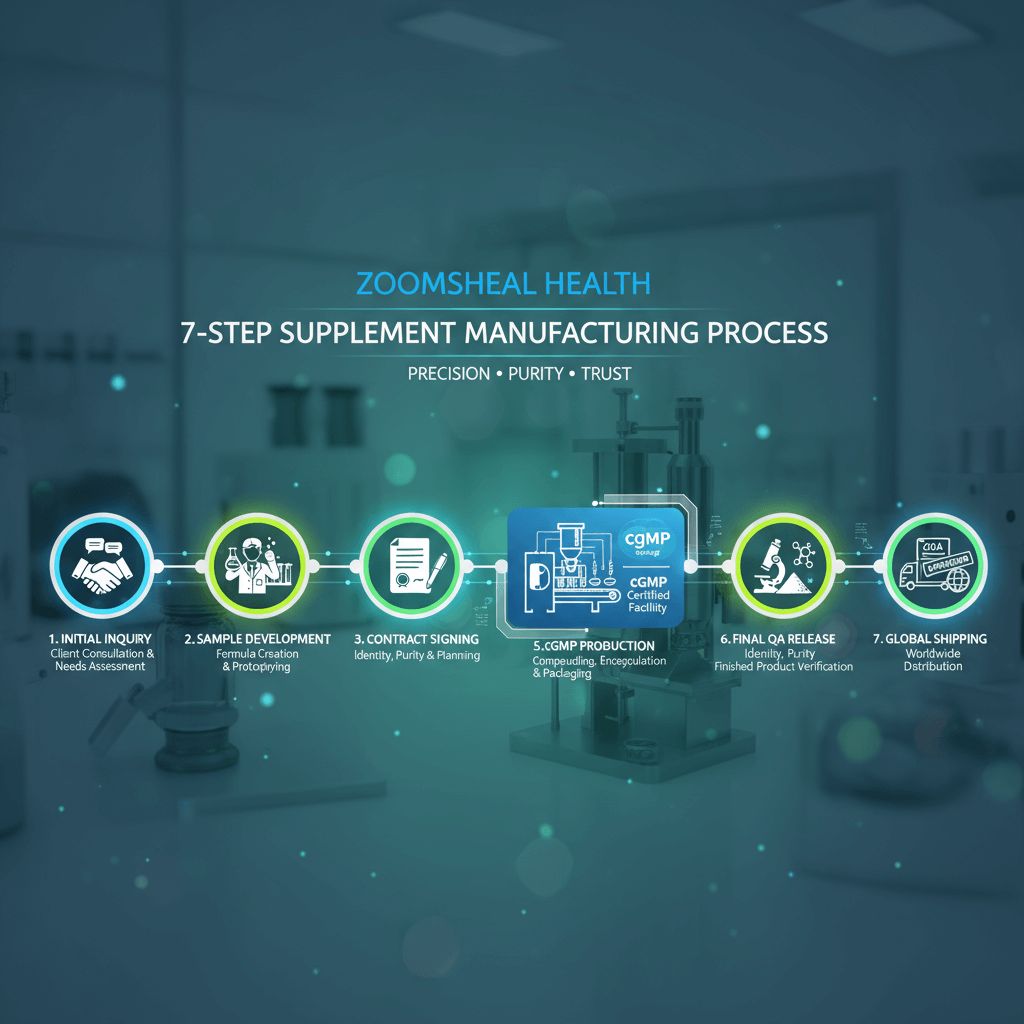
In practice, personalization runs through four steps.
Step 1: Intake. The brand collects data. This may be a lab value such as serum vitamin D or ferritin, a lifestyle questionnaire, or a genetic panel. The data must be stored and handled under privacy rules. The factory usually does not see raw personal data. It sees a formula code.
Step 2: Formula logic. The brand or a clinical partner maps inputs to a formula. Good logic uses ranges, not single values. For example, a vitamin D input may map to 400, 1,000, or 2,000 IU depending on the reported level and local upper limits. The logic must respect tolerable upper intake levels and local labeling rules.
Step 3: Batching. The factory groups orders into production runs. This is where personalization meets reality. You cannot economically run one capsule per person. You run a batch of a given formula, then pack it into labeled units for each customer. The batch size is set by the smallest viable run for that form.
Step 4: Release. Each batch is tested and released with a certificate of analysis (CoA). The CoA covers identity, potency, and microbiological limits. The brand links each shipped unit back to its batch.
Forms and delivery systems: what personalization can actually vary
Personalization often means changing the form, not just the formula. A person who cannot swallow a tablet may take a softgel. A person who wants a drink may prefer a stick pack. Each form has different minimums and different technical limits.
| Form | Typical use in personalized lines | Practical notes |
|---|---|---|
| Hard capsule | Single nutrients, blends, daily packs | Easy to vary dose by capsule count; good for multi-SKU lines |
| Softgel | Oils, fat-soluble vitamins, CoQ10 | Pilot runs from 1,000–2,000 units; good for premium positioning |
| Tablet | Multivitamins, minerals, effervescent | Compression limits some combinations; taste and size matter |
| Gummy | Consumer-friendly daily products | Heat-sensitive actives need care; sugar and texture affect formula |
| Powder (jar, sachet, stick) | Sports, gut health, meal support | Sachets and stick packs suit single-serve personalization |
| Liquid drops | Infants, elderly, flexible dosing | Stability and preservative system are the main constraints |
| Effervescent tablet | Vitamin C, electrolytes, hangover products | Moisture control is critical; packaging must be robust |
At ZOOMSHEAL, all of these forms are made in-house. That matters for personalized lines because a brand may need to switch form for a customer segment without changing suppliers.
Dosing and specification ranges: where personalization gets real
Dose is the part of personalization that has the clearest scientific basis. It is also the part most often ignored in marketing. The table below shows common ranges used in supplement development. These are formulation ranges, not medical advice. Final doses must follow local rules and be set by a qualified formulator.
| Nutrient or category | Common range in supplements | Personalization input |
|---|---|---|
| Vitamin D3 | 400–2,000 IU per day | Blood level, age, sun exposure, local upper limit |
| Iron | Often 10–30 mg elemental | Ferritin or lab result; only with clinical oversight |
| Magnesium | 100–400 mg elemental | Diet, goal (sleep, muscle), tolerance |
| Omega-3 (EPA+DHA) | 250–1,000 mg | Dietary intake, goal, softgel size preference |
| B-complex | Varies by B vitamin | Diet pattern, lifestyle, local labeling limits |
| Probiotics | Strain-specific; often 1–10 billion CFU | Goal, strain evidence, stability in form |
Two rules apply. First, do not exceed local upper limits without a documented reason. Second, do not personalize a dose you cannot test. If the CoA cannot confirm potency, the personalization is fiction.
Who benefits, and who should be careful
Personalization makes sense when a person has a defined need. Examples include a documented vitamin D deficiency, a restricted diet, a life stage such as pregnancy, or a clinician-guided nutrient plan. In these cases, matching dose and form to the person is practical.
It makes less sense as a general wellness upsell. Most healthy adults eating a varied diet do not need a bespoke formula. They need a reasonable baseline and a check on interactions.
Caution is needed for people on medication, pregnant or breastfeeding people, children, and people with chronic conditions. Iron, vitamin K, and some herbal ingredients interact with drugs. A personalized supplement is still a supplement. It can cause harm if dosed poorly or combined badly.
What the evidence actually shows
The evidence is strongest for nutrient status correction. If a lab test shows low vitamin D, a supplement at an appropriate dose can raise status. The same is true for iron in diagnosed deficiency, under clinical care. These are well-established uses.
The evidence for gene-based supplement advice is weaker. Many direct-to-consumer genetic reports link variants to nutrient needs. The effect sizes are often small, and the clinical utility is limited. A 2019 review in BMJ found little evidence that genetic testing improves dietary behavior or health outcomes. That does not mean genetics is irrelevant. It means the current tests do not support strong personalization claims.
Microbiome-based personalization is earlier still. The science is moving, but strain-level recommendations are not yet reliable for most consumers. Brands should avoid implying otherwise.
Where the evidence is weak, say so. That is a quality signal in itself.
Quality signals: how to read a label or a CoA
A personalized supplement should be held to the same standard as any other supplement. The label and the CoA are where you check.
On the label, look for: a full supplement facts panel with doses per serving; a clear serving size; allergen statements; and a manufacturer or distributor address. For personalized products, look for a batch or lot code that links to the CoA.
On the CoA, look for: batch number; product name; tests for identity, potency, and microbiological limits; and a release date. A CoA that only says "pass" is not useful. It should list results against specifications.
| Quality check | What good looks like | Why it matters for personalized lines |
|---|---|---|
| Identity test | Ingredient confirmed against reference standard | Prevents mix-ups in multi-SKU production |
| Potency test | Result within specification range | Confirms the personalized dose is real |
| Microbiology | Total plate count, yeast, mold, pathogens within limits | Protects consumers, especially in powders and gummies |
| Heavy metals | Below local limits | Important for mineral and botanical ingredients |
| Batch traceability | Code links unit to CoA | Enables recalls and customer transparency |
Certifications are a starting point, not a finish line. ZOOMSHEAL holds GMP (Intertek), ISO 9001:2015, ISO 22000:2018, HACCP, an NSF audit, and line-specific Halal. The facility is FDA-registered via a US agent. FDA registration is not FDA approval. Supplements have no pre-market approval in the US. Every batch ships with a CoA.
Common mistakes in personalized supplement projects
Mistake 1: Designing formulas before checking minimums. A brand plans 200 unique formulas, then learns that most forms need 500 units per SKU (1,000 for capsules, tablets and softgels) per run. Softgels can start at 1,000–2,000 for a pilot, but that is still a pilot, not a per-person batch. Group formulas into a small number of SKUs.
Mistake 2: Ignoring lead time. Sampling takes 7–10 days. Production takes 4–6 weeks after formula and artwork approval. Personalized subscription models need to plan around that, not promise next-week delivery.
Mistake 3: Overclaiming the science. Gene-based and microbiome-based claims are often ahead of the evidence. Regulators in the US and EU watch supplement claims closely. Write claims you can defend.
Mistake 4: Forgetting stability. A personalized formula may sit in a subscription box for weeks. Test stability in the final pack, not just in bulk.
Mistake 5: Treating the CoA as paperwork. The CoA is the link between the personalized promise and the physical product. If you cannot produce it on request, you cannot support the claim.
How personalized supplements are manufactured at scale
At scale, personalization is a logistics problem more than a chemistry problem. The factory makes a set of base formulas. Each formula is batched, tested, and released. Then packaging and labeling assign units to individual customers or segments.
This is why contract manufacturers with in-house capsule, softgel, tablet, gummy, powder, liquid, and effervescent lines can support personalized brands. The brand does not need a new factory for each form. It needs a partner that can run small batches, hold specifications, and document every step.
ZOOMSHEAL has 23 years of contract manufacturing experience and is an own-factory operation, not a trading company. That structure matters when a personalized line needs a quick pilot and a clear CoA trail.
A practical checklist before you launch
- Define the input: what data drives the formula decision, and who reviews it?
- Map inputs to a small number of formulas. Aim for 3–10 SKUs, not hundreds.
- Check the minimum order quantity for each form. Most forms start at 500 units per SKU; softgels can pilot at 1,000–2,000.
- Confirm lead time: 7–10 days for samples, 4–6 weeks for production after approvals.
- Verify the CoA format and batch traceability before you sign.
- Check certifications and their scope. Ask whether Halal is line-specific.
- Review claims against local rules. Avoid disease claims and unsupported personalization promises.
- Test stability in the final pack.
- Plan privacy handling for any personal data used in formula selection.
Frequently asked questions
Is personalized nutrition scientifically proven?
Partly. Correcting a documented nutrient deficiency with a supplement is well established. Gene-based and microbiome-based personalization is much weaker. Reviews of direct-to-consumer genetic testing have found limited evidence that it changes behavior or improves health outcomes. Treat personalization as a tool for matching dose and form to a defined need, not as a proven way to optimize health for everyone.
What is the minimum order for a custom supplement formula?
At ZOOMSHEAL, most forms start at 500 units per SKU (1,000 for capsules, tablets and softgels). Softgels can start at 1,000–2,000 units for a pilot. Minimums vary by form because each production line has setup and cleaning costs. If you plan a personalized line, group customers into a small number of formulas so each formula reaches a viable batch size.
How long does it take to make a personalized supplement line?
Sampling takes 7–10 days. Production takes 4–6 weeks after formula and artwork approval. Add time for label review and any stability testing. A subscription model should build these timelines into its launch plan. Promising fast delivery before the first batch is released is a common mistake.
Does FDA registration mean a personalized supplement is approved?
No. FDA registration is not FDA approval. In the US, dietary supplements have no pre-market approval process. The FDA does not approve supplements or their labels before sale. A facility registration via a US agent means the factory has registered, not that a product is endorsed. Every batch should still ship with a certificate of analysis.
Can a contract manufacturer handle many small personalized batches?
Yes, within limits. The factory batches a formula, then packs units for different customers. The limit is the minimum run size per formula and the cleaning time between runs. A practical approach is to offer a defined set of formulas and let customers choose among them, rather than making a unique formula for every person.
What should I look for in a certificate of analysis?
Look for the batch number, product name, tests for identity, potency, and microbiological limits, and results against specifications. A useful CoA lists actual results, not just "pass." It should be traceable to the units you received. If a supplier cannot provide a CoA on request, that is a warning sign for any personalized line.
Are personalized supplements safe for everyone?
No. People on medication, pregnant or breastfeeding people, children, and people with chronic conditions should get advice before starting. Some nutrients and botanicals interact with drugs. Iron and vitamin K are examples. A personalized formula is still a supplement. Dose and combination matter, and local upper limits should be respected.
What forms work best for personalized supplement lines?
It depends on the customer. Hard capsules and sachets are easy to vary by count or single-serve. Softgels suit oils and fat-soluble nutrients. Gummies and liquids help people who dislike pills. Powders and stick packs fit sports and gut-health goals. A factory that makes several forms in-house gives a brand room to switch without changing suppliers.
References
- NIH Office of Dietary Supplements — Dietary Supplement Fact Sheets
- PubMed — search: personalized nutrition genetic testing review
- PubMed — search: direct-to-consumer genetic testing nutrition
- FDA — Dietary Supplements
- EFSA — Dietary Reference Values
- WHO — Malnutrition fact sheet
- PMC — search: personalized nutrition supplements
- Cochrane Library
Reviewed by Dr. Xu Wei, PhD, formulation scientist at ZOOMSHEAL in Guangzhou (23 years of supplement contract manufacturing). Last updated: November 2026. This article is for education and does not replace medical advice.