
Quick answer: Five trends are reshaping supplement products for 2025: smaller personalized batches, functional mushrooms and adaptogens, gut-health formulas built on the gut-brain axis, verifiable sustainability claims, and stress and sleep products. Each one changes what a factory must do — batch size, dosage form, testing, and documentation. The trend is not the ingredient. It is the manufacturing discipline behind it.
What these trends are, and what they are not
A trend is a shift in what buyers ask for. It is not proof that an ingredient works. I have watched plenty of popular ingredients arrive at our plant in Guangzhou with strong marketing and thin evidence. My job is to make a stable, labeled, testable product — not to repeat claims.
So read this as a production document. For each trend I describe the mechanism, the dosage forms that fit, the specification ranges we work with, and the mistakes that cost brands money. ZOOMSHEAL is the export brand of Zhongci Health Products Technology Development Co., Ltd., in Huadu District, Guangzhou. We have run contract manufacturing for 23 years in our own factory. We are not a trading company.
Trend 1: Personalized nutrition moves from concept to small batches
Personalized nutrition means a formula built around one person's data — genetics, blood markers, microbiome results, or lifestyle inputs. The biology is real but partial. Genetic variants do influence how some people metabolize folate or vitamin D, yet a genotype is not a diagnosis and does not replace a blood test.
The manufacturing consequence is simple: smaller runs, more SKUs, tighter traceability. A brand that sells twelve variants needs twelve sets of artwork, twelve batch records, and clean changeover between them. That is where most personalized projects fail — not in the science, but in the paperwork and the line time.
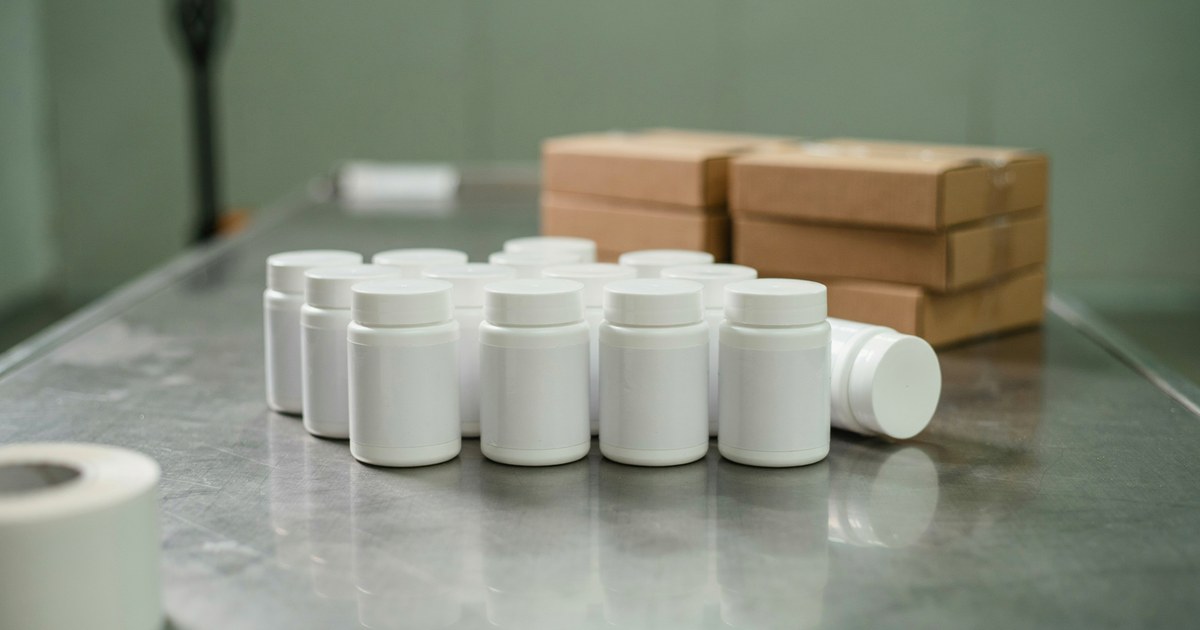
We handle this with fixed batch records and line clearance checks between products. MOQ starts at 500 units per SKU for gummies, powders and liquids and 1,000 for capsules, tablets and softgels. Softgels can run 1,000–2,000 for a pilot, which suits a brand testing a narrow personalized range before scaling.
Trend 2: Functional mushrooms and adaptogens
Reishi, lion's mane, cordyceps, ashwagandha, rhodiola. The mechanism story differs by ingredient. Mushroom beta-glucans interact with immune receptors. Adaptogens are studied for effects on the stress response axis. The evidence is uneven — strongest for a few extracts at specific doses, weak or absent for many finished products on shelf.
Two production facts matter more than the folklore. First, the raw material is the product. A mushroom extract specified only as "10:1" tells you nothing about beta-glucan content. Ask for the assay. Second, these powders are hygroscopic and often bitter. That limits which dosage forms work.
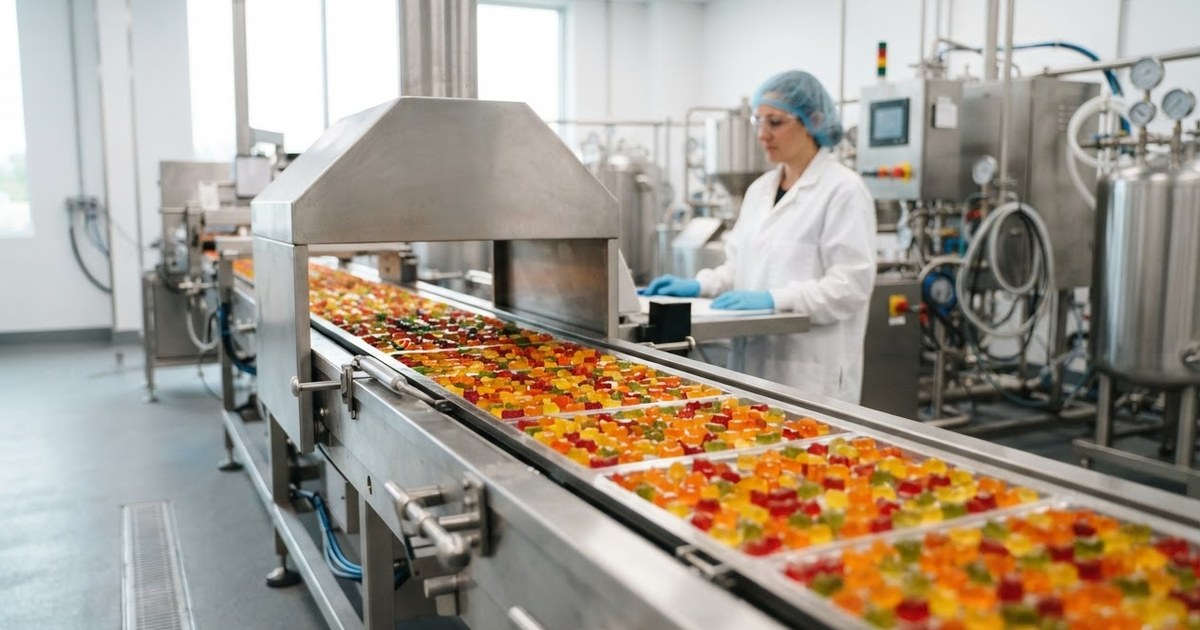
Capsules and stick packs handle taste well. Gummies need masking and heat control. Effervescent tablets need a dry room and careful granulation. We run all of these in-house, so the choice is driven by the formula, not by what we happen to own.
Trend 3: Gut health beyond basic probiotics
The gut-brain axis is a real communication system: vagal signaling, microbial metabolites, immune mediators. It is also the most over-claimed area I see. A probiotic strain with good data in one context does not automatically transfer that data to a shelf-stable capsule with three other strains.
Formulation logic for 2025 looks like this: a prebiotic substrate, one or more documented strains, sometimes a postbiotic for stability, and occasionally a complementary compound. Viability is the hard part. Water activity, packaging, and storage temperature decide whether the CFU count on the label survives to expiry.
We control humidity in production and test counts at release. Every batch ships with a CoA. If a brand wants an expiry claim, we test at interval, not just at release.
Trend 4: Sustainability and transparency claims
Buyers now ask where raw material came from and what is in the box. That is a documentation request, and documentation is something a factory can actually deliver. Traceability records, supplier specifications, and packaging material data are concrete. Broad environmental slogans are not.
My advice: make claims you can evidence at batch level. Recyclable packaging is checkable. "Eco-friendly production" is not, unless you define the metric. Regulators in the EU and US both scrutinize green claims, and a claim you cannot document is a liability, not a differentiator.
Trend 5: Stress, sleep, and mind-body products
This category pulls ingredients like magnesium, L-theanine, glycine, and botanical extracts into gummies, stick packs, and liquid drops. The delivery form matters here. A gummy is convenient and pleasant; it also carries sugar or a polyol, and heat during cooking can degrade sensitive actives.
Liquid drops suit low-dose actives and fast dissolution. Stick packs suit powders with a larger dose. Effervescent tablets suit a fast-dissolving, pleasant format but demand strict humidity control. Match the form to the dose and the stability profile first. Marketing comes later.
Comparison of dosage forms
| Form | Typical MOQ | Best fit | Watch out for |
|---|---|---|---|
| Hard capsule | 500 units per SKU (1,000 for capsules, tablets and softgels) | Botanical extracts, blends, medium doses | Powder flow and fill-weight variation |
| Softgel | 1,000–2,000 pilot; 3,000 standard | Oils, fat-soluble vitamins, lipophilic actives | Fill accuracy and shell stability |
| Tablet | 500 units per SKU (1,000 for capsules, tablets and softgels) | Compressed blends, sustained release | Compression force versus disintegration |
| Gummy | 500 units per SKU (1,000 for capsules, tablets and softgels) | Consumer-friendly vitamins, low-dose actives | Heat degradation, sugar or polyol load |
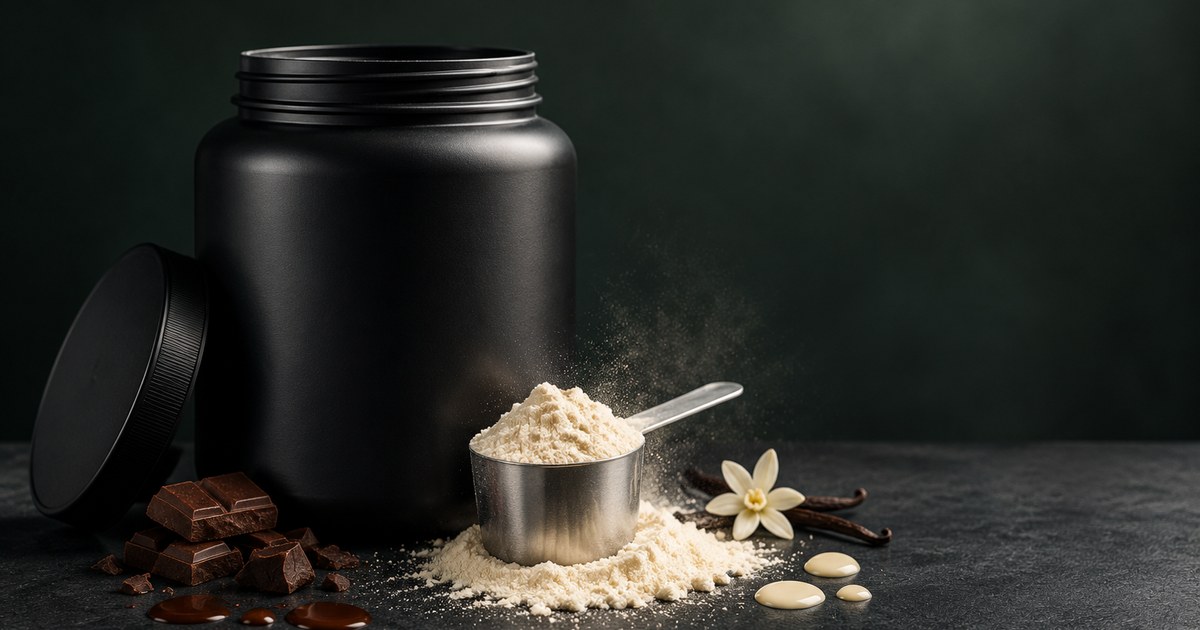
| Powder (jar, sachet, stick) | 500 units per SKU (1,000 for capsules, tablets and softgels) | Large doses, protein, fiber, mushroom blends | Hygroscopicity, taste masking |
| Liquid drops | 500 units per SKU (1,000 for capsules, tablets and softgels) | Low-dose actives, pediatric formats | Preservation, pH, sedimentation |
| Effervescent tablet | 500 units per SKU (1,000 for capsules, tablets and softgels) | Fast-dissolving, pleasant taste | Humidity during production and packing |
Specification ranges we work with
Exact doses depend on the ingredient and the target market. These are the ranges we see most often in briefs, not recommendations.
| Ingredient class | Common label range | Formulation note |
|---|---|---|
| Mushroom extract | 250–1,000 mg per serving | Specify beta-glucan content, not just extract ratio |
| Adaptogen extract | 125–600 mg per serving | Standardize to a marker compound |
| Probiotic blend | 1–50 billion CFU per serving | Viability at expiry, not only at release |
| Magnesium | 50–400 mg elemental per serving | Salt form changes elemental yield and pill size |
| L-theanine | 100–200 mg per serving | Stable in capsules, gummies, stick packs |
Who benefits, and who should be careful
These trends serve brand owners building a differentiated line, procurement teams sourcing a reliable factory, and readers who want to understand what is behind a label. They also serve people who take supplements and want to judge a product honestly.
Caution applies to anyone on medication, pregnant or breastfeeding, managing a chronic condition, or giving products to children. Adaptogens and botanicals can interact with drugs. Probiotics are not appropriate for everyone, particularly immunocompromised people. I formulate; I do not prescribe. Speak to a clinician.
What the evidence actually shows
Some areas are well studied. Vitamin and mineral deficiencies respond to correction. Certain probiotic strains have documented effects in specific conditions. Magnesium has reasonable data for some outcomes.
Other areas are thin. Many mushroom and adaptogen studies are small, use different extracts, and measure different endpoints. That does not make the products useless. It means the honest claim is modest. A brand that says "supports" and shows a CoA is more credible than one that implies treatment.
Quality signals and how to read a CoA
A certificate of analysis is a batch document. Read four things: the batch number matching your shipment, the assay result against specification, the microbiological results, and the test date. A CoA without a batch number is decoration.
On the label, look for a full ingredient list with quantities, a supplement facts panel, and a manufacturer address. Facility credentials matter too. Ours include GMP verified by Intertek, ISO 9001:2015, ISO 22000:2018, HACCP, an NSF audit, Halal on specific lines, and FDA facility registration through a US agent.
One clarification I repeat often: FDA registration is not FDA approval. Dietary supplements have no pre-market approval in the US. Any supplier who says "FDA approved" is either confused or misleading you.
Common mistakes
Choosing the form before the formula. Ignoring hygroscopicity. Specifying an extract ratio instead of an active marker. Skipping stability testing to save time. Approving artwork late and blaming the factory for the delay. Assuming a pilot MOQ applies to full production.
The most expensive mistake is a vague brief. A clear specification — ingredient, marker, dose, form, packaging, market — shortens sampling to 7–10 days and production to 4–6 weeks after formula and artwork approval.
How this is manufactured at scale
Raw materials arrive and are quarantined. Identity and assay testing release them to production. Weighing happens in a controlled room. Blending, encapsulation or compression, then packaging. In-process checks run throughout. Finished batches are tested, a CoA is issued, and goods ship.
That sequence is the same for a 3,000-unit run and a larger one. Scale changes line time, not the controls.
Practical checklist before you brief a factory
| Check | Why it matters |
|---|---|
| Ingredient and marker specified | Prevents substitution and label drift |
| Dose per serving fixed | Drives pill size and form choice |
| Target market identified | Sets labeling and claim rules |
| MOQ confirmed against forecast | Avoids dead stock or short runs |
| Stability plan agreed | Supports expiry claims |
| CoA requirements stated | Defines release criteria |
| Artwork timeline set | Lead time starts after approval |
Frequently asked questions
What are the main supplement trends for 2025?
Five stand out in the briefs we receive: personalized nutrition in smaller batches, functional mushrooms and adaptogens, gut-health formulas built around the gut-brain axis, sustainability claims backed by documentation, and stress and sleep products. Each changes factory requirements — batch size, dosage form, testing, and paperwork. The trend itself is not evidence of efficacy. Treat it as a signal of buyer demand, then verify the ingredient and the specification before committing to a formula.
What is the minimum order quantity for a supplement?
At ZOOMSHEAL, MOQ starts at 500 units per SKU for gummies, powders and liquids and 1,000 for capsules, tablets and softgels, including capsules, tablets, gummies, powders, liquid drops, and effervescent tablets. Softgels can run 1,000–2,000 units for a pilot batch, which suits a brand testing a new concept. Pilot runs use the same batch records and testing as full production. Plan your forecast before you brief us, because MOQ and packaging choice interact.
How long does supplement manufacturing take?
Sampling takes 7–10 days. Production takes 4–6 weeks after formula and artwork approval. Those two approvals are the clock starters, and late artwork is the most common cause of delay. Raw material lead time can extend the schedule when an ingredient is scarce or requires special testing. Ask for a written timeline with approval dates built in, not a single number.
Is FDA registration the same as FDA approval?
No. FDA facility registration is not FDA approval. Dietary supplements have no pre-market approval process in the United States. A registered facility has told the agency where it operates; it has not received a verdict on its products. Any supplier claiming "FDA approved" supplements is misstating the regulatory position. What you should ask for instead is a batch CoA and the facility's audit and certification records.
What certifications should a contract manufacturer hold?
Look for GMP, ISO 9001:2015, ISO 22000:2018, and HACCP as a baseline. Ours include GMP verified by Intertek, an NSF audit, and Halal certification on specific lines. Ask which lines the Halal certificate covers, since it is often line-specific. Certificates should be current and traceable to the facility that will actually make your product, not a parent company or a trading partner.
How do I read a certificate of analysis?
Check that the batch number matches your shipment. Read the assay result against the specification, not in isolation. Review microbiological results, heavy metals where relevant, and the test date. Confirm the testing laboratory and method. A CoA is a batch document, so a generic certificate with no batch number tells you nothing about the goods in your warehouse. Every batch we ship includes one.
Which dosage form should I choose for mushroom or adaptogen products?
Start with dose and taste. Capsules and stick packs handle bitter, hygroscopic powders well. Gummies need masking and heat control during cooking. Effervescent tablets need a dry production room. Softgels suit oil-based actives. The form should follow the formula and stability data, not a competitor's packaging. We make all of these in-house, so the recommendation comes from the specification.
Can a small brand order a pilot batch?
Yes, within limits. Softgels can run 1,000–2,000 units as a pilot. Other forms generally start at 500 units per SKU (1,000 for capsules, tablets and softgels). A pilot uses the same raw material testing, in-process checks, and finished-goods CoA as a larger run, so it is a real test of the formula and the packaging. Use it to validate stability and consumer response before scaling.
References
NIH Office of Dietary Supplements — fact sheets
NIH ODS — dietary supplements: what you need to know
FDA — dietary supplements
FDA — food facility registration
EFSA — food supplements
PubMed — probiotics and the gut-brain axis
PubMed — mushroom beta-glucans and immune function
PubMed — ashwagandha and stress trials
Reviewed by Dr. Xu Wei, PhD, formulation scientist at ZOOMSHEAL in Guangzhou (23 years of supplement contract manufacturing). Last updated: November 2026. This article is for education and does not replace medical advice.